


A series of surprise inspections by the health minister has exposed what public health experts describe as deep-rooted absenteeism and unauthorised private practice among government doctors, raising fresh concerns over accountability and access to healthcare, particularly in rural areas.
The latest inspection on Thursday led Health Minister Sardar Md Sakhawat Husain to order the cancellation of a government doctor’s licence and his dismissal from public service after finding him treating patients at a private diagnostic centre in Dhaka during official working hours.
During an unannounced visit to Popular Diagnostic Centre on English Road in Old Dhaka, the minister found Dr Moinul Hasan Chishti, a physician posted at Belabo Upazila Health Complex in Narsingdi, seeing private patients instead of reporting to his government workplace.
According to the Ministry of Health and Family Welfare, the doctor had been practising privately for a prolonged period despite government rules prohibiting public physicians from providing private medical services during office hours.
Sakhawat immediately directed authorities to begin cancelling the doctor’s registration with the Bangladesh Medical and Dental Council (BMDC) and initiate dismissal proceedings from government service.
He also instructed the accompanying executive magistrate to take legal action.
“Providing treatment at a private institution during government office hours while serving as a government physician is completely against the rules,” Sakhawat said. “We have instructed the relevant authorities to cancel his licence and dismiss him from government service.”

The inspection also revealed lapses by Popular Diagnostic Centre.
Officials found the institution had failed to collect or preserve documents confirming whether the physician had resigned from government service or obtained the mandatory no-objection certificate before being allowed to practise there.
Sakhawat criticised the management, saying private hospitals and diagnostic centres are legally required to verify the employment status of government doctors before appointing them.
The centre’s manager admitted the documents had not been collected and assured authorities that similar lapses would not happen again.

Irregularities in rural health complexes
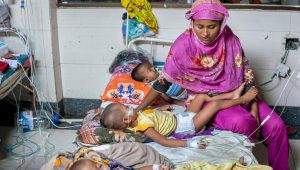
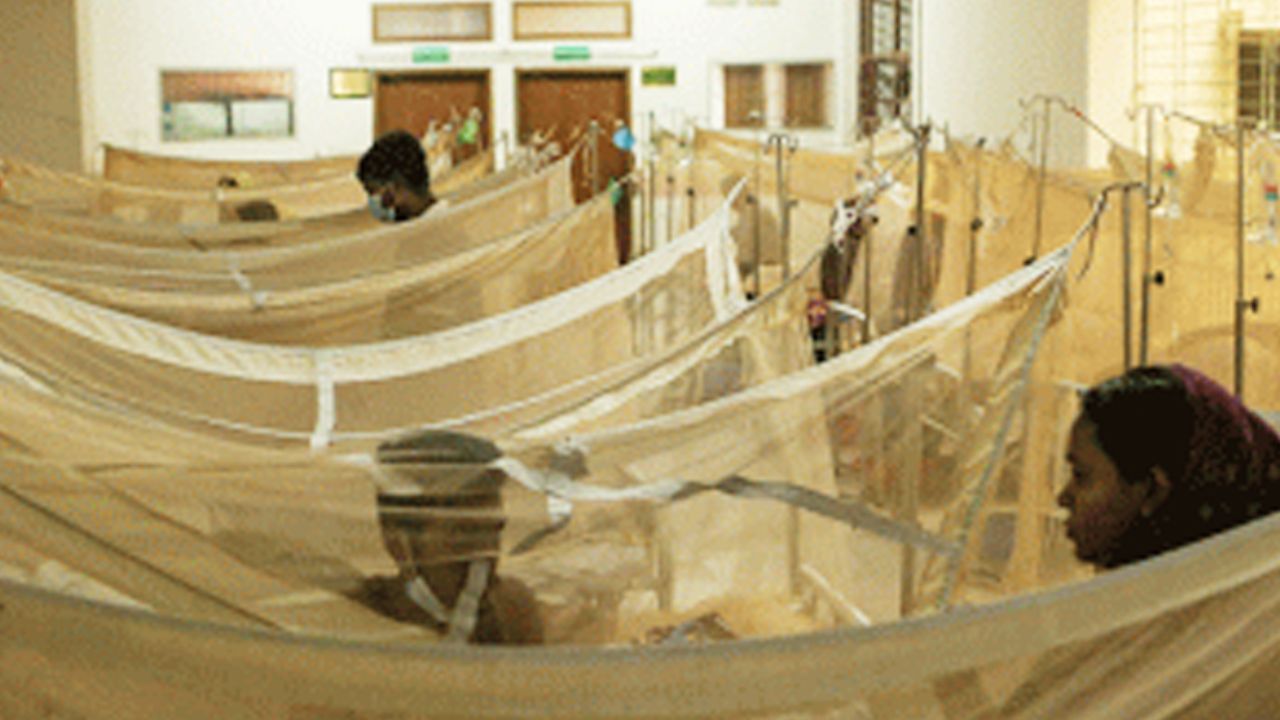
The action forms part of a wider campaign launched by the minister to improve discipline in public healthcare through unannounced inspections across the country. Earlier visits to hospitals in Narsingdi and Gazipur uncovered similar irregularities.
At Palash Upazila Health Complex in Narsingdi, Sakhawat reviewed attendance records after receiving complaints of frequent absenteeism. Of the hospital’s 21 physicians, five were on approved leave.
Among the remaining 16 expected to be on duty, only eight were present when Sakhawat arrived, while two others reported after official working hours had begun. The minister also inspected hospital services and spoke with patients about the care they were receiving.
A separate inspection at Kaliganj Upazila Health Complex in Gazipur found the Upazila Health and Family Planning Officer, Dr Rezwana Rashid, absent despite her leave application reportedly lacking approval from the civil surgeon.
Four other doctors were also absent, and hospital authorities could not produce leave applications for them.
Several physicians later arrived after learning of the minister’s visit and apologised, while Dr Rashid returned and cited illness although her leave application reportedly mentioned family reasons.
Sakhawat also found poor hygiene conditions, including a lack of soap and handwash in ward toilets, while several patients complained about healthcare services.
He warned that surprise inspections would continue nationwide and that no government doctor violating service rules would be spared disciplinary action.
The minister added that the longstanding practice of doctors remaining in Dhaka despite being posted to rural health facilities would no longer be tolerated.
Public health experts say the inspections have highlighted longstanding structural weaknesses rather than isolated cases of misconduct.
Irregularities in rural health complexes
Dr Mushtuq Husain, former principal scientific officer at the Institute of Epidemiology, Disease Control and Research (IEDCR), said the minister’s actions carry important “symbolic value” because they demonstrate that authorities are finally enforcing rules that have often gone unenforced.
He said private hospitals should also ensure government doctors are not engaged in unauthorised dual employment, adding that “double employment is not allowed under any law.”
However, Husain said inspections alone would not solve the problem.
He called for structural reforms, including creating an autonomous Bangladesh Health Service that would allow regional authorities to recruit and retain doctors locally while preserving government employment benefits.
Husain also recommended greater autonomy for medical colleges, stronger administrative accountability and better financial incentives for junior doctors to reduce dependence on private practice.
“The inspections send a strong message,” Husain said. “But unless the underlying administrative and financial problems are addressed, enforcement alone will not produce lasting change.”