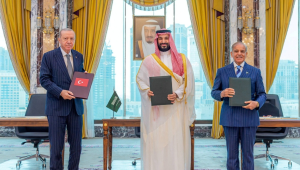
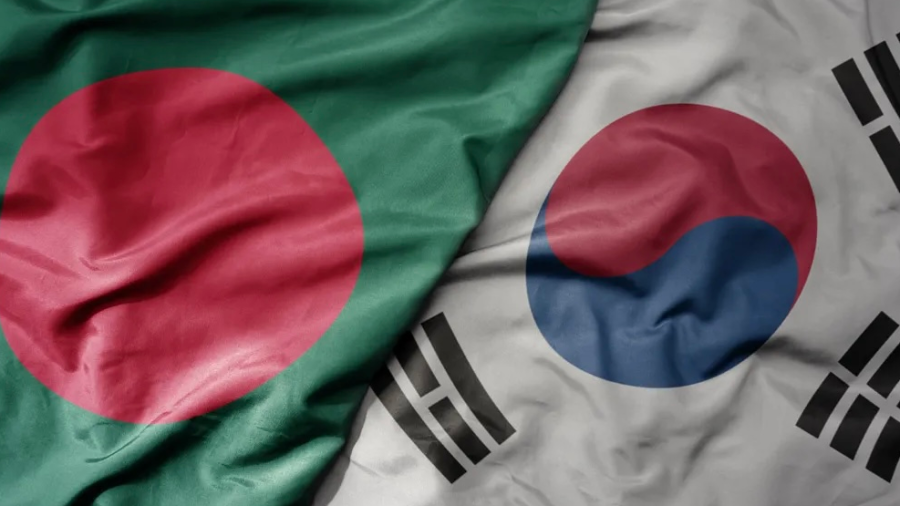

Korea and Bangladesh reached an agreement in principle on a comprehensive economic partnership agreement (CEPA), Seoul’s industry ministry said Seoul has signed a framework of CEPA. On the other hand, media in Bangladesh reported that the two countries have signed a CEPA on 4th August 2026. While similar trade agreements often take between 10 and 20 years to conclude, Bangladesh reportedly completed the negotiations within six months through continuous efforts. The copy of the agreement is yet to be published, and contraction remain until clarified by both countries.
This will be the third full-fledged trade agreement signed by Bangladesh with an Asian giant, following the Economic Partnership Agreement with Japan and the USA. The existing bilateral economic relations had traditionally centred on the textile sector but were now expanding into broader industrial cooperation and investment. Korean firms could establish manufacturing facilities in Bangladesh to serve both the Korean market and global export destinations.
As domestic resources alone will not be sufficient to achieve this target, attracting foreign investment is essential, and CEPA will facilitate FDI and technology transfer from Korea. The agreement would encourage Korean investment in high-value sectors such as semiconductors, information technology, shipbuilding, ship recycling and light engineering. Bangladesh’s demographic advantage, with the country’s large young workforce, makes it an attractive production base for Korean companies.
Bangladesh’s major exports to South Korea include ready-made garments, home textiles, leather products, footwear, pharmaceuticals, jute products, frozen foods, and ceramics. Imports from South Korea mainly consist of iron and steel, industrial machinery, electrical equipment, plastics, chemicals, and paper products. CEPA will create a wide framework, covering trade in goods and services, investment, rules of origin, customs procedures, sanitary and phytosanitary (SPS) measures, technical trade barriers (TBT), digital trade, intellectual property rights, and economic cooperation.
Country of origin criteria will be relaxed to allow Korean companies to receive tariff benefits even when using some materials procured overseas, but the report did not mention the origin criteria for Bangladesh export products. Bangladesh’s industry remains largely dependent on natural fibres, with a value-added ratio of approximately 30 percent. Shifting production from natural fibres to man-made fibres and functional materials remains the most effective way to increase value addition.

The CEPA also covers cooperation in infrastructure, manufacturing, textiles, halal industries, digital transformation, energy, supply chains and the clean economy. The agreement to facilitate technology transfer, promote the mobility of skilled professionals and strengthen investment cooperation. Greater collaboration in skills development, worker welfare and knowledge exchange will create lasting benefits for both countries. CEPA can accelerate Korean investment in renewable energy, digital transformation, infrastructure, shipbuilding and advanced manufacturing, while helping Bangladesh move further up the global value chain.
Bangladesh will open 95 services sub-sectors for South Korea, while South Korea will provide market access in 111 services sub-sectors across the four modes of supply for Bangladesh. At present, more than 4,000 Bangladeshi products receive duty-free access to South Korea under the Asia-Pacific Trade Agreement (APTA) and World Trade Organization provisions for least developed countries, covering around 95% of Bangladesh’s tariff lines. In return, Bangladesh will provide duty-free access to 1,054 South Korean products.
By eliminating tariff walls across key product lines – including ready-made garments, footwear, leather items, and light engineering goods – CEPA improves the price competitiveness of Bangladeshi merchandise, positioning local manufacturers as viable long-term supply partners for major South Korean retail brands. It will grant preferential tariff treatment to 97% of Bangladeshi exports, providing duty-free entry into South Korea’s high-value market, while granting 87% of South Korean goods similar access in Bangladesh. CEPA would play a vital role in supporting the country’s post-LDC trade transition while attracting greater foreign direct investment (FDI). Bangladesh’s export-oriented garment industry as European market tightens supply chain on the issues of due diligence, eco-design and carbon emission requirements. The transfer of technology and FDI from Korea shall support Bangladesh in complying with strict regulations of the Western market.



Bangladesh may take advantage of the Korean market; Bangladesh manufacturers must adapt to South Korea’s fast-moving consumer demands by prioritising fashion design, product quality, rapid lead times, and sustainable production processes. Furthermore, the ideal window to attract Korean Foreign Direct Investment (FDI) and integrate our manufacturers into global high-tech supply chains. There is considerable scope for Bangladesh to move up the value chain. Korea is globally competitive in man-made fibres (MMF) and functional and technical textiles, which aligns precisely with Bangladesh’s policy of increasing the share of MMF in garment production without high administrative costs. Services and digital trade are reportedly also substantive parts of the CEPA and could open doors for Bangladesh in areas like IT. IT-enabled services, professional services, and other knowledge-driven sectors. South Korean companies possess much greater technological skills and international experience in many advanced services. Bangladesh must therefore enhance its domestic capacity so its companies can take meaningful advantage of these new opportunities.
Bangladesh requires expertise in trade economics, international trade law, services, investment, customs, standards, rules of origin, and digital regulation. Effective coordination among the Ministry of Commerce, National Board of Revenue (NBR), Bangladesh Bank, Bangladesh Investment Development Authority (BIDA), standards bodies, and other relevant agencies will also be crucial.
Unlike a traditional Free Trade Agreement (FTA), which mainly focuses on eliminating tariffs on goods, CEPA covers a much wider range of areas, including services, investment, digital trade, intellectual property, customs cooperation, government procurement, competition policy and the movement of professionals, making it a deeper form of economic integration.
Bangladesh has demonstrated that it can negotiate new trade partnerships. But its next challenge is harder: ensuring that those agreements are supported by internal reforms and an increase in domestic productive capacity. The negotiations have effectively concluded, with both countries agreeing on the main content and only remaining technical matters left. Both nations plan to swiftly conclude consultations on remaining technical matters and pursue follow-up procedures necessary for the formal signing and entry into force of the agreement.
Realising the full commercial potential of CEPA will require domestic supply-side upgradation. The agreement is also expected to serve as a strategic milestone in helping Bangladesh maintain its global-trade competitiveness after it graduates from the least-developed country (LDC) status.
Bangladesh aims to become a $1 trillion economy by 2034, requiring an annual nominal GDP growth rate of around eight percent. The deal would support export diversification and enhance Bangladesh’s competitiveness in the global market.
The agreements with Japan and the USA show roadmaps for deeper economic integration and long-term prosperity. CEPA will presume to have the same commitment for Bangladesh. It must reform policies, strengthen institutional cooperation and create a business-friendly environment; the agreement can unlock new opportunities for investment, innovation and industrial growth. The reforms in domestic laws and regulations, as well as opening of the market, are a big challenge for Bangladesh due to strong resistance from bureaucracy and some other stakeholders.
To ensure transparency, the full text of the agreement will be made public so that businesses and other stakeholders can better understand its provisions and long-term benefits. The agreement will come into force after both countries complete their respective parliamentary procedures.
The views expressed in this article are solely those of the author
The writer is the CEO of Bangla Chemical and legal economist. E-mail: [email protected]