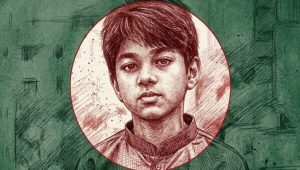
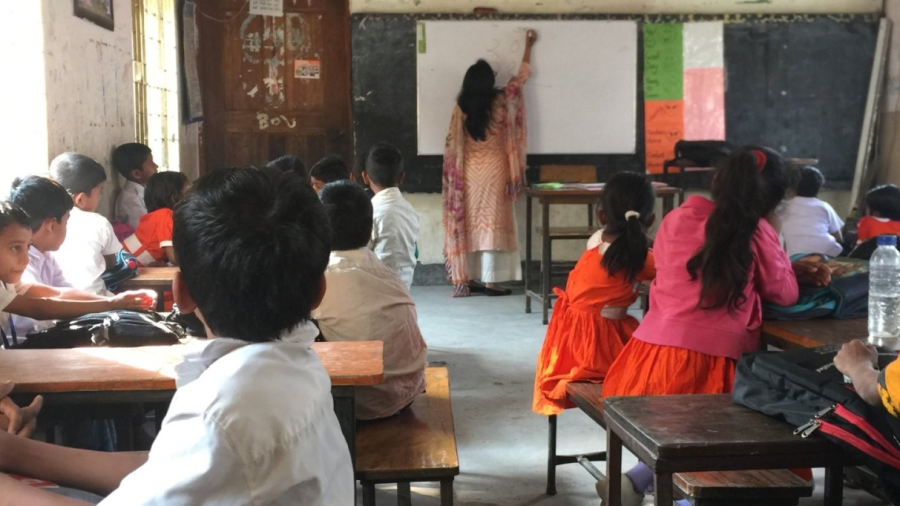

Education is the light that dispels darkness. It is an adornment, adding grace to a person’s identity and an elegance shaping human dignity. It is the key to opportunities for development and a better future, and without this being guaranteed, no amount of economic growth can be called truly inclusive or sustainable. Education is a basic right that every child must enjoy. Household income, gender, location or anything else should not be a barrier to deny a child’s chance to learn, grow and dream.
Over the past two decades, Bangladesh has made remarkable strides in its development journey. As per UNESCO, from 1990 to 2024, primary education completion increased from 34% to 90%, and lower secondary completion increased from 23% to 74%. These achievements reflect successful government initiatives, including free textbooks, stipend programmes, expanded school infrastructure, and campaigns to increase girls’ enrollment.
According to the Annual Primary School Statistics (APSS) 2024, there were 118,607 schools in Bangladesh. The net enrolment rate was 94.55 percent in 2024. However, enrolment alone does not guarantee literacy either. Many children do not stay in school long enough to acquire fundamental knowledge. Although estimates show primary school dropout rates are decreasing, from 39.8 percent in 2010 to 16.25 percent in 2024, this still means one in six children entering primary school never finishes, leaving a significant portion not completing the full primary education cycle. Data from the Bangladesh Bureau of Educational Information Statistics (BANBEIS) shows 21% of youth of upper secondary school age were dropouts in 2024, an alarming figure that’s hard to brush aside.
According to the Multiple Indicator Cluster Survey 2025, 83.7 percent of children complete primary school, but 69.3 percent at lower secondary levels and 43.9 percent at upper secondary. Only 21 percent of children from very impoverished families complete upper secondary schooling. The survey also showed a gap between urban and rural areas. Around 49 percent of students in urban areas complete upper secondary education compared to 42 percent in rural areas.

For many poor families, education is seen as a luxury. Many direct and indirect costs associated with education put impoverished families into dilemmas between sending a child to school and putting food on the table. In many such cases, families decide to pull their children out of school and set them to work on farms, in shops, garment factories, or in domestic settings to contribute to household income, to cope with rising costs of living. Such decisions by any family are not just a failure of that individual family, but of the entire country.
A 2026 report by the Bangladesh Bureau of Statistics shows child marriage remains the leading cause of female dropout (at 71%). Another group facing inequality in educational opportunities are children with disabilities. According to the UNICEF 2021 survey, over 60% of children with disabilities are not enrolled in any formal schooling. Even in primary education, 65% of disabled children attend primary school, compared to 95% of the general population. This may be due to shortages of trained teachers, insufficient learning materials, inaccessible infrastructure, and limited awareness about disability-inclusive teaching methods, combined with social stigma and negative attitudes toward disability, leading to low enrollment, high dropout rates, and poor learning outcomes among children with disabilities.


To address these issues, the government must take people’s rights to education seriously and plan coherent, realistic, evidence-based policies and initiatives. One practical approach can be expanding partnerships with global humanitarian organisations such as the United Nations International Children’s Emergency Fund (UNICEF) and United Nations Educational, Scientific and Cultural Organization (UNESCO). While these organisations already run successful initiatives in Bangladesh, such as UNICEF’s secondary school stipend programmes for girls covering 2+ million girls annually across 460 rural districts since 1994, the government should encourage and support them to bring in more programmes and models which have shown strong results elsewhere.
One of the untested models that can be promising if initiated in Bangladesh is UNICEF’s Cash-Plus initiative. It identifies the most vulnerable households, often those living in extreme poverty, conflict zones, or informal settlements, through detailed vulnerability assessment. Aimed at promoting children’s enrolment and retention in education, it combines cash assistance with a ‘plus’ package, meant to benefit all family members. Implemented in Yemen, after the first payment cycle, retention and attendance among beneficiary children improved sharply, with families reportedly being able to keep children in school instead of sending them to work.
Another such initiative that can be impactful in Bangladesh is the Accessible Digital Textbooks (ADT) initiative. Started in 2016 by UNICEF in partnership with OpenAI and governments, it uses AI-enabled tools to rapidly convert curriculum materials into accessible digital formats with text-to-speech, image descriptions, easy-read functions, and sign-language support. Primarily aimed at disabled children, ADT ensures that learning materials are designed to be inclusive and adaptable to the needs of all learners. Implemented in 11 countries, used by 200,000 students, improving access to high-quality learning materials for disabled children in formats that match diverse needs.
Education is the foundation of economic growth. Robbing the right to education from one child is a debt the whole nation eventually pays. Bangladesh must ensure the promise is made and kept for every child, with no exceptions.
The views expressed in this article are solely those of the author
The writer is a student at North South University. Email: [email protected]