
There has been a row involving three common phrases, Assalamu Alaikum, Inshallah, and Jazakallah, that has led to much bigger discussions about secularism, citizenship, and nationalism in modern-day India. Bushra Bano, an Indian police officer in the IPS cadre and Additional Superintendent of Police in Kharagpur, West Bengal, posted a video on September 13th, 2026, about her experience as an IPS officer and the importance of the Residential Coaching Academy at Aligarh Muslim University.
The Hindu Legal Fund lodged a complaint with the West Bengal Home Secretary regarding whether a serving officer should use such religious expressions and why she did not resort to expressions like ‘Jai Hind’ or ‘Vande Mataram’ instead. The next day, Bano was transferred from Kharagpur and was made the Deputy Commandant of the State Armed Police. Both the complaint and the transfer have been reported. Nevertheless, the state government has not officially proven that she was transferred because of her religious vocabulary. This is why the controversy matters, since it raises the following question: What does secular citizenship mean when a minority’s religious language becomes politically suspect, and the majority’s symbols increasingly align with nationalism?
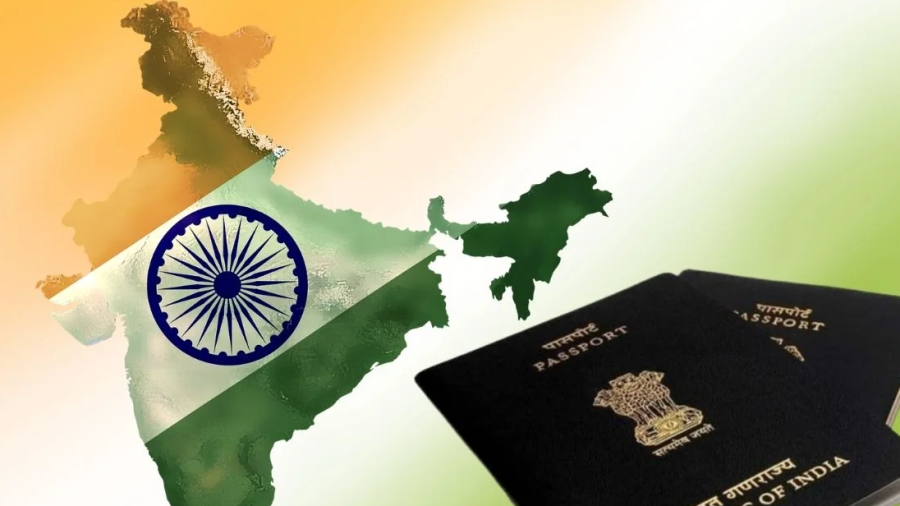
India’s constitutional identity is clear. The preamble declares India a ‘Sovereign Socialist Secular Democratic Republic.’ Furthermore, the Constitution guarantees equality before the law and freedom of conscience and religion. The Apex Court upheld in November 2024 the use of the terms ‘socialist’ and ‘secular’ in the Preamble and reiterated that the idea of secularism is an integral part of the Constitution of India and pointed out that the Constitution was ‘secular in spirit’ even before the insertion of the 42nd Amendment.
India’s problem, therefore, is not the absence of constitutional secularism. The deeper concern is the potential widening distance between constitutional principle and political practice. Constitutions cannot implement themselves. Political leaders, bureaucracies, police, courts, civil society and citizens transform constitutional principles into everyday reality. This produces a difficult democratic question: What happens when institutions charged with administering a secular republic operate within a political culture increasingly shaped by majoritarian definitions of nationhood?
An important distinction must be maintained between Hinduism and Hindutva. Hinduism is an ancient and extraordinarily diverse religious and philosophical tradition. Hindutva is a modern political ideology that conceptualises Indian national identity substantially through Hindu civilisation and culture. The Bharatiya Janata Party has longstanding ideological connections with the broader Hindu nationalist movement, within which the Rashtriya Swayamsevak Sangh occupies a central position. But this debate should never be reduced simplistically to ‘Hindus versus Muslims.’ Millions of Hindus remain committed to secular democracy, pluralism and minority rights. This deeper conflict is between constitutional citizenship and religious majoritarianism. Constitutional citizenship means that whether an Indian says Namaste, Assalamu Alaikum, Sat Sri Akal, Jai Hind, or just Good Morning, he or she remains an Indian citizen. Patriotism must not be dependent on any religious terms.
There could also be another, unwritten test, based on which nationalism of the majority could make it necessary for minorities to show their loyalty to India in terms of majority culture.
And this is why the Bano case is important because when Inshallah makes one suspect, but words associated with majority culture are taken as patriotic, then there will be an asymmetry of secularism. Secularism cannot mean that Muslims must become less visibly Muslim to prove that they are Indian.
No single administrative decision can define the experience of roughly 200 million Indian Muslims. The Bano controversy becomes more consequential, however, when placed alongside documented disputes involving citizenship, demolitions, vigilantism, hate speech and treatment of Bengali-speaking Muslims.

The Citizenship Amendment Act has been attacked for bringing religion into the expedited process of citizenship through which specific non-Muslim minorities from Afghanistan, Bangladesh and Pakistan become eligible. Proponents claim that it gives asylum to religiously persecuted minorities but does not take away citizenship from Indian Muslims. They see the inclusion of religious criteria in citizenship procedures as undermining equality in a secular state.
‘Bulldozer Justice’ is another matter of dispute that involves the demolition of houses and property due to charges of crime or communal unrest. The Supreme Court has stopped such demolition practices in 2024, whereas Human Rights Watch has found such demolitions being undertaken predominantly against Muslims. The attacks by cow vigilante groups have also been raised as a matter of human rights violations. Human Rights Watch found attacks carried out in 2024 in which a Muslim migrant labourer was killed in Haryana on the charge of consuming beef.
The concerns continued into 2025. Human Rights Watch reported that hundreds of Bengali-speaking Muslims were expelled toward Bangladesh without adequate due process and that some were Indian citizens. It also documented demolitions, expulsions and intensified anti-Muslim rhetoric following the deadly attack in Jammu and Kashmir. They vary significantly in jurisdiction, legal, and political responsibility. They cannot be taken for granted as instances of a centrally planned conspiracy. However, they pose an interesting question on whether all Indians have secular citizenship rights.
India understandably presents itself internationally as the world’s largest democracy and as a plural civilisation, where Hindus, Muslims, Sikhs, Christians, Buddhists, Jains, Jews and others coexist under one constitutional order. That image has genuine foundations. Indian Muslims have contributed profoundly to politics, public administration, the armed forces, judiciary, universities, science, literature, music, cinema, business and culture. Courts, journalists, academics, activists and civil-society organisations continue to challenge majoritarian excesses.
It would therefore be inaccurate to describe India simply as a country in which Muslims possess no rights.
But precisely because India claims the mantle of pluralistic democracy, treatment of minorities deserves scrutiny. A contradiction emerges when pluralism is celebrated internationally while domestic rhetoric sometimes depicts Muslims as ‘infiltrators,’ demographic threats, cultural outsiders or citizens whose patriotism requires repeated demonstration.



The Human Rights Watch 2026 report claims that there was an increase in the vilification of Muslims in 2025 and mentions some policies and practices of discrimination, hate speech, expulsion, and abuse committed against religious minorities. This is according to Human Rights Watch’s observations, while the Indian government and BJP reject claims of anti-minority governance. The fundamental question, then, is not whether secular institutions still exist in India they unquestionably do but whether secularism is applied symmetrically.
India’s increasingly visible strategic partnership with Israel introduces another controversial dimension. India established full diplomatic relations with Israel in 1992, while Narendra Modi’s 2017 visit, the first by an Indian prime minister, gave the relationship unprecedented political visibility. Cooperation has expanded across defence, security, technology, agriculture, trade and innovation. When talking to the Knesset on February 25, 2026, he referred to the Jews of Indian origin living in Israel and said that to them, “Israel was the fatherland while India was the motherland.” This is very critical because when Modi was referring to the fatherland here, he was referring to Indian Jews who have moved to Israel.
Nevertheless, the imagery has entered a broader political discussion. Critics of Hindu majoritarianism have drawn comparisons, not equivalence, between Israel’s treatment of Palestinians and pressures experienced by sections of India’s Muslim population.
Such comparisons require intellectual discipline. India is not Israel; Indian Muslims are not Palestinians; and the historical, territorial, constitutional and security circumstances are profoundly different. Nor does evidence establish that New Delhi has simply imported an Israeli blueprint for dealing with Indian Muslims.
Rather, the more legitimate question may be how two dissimilar political systems still manage to share some common tendencies towards majoritarian nationalism, in which the majority religion blends with national identity, making minorities prove their loyalty.
Constitutional distinction is especially important. Israel defines itself politically and legally as the nation-state of the Jewish people. India defines itself as a secular democratic republic. The mere fact that two countries collaborate in their foreign policy need not necessarily indicate that one is imitating the other ideologically. But democratic nations have the right to investigate whether ideas related to politics, security, and nationalism travel with strategic alliances.


In the end, the credibility of India’s secularism will depend on how it treats its own people, not on whom it associates with abroad.
The Bano controversy returns this debate to an elementary principle. Assalamu Alaikum means peace be upon you. Inshallah means God willing. Jazakallah conveys gratitude and blessing. None inherently repudiates India, Hinduism, Indian sovereignty, or the Constitution. Secular republics do not have to decide whether to use Assalamu Alaikum or Jai Hind, or to make Inshallah or Vande Mataram, to fight for the right to co-exist. These forms come from different languages and cultures, but all are compatible with the concept of Indian citizenship. Forcing a Muslim official working in the government service to refrain from any expression of his faith will not turn the state into a secular one; it will merely make the cultural preferences of the majority determine the criteria for neutrality and patriotism.
The point is very clear – when Namaste, Sat Sri Akal, Assalamu Alaikum, Jai Hind and Good Morning can all be said without affecting the opinion about the loyalty of the citizen, then everything is alright with secularism in India. When one of them raises suspicion, whereas the other automatically means patriotism, the problem does not lie in the phrases themselves.
Former Prime Minister Inder Kumar Gujral offered a warning that speaks directly to this debate. For Gujral, secularism was never simply a question of protecting Muslims or extending concessions to religious minorities. It was a principle of national cohesion, a constitutional necessity for holding together a civilisation of many religions, languages, cultures, and ways of life. When he became Prime Minister in 1997, he emphasised in Parliament that India’s diverse social fabric had to be preserved and that the traditions of secularism must be upheld.
He expressed the principle even more forcefully: “Indian unity can be sustained only based on secularism. Unless we remain secular, we will not be able to keep this nation together.” His warning is important because it shifts the debate away from the misleading notion that secularism is primarily a Muslim demand. In a multicultural India, secularism protects the republic itself. It assures Hindus, Muslims, Sikhs, Christians, Buddhists, Jains and others that none must surrender religious or cultural identity to qualify fully as Indian.
From Gujral’s perspective, the issue of Bushra Bano has raised a much bigger question beyond the fundamental right of one Muslim officer. When expressions tied to one religion begin to define citizens’ patriotism or their identity as members of the country, the larger issue becomes not only the protection of minorities but the very constitutional foundation of the country’s unity. What he saw as crucial to the Indian situation was that India does not grow stronger through cultural uniformity of its citizens but when great differences exist within equality.
India appears increasingly engaged in a contest between two conceptions of itself.
One is the republic of constitutional citizenship: secular, democratic, pluralistic and sufficiently confident to accommodate profound diversity. The latter is a majoritarian paradigm wherein Hindu civilisation becomes the key language of national identity, and minorities become citizens but might come under pressure to accept an implicit cultural stratification. The former says: Are you a citizen of India? The latter might say: Are you sufficiently Indian? This is the difference between the unconditional, constitutionally guaranteed right of citizenship and a belonging that must be proved all the time. Thus, the Bano incident goes way beyond the three religious manifestations.
A secular democratic polity cannot ask for religious neutrality exclusively from minorities while accommodating majoritarian religious-cultural symbols in nationalism. It certainly cannot claim to espouse pluralism internationally when its citizens face suspicion simply because they manifest parts of their religious identities. India’s Constitution still stands as a powerful shield against any such tendencies. The Supreme Court of India is still upholding secularism, while journalists, academics, lawyers, and countless citizens in India are fighting for the plurality of India. Therefore, the battle must not be seen as that of India versus Muslims or Hindus versus Muslims.
In the end, this is not only an issue for Muslims and Hindus, but also not just an issue of religion versus secularism. This is a debate about what India represents and what kind of republic it wants to remain. The real test of Indian democracy will be not in whether the minorities are just permitted to exist in the country, but whether they can belong in full, visible, and equal measure without having to renounce their difference.
The central issue, in any case, remains whether secularism will remain committed to protecting the constitutional right of every individual to be different, or whether being an Indian would come to depend increasingly on minorities’ willingness to be less different. It may well be true that the Constitution declares a republic to be secular, the courts uphold this ideal, and the government extols the value of pluralism to the world. Yet it is in the practice of secularism, in which a Muslim cop says Assalamu Alaikum, a Hindu cop says Namaste, a Sikh cop says Sat Sri Akal, a Christian cop invokes God, and an atheist cop invokes no God, and all of them know that the republic considers them to be equally Indian citizens.
This is not tolerance offered by a majority to a minority. This is the equality provided by the Constitution. This is not only recognition of diversity, but the democratic power India gains through diversity. This is not just protection for Indian Muslims, but it is the protection of the constitutional concept of India. For when democracy starts demanding that its citizens reduce themselves to prove their loyalty or get their place in the country, then what is at risk is not the rights of the minorities anymore. What is at risk is the equality of citizenship upon which the democratic republic stands.
Perhaps nothing could be a better reminder than the words of B. R. Ambedkar, the chief architect of the Indian Constitution. He said, “Constitutional morality is not a natural sentiment. It has to be cultivated.” The responsibility of India, thus, is to cultivate such a constitutional morality in such a way that diversity is never seen as disloyalty, difference never turns into patriotism, and no citizen ever feels the need to choose between faith and Indian identity.
So, we return to the questions that are not so easily answered: Is there a way in which India can continue to uphold the principle of secularism within the Constitution as majoritarian politics plays an increasing role in determining how minorities can identify themselves? Is it possible for India to uphold the principle of equality among all its citizens in such a way that some of its citizens must change who they are in order to be seen as part of India? Or, indeed, will India’s great diversity be its strength or its weakness?
The views expressed in this article are solely those of the author
The writer is a Professor and Former Chair, Department of Journalism and Mass Communications, Savannah State University. E-mail: [email protected]