


Despite boasting vast potential in natural beauty and archaeological heritage, Bangladesh’s international tourism earnings slumped by nearly $13 million in a single year as steep prices, limited recreational facilities, weak infrastructure, and safety concerns continue to deter global travellers.
Figures from the Asian Development Bank (ADB) reveal that Bangladesh generated $453 million from foreign visitors in 2023, falling to $440 million in 2024.
A critical concern for the sector is that service quality and the overall holiday experience have failed to keep pace with rising travel expenses, leading many locals and foreign visitors to consider travelling abroad far more convenient and value-packed than holidaying domestically.
The country’s global standing reflects these systemic struggles, with Bangladesh ranking 109th among 119 economies in the World Economic Forum’s Travel & Tourism Development Index 2024.
Trailing regional peers such as India, which ranked 39th, Sri Lanka at 76th and Pakistan at 101st, Bangladesh placed last among the 19 Asia-Pacific economies evaluated.
The index assesses price competitiveness, openness, air connectivity, infrastructure, safety, and cultural resources, areas where the nation continues to lag severely behind.

In stark contrast, Pakistan generated $1.15 billion from tourism in 2024, roughly 2.6 times Bangladesh’s earnings, while Sri Lanka pulled in $3.17 billion, or nearly seven times more.
Tourists and industry operators familiar with South and Southeast Asian destinations point out that travelling within Bangladesh is extraordinarily expensive.
Hotel and resort tariffs often reach double the rates of comparable regional spots. In countries like Nepal, Sri Lanka, India, and Thailand, comfortable three-star accommodation is readily available for Tk8,000-12,000, whereas similar lodgings in Bangladesh rarely cost under Tk20,000.




Domestic transit reflects a similar price hike: a brief 30- to-40-minute internal flight costs Tk4,000-6,000 compared to Tk2,000-3,000 across neighbouring borders, while long-distance air-conditioned bus tickets run up to Tk2,000 against Tk800-1,000 elsewhere.
Daily car rentals in Bhutan average Tk3,500-4,200, whereas a similar vehicle in Bangladesh commands at least Tk8,000-10,000.
Dining costs follow suit, with a simple restaurant meal for two often exceeding Tk1,000 in Dhaka, compared to just Tk812 (215 baht) for a family meal in Thailand.
Industry insiders attribute high hospitality rates to heavy import tariffs on construction materials and soaring land costs, though experts caution that seasonal price-gouging remains rife.
Mohammad Rafiuzzaman, former president of the Tour Operators Association of Bangladesh, said most construction equipment and materials must be imported. However, he said reasonable costs should be distinguished from unfair profit-making.
Around 80 to 90 lakh domestic tourists travel across the country annually, but experts note that operators frequently exploit peak-demand surges without enhancing amenities.
Samshad Nowreen, associate professor of tourism and hospitality management at Dhaka University, said businesses seek to maximise profits by taking advantage of surges in tourist demand during peak seasons.
Tour operator Akhtar Nur said weak government management, limited recreational facilities and unplanned development are among the sector’s key problems.
Academic and international bodies, including the International Labour Organization (ILO), have cited inadequate infrastructure, airport harassment, security deficiencies, hygiene concerns, and a dearth of trained guides as primary deterrents for foreign visitors.
Bangladesh Tourism Board CEO Nuzhat Yasmin admitted destinations suffer from a total lack of capacity planning, leaving popular spots overcrowded while others lie underutilised. She added that food and lodging remain overpriced despite poor facilities and crumbling roads.
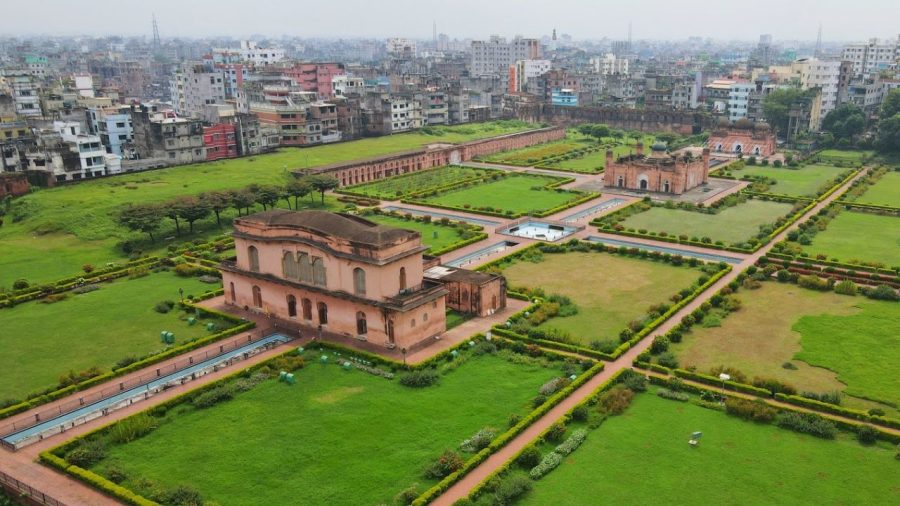
Furthermore, while the Department of Archaeology lists 536 protected antiquities, only 31 sites and museums are actively managed and open to visitors, with Unesco highlighting major shortcomings in heritage conservation and site management.
Addressing these management and infrastructure gaps remains crucial if the nation is to unlock its broader appeal.
The government’s Tourism Master Plan 2023-2047 has identified 255 prime potential destinations across 11 distinct clusters, ranging from eco-tourism and beach resorts to riverine cruises and archaeological circuits, alongside a broader inventory of 1,498 nationwide attractions.
Industry leaders stress that the immediate challenge for Bangladesh is not merely attracting visitors, but transforming this sprawling potential into accessible, well-regulated, and reasonably priced experiences through targeted investment and comprehensive planning.