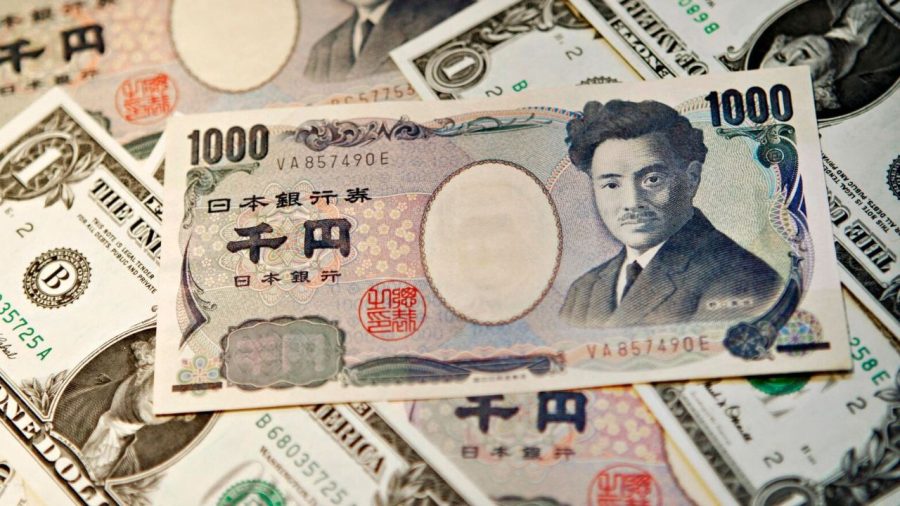



Japan has been Bangladesh’s development partner for decades. After the World Bank and the Asian Development Bank (ADB), it is the country’s largest source of foreign loans.
Since independence, Bangladesh has preferred Japanese financing for its relatively low interest rates, long repayment periods and flexible conditions. But rising interest rates, escalating project costs and stricter loan conditions have forced policymakers to reassess their reliance on Japanese loans.
Sources said concerns were raised at the latest meeting of the Executive Committee of the National Economic Council (Ecnec) after the costs of two metro rail projects financed by Japan nearly doubled. The government has decided to scrutinise Japanese loan conditions more carefully before accepting future financing.
At a briefing after the Ecnec meeting, Planning State Minister Zonayed Abdur Rahim Saki pointed to several limitations of Japanese financing.
“Jica follows its own standards. Their contractors come from Japan and the required products are also sourced from Japan. Their tenders include provisions for using Jica vendors and products. There is no scope to do anything outside this arrangement,” he said.
The state minister added that project costs are often lower under loans from other development partners compared with Jica financing.
Planning Commission data shows a significant cost gap between Japan-funded and other donor-funded metro projects. The per-kilometre cost of the Japan-funded northern route of MRT Line-5 is around 70 per cent higher than the southern route, which is being jointly financed by ADB and South Korea.
The 20-kilometre MRT Line-5 northern route from Hemayetpur to Bhatara has an estimated cost of Tk89,848.36 crore. Of the route, 13.50 kilometres will be underground and 6.50 kilometres will be elevated, meaning 67.50 per cent of the line will run underground.
The average cost stands at around Tk4,492 crore per kilometre.
In comparison, the 17.20-kilometre MRT Line-5 southern route from Gabtoli to Dasherkandi has an estimated cost of Tk45,503.77 crore. The route includes 13.10 kilometres of underground track and 4.10 kilometres of elevated sections, with 76.16 per cent of the route underground.

Despite having a larger underground portion, the southern route costs around Tk2,646 crore per kilometre — about Tk1,846 crore less than the northern route.
The rising cost of Japanese loans has also become a major concern for policymakers.
Economic Relations Division (ERD) data shows that interest rates on seven loan agreements signed with Japan in 2020 stood at 0.6 per cent. The rate increased to 0.7 per cent in 2022, 1.2 per cent in 2023, 1.7 per cent in 2024 and 2 per cent in 2025.
In June this year, the interest rate on a $314 million budget-support loan from Japan was 3.05 per cent.
ERD fears the rate could rise further to 3.5 per cent during the next review in October.
Officials said Bangladesh held several discussions with Japan to reduce the interest rate, but those efforts have not produced results.
A senior ERD official, speaking on condition of anonymity, told TIMES that talks with Japan on lowering interest rates have continued for a long time.




“Japan has so far not agreed to reduce the interest rate. The rate will be reviewed in October, and it may increase further. However, a review does not necessarily mean that the rate will rise. Recent trends indicate an upward movement,” he said.
The official said Bangladesh is closely monitoring changes in Japanese government policy and preparing strategies accordingly. A visit by the prime minister to Japan is expected in the coming months, where the issue may also be discussed.
He said Japan was once Bangladesh’s “fast and best choice” for development financing, but that position has changed.
“Japan is also aware of this matter,” he said.
Another ERD official said Japanese loans still offer some advantages despite higher interest rates.
“Although loans from some other development partners are available at comparatively lower interest rates, shorter repayment periods often create pressure for faster repayment,” he said.
He added that Japanese loans offer longer repayment periods, reducing repayment pressure. Through Japan’s debt relief fund, Bangladesh also has the opportunity to use funds in other projects instead of paying a portion of the interest, he said.
Mohammad Rajibul Islam, joint secretary of ERD’s Japan wing, told TIMES, “Discussions with Japan on reducing loan interest rates are continuing. We are regularly monitoring their overall policies.”
However, he declined to make any further comment.
Japan’s role in Bangladesh’s development financing remains significant. According to ERD’s Foreign Aid and Financial Resources data, Bangladesh’s outstanding foreign debt stood at $77.28 billion as of 30 June 2025. Japan accounted for around 18 per cent of the total.
The World Bank’s International Development Association (IDA) was the largest source of foreign loans, accounting for around 29 per cent, followed by ADB with 23 per cent and Japan with 18 per cent. Russia accounted for 11 per cent, China 7 per cent and India 2 per cent.
Until the 2024-25 fiscal year, Bangladesh had borrowed around $24 billion from Japan. Of this, around $20 billion was taken for development projects.
As of 30 June 2025, Bangladesh’s outstanding debt to Japan stood at around $13.73 billion.
Japan International Cooperation Agency (Jica) financing supports several major projects in Bangladesh’s transport, power and infrastructure sectors. These include Dhaka’s first metro rail, MRT Line-6, the country’s first underground metro rail, MRT Line-1, and the proposed MRT Line-5 northern route.
Japan is also the main financier of Hazrat Shahjalal International Airport’s third terminal, the dedicated rail bridge over the Jamuna River, the Matarbari Ultra Super Critical Coal-Fired Power Plant, the country’s first Matarbari deep-sea port and the Japanese Economic Zone in Araihazar, Narayanganj.
Interest rates of other lenders
ERD officials said World Bank IDA loans currently carry an interest rate of 1.25 per cent, with an additional 0.75 per cent service charge, bringing the total cost to around 2 per cent.
The repayment period is 25 years, including a five-year grace period. However, loans taken from the World Bank under harder terms can carry interest rates above 4 per cent.
Bangladesh takes ADB loans at around 2 per cent interest, repayable over 20 years with a five-year grace period. Under harder terms, ADB loans can also carry interest rates above 4 per cent.
Chinese loans generally carry interest rates between 2 per cent and 2.25 per cent, but their repayment period is shorter, at around 15 years.
‘The choice is ours’
Mustafa K Mujeri, former director general of the Bangladesh Institute of Development Studies (BIDS) and former chief economist of Bangladesh Bank, said Bangladesh can no longer expect loans with the same easy terms and low interest rates as before.
“Due to changes in the global situation, interest rates and conditions of loans from development partners are becoming tougher,” he said.
Mujeri said Japanese loans come with conditions requiring the use of Japanese contractors and products, limiting opportunities for open competition in selecting contractors and suppliers.
“However, China and other countries are also providing loans with similar conditions,” he said.
“Those who provide loans will look after the interests of their own countries. You have to look after your own interests,” Mujeri said.
He said Bangladesh must secure the most favourable terms while negotiating loans.
“The choice is ours,” he said.
Referring to the possibility of taking loans from other countries instead of Japan, Mujeri said similar conditions may exist there as well.
“Therefore, within reality, we have to secure the best deal in the interest of the country. For this, our own interests must get priority during negotiations,” he said.