


US forces are set to leave their remaining bases in Iraq by today, ending a more than two-decade military presence that cost the lives of thousands of Americans and reshaped Iraq’s political and security landscape.
The withdrawal, agreed in 2024 under then-president Joe Biden and implemented by President Donald Trump’s administration, is being celebrated by Iran and its allies as a victory. Iraqi security officials and analysts, however, warn that the departure could strengthen Iran-backed armed groups and create opportunities for Islamic State to rebuild its capabilities, report agencies.
“Iran stands to benefit strategically from the coalition’s departure because it removes a military presence that for years acted as a counterweight to Tehran’s influence in Iraq,” said Jasim al-Bahadli, an Iraqi security analyst who studies Iran-aligned Shiite armed groups.
He said pro-Iranian militias were likely to portray the withdrawal as a victory and seek greater influence over security and political decision-making.
Abu Mojtaba al-Yasiri, a commander in the Islamic Resistance in Iraq, an umbrella group of Iran-backed factions, described the US departure as a “historic victory” for Iraqi resistance groups.
The withdrawal is broadly popular among Iraqis who view the end of the foreign military presence as an important step towards full sovereignty. But some security figures fear Iraqi forces may not yet be prepared to operate without the support of the US-led coalition.

“We believe Iraq is still not fully ready to take over the security file at this time,” said Abdulrahman al-Zobaie, a Sunni tribal leader from Fallujah.
“All Iraqis aspire to full sovereignty, and no Iraqi would dispute that. But I believe that the coalition leaving in this way and creating a vacuum is what all Iraqis fear,” he said.
Two decades of US military presence
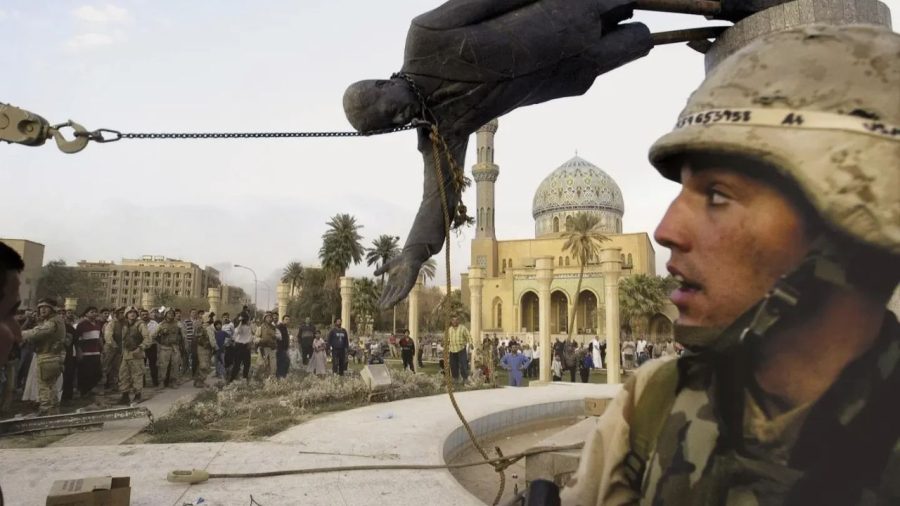
The United States invaded Iraq in 2003 to overthrow Saddam Hussein’s government. American forces subsequently occupied the country, helped establish a new political order and fought a prolonged insurgency before withdrawing in 2011.
They returned less than three years later as part of an international coalition supporting Iraqi forces against Islamic State, which seized large parts of Iraq and Syria in 2014.


The group was eventually driven from its territorial strongholds, but Iraqi and Kurdish security officials say it retains sleeper cells capable of carrying out attacks.
Iraq has remained unusual in the region for maintaining close political and security relationships with both Washington and Tehran. Iraqi territory has at times also become a battleground in the US-Iran confrontation.
The United States killed senior Iranian commander Qasem Soleimani in a drone strike near Baghdad airport in 2020. Iran-aligned groups subsequently carried out repeated attacks against US positions in Iraq, prompting American retaliatory strikes.
Iran welcomes withdrawal
Tehran has welcomed the US departure, describing it as a step towards ending the American military presence in the Middle East.
Amir Hayat Moqaddam, deputy chairman of Iran’s parliamentary National Security Commission, said lasting security would prevail in Iraq once US forces leave.
Iran “welcomes the withdrawal of American troops from Iraq and will undoubtedly support it,” he told Iran’s parliamentary news service.
Washington has accused Iran-backed Iraqi militias of contributing to the wider regional conflict by launching attacks against US allies and other targets. Baghdad has said it is working to limit the influence of armed groups operating outside the state’s security structure.
Concerns over Islamic State
Iraqi security officials, including those in the autonomous Kurdish region, are also concerned that the US withdrawal could provide Islamic State with an opportunity to rebuild.
At its height, Islamic State controlled roughly a third of Iraq and killed thousands of people. Although its territorial control was dismantled nearly a decade ago, its sleeper networks remain active.
Kurdish commander Sirwan Barzani said security forces had recently detected increased movement by Islamic State sleeper cells.
“For more than two weeks, we have noticed movement by Islamic State sleeper cells,” he said, adding that news of the coalition’s impending withdrawal had boosted the militants’ morale.
Iraqi security forces have also said they uncovered a suspected Islamic State plot to carry out suicide attacks around the time of the US departure.
Colonel Khalid al-Bayati, a senior security official in Kirkuk, said the group was seeking to demonstrate that it remained capable of carrying out major attacks.
The end of the US military presence therefore marks a significant change in Iraq’s security environment, with Baghdad facing the challenge of maintaining sovereignty while balancing relations with Washington, Tehran and powerful armed groups operating within the country.