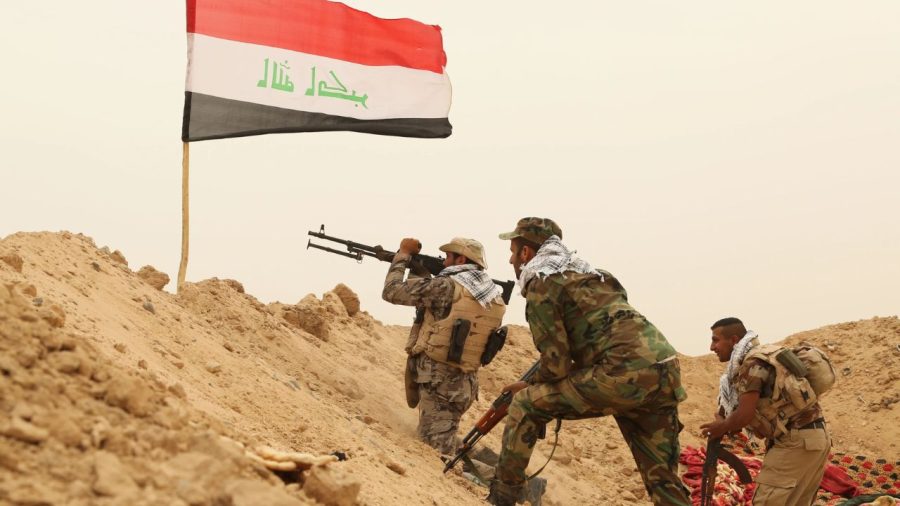

The last remaining American troops are due to leave Iraq by 30 September, closing out a military presence spanning more than two decades, even as powerful Iranian-backed militias make clear they will not surrender their weapons by the same date.
The withdrawal, agreed between Washington and Baghdad in 2024, coincides with a government ultimatum demanding armed factions disarm, but most groups have given no indication they intend to comply, leaving deep uncertainty over Iraq’s security landscape once foreign forces depart, reports AP.
Hundreds of US personnel still stationed in the northern Kurdish region will be redeployed to Jordan and elsewhere in the region, according to a US military official speaking anonymously, with air defence equipment also being withdrawn. Talks on a fresh bilateral security arrangement with Baghdad could follow, though its shape remains unclear.
American forces first entered Iraq in 2003 to remove Saddam Hussein, leaving in 2011 before returning three years later at Baghdad’s request to combat the Islamic State group, which had overrun large parts of the country.

With the jihadist network now reduced to isolated cells, Washington and Baghdad agreed to wind down the mission, with most bases vacated last year except in the Kurdish north.
The official said the counterterrorism base at Irbil had lost strategic value as the Islamic State threat diminished. Although northern Iraq was rarely used as a staging ground during the recent war between the US and Iran, forces there were repeatedly targeted by Tehran and its allied militias, meaning withdrawal would lower the risk to American personnel.



Washington nonetheless remains wary of the militias’ capacity to strike elsewhere in the region, including Saudi Arabia, Jordan and Israel, and of a Houthi presence inside Iraq. The US has previously bombed militia positions in retaliation for attacks and imposed sanctions, with further measures possible.
Since Israel and the United States struck Iran in late February, Iranian-backed factions have hit US-linked sites both within Iraq and beyond, while also cooperating with Yemen’s Houthi movement in assaults on Saudi Arabia. Analysts say Tehran is unlikely to relinquish this leverage while its confrontation with Washington continues.
Iraqi officials have been inconsistent about whether the end of September represents a firm disarmament deadline or merely a starting point for talks. Analyst Sajad Jiyad told an Atlantic Council event that no group would be disarmed by that date.
The most formidable Iran-aligned factions — Kataib Hezbollah, Harakat al-Nujaba and Kataib Sayyid al-Shuhada — have rejected the idea outright or attached conditions Baghdad is unlikely to satisfy soon, including placing Kurdish peshmerga forces under federal command and expelling exiled Iranian Kurdish groups and the Kurdistan Workers’ Party from the region.
A militia official said talks would centre on regulating arms rather than giving them up, insisting no weapons had been surrendered. A government source said Baghdad’s approach instead focuses on folding armed groups into the Popular Mobilisation Forces, a state-sanctioned umbrella body, and handing its central command heavier weaponry such as missiles and long-range drones. Government spokesman Sabah al-Numan said the matter would be settled once coalition forces had withdrawn.
For Kurdish authorities, the pullout brings fresh anxiety. Analyst Mohammed Salih noted that Iranian-linked attacks have previously hit targets unconnected to US forces, including dissident bases, energy infrastructure and the Kurdish premier’s office, warning the region would become more exposed.
Regional leader Masrour Barzani has voiced concern over losing US air defence cover. Numan said Baghdad was close to acquiring new air defence systems from South Korea, Turkey and the United States to protect Iraqi airspace, including Kurdistan.