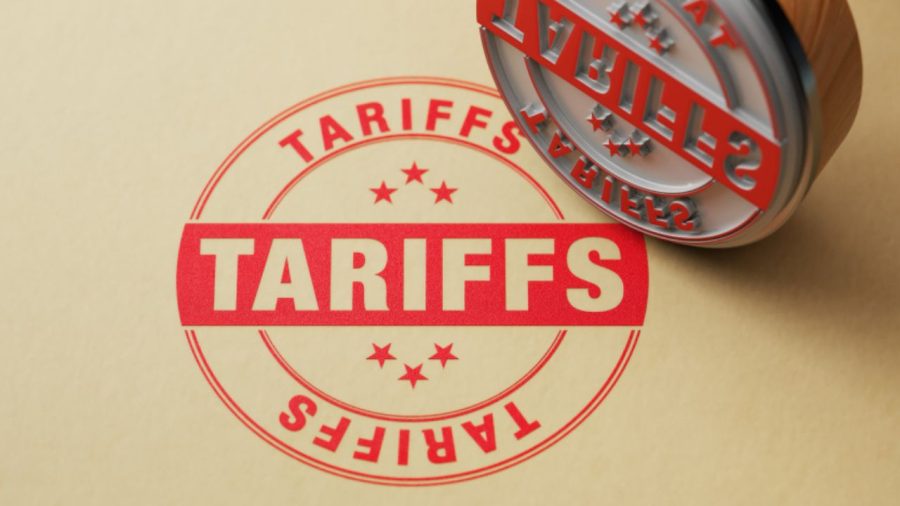

The United States House of Representatives has approved legislation authorizing President Donald Trump to levy tariffs of up to 100 per cent on nations purchasing Russian energy, placing India’s affordable oil imports and key export industries under severe geopolitical strain.
While affected countries typically receive 180 days to cut Russian oil purchases or negotiate with Washington, the US president retains the power to shorten this timeline.
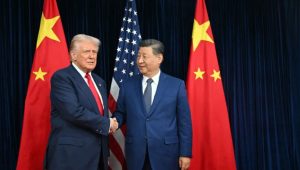
Following the vote, Democratic Senator Richard Blumenthal issued a direct warning to New Delhi and Beijing to source their oil and gas elsewhere.
Over the past four years, India has relied on discounted Russian crude to lower national energy costs, with Russia supplying 30.3 per cent of India’s crude imports in fiscal 2026, valued at $40.8 billion out of a total $134.7 billion import bill, reports BBC.
In July, Russian crude accounted for more than half of India’s total oil imports, exceeding the combined supplies of its next six largest sources, including the United Arab Emirates, Saudi Arabia, Venezuela, Brazil, Oman, and the United States. Data from the Centre for Research on Energy and Clean Air (CREA) shows that India absorbed 37 per cent of Russia’s crude exports between December 2022 and August 2026, second only to China’s 50 per cent share.

Responding to the legislation, India stated that it is actively monitoring developments and remains committed to guaranteeing energy security for its 1.4 billion citizens.
New Delhi noted that it has raised the issue with high-level US interlocutors in recent months, emphasizing the potential fallout for bilateral relations and global energy markets.
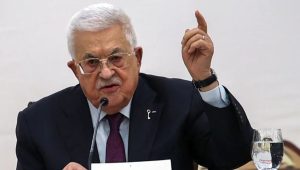
Ajay Srivastava, a former Indian trade official heading the Global Trade Research Initiative (GTRI), described the bill as a blunt attempt to pressure New Delhi into accepting a one-sided bilateral trade agreement.



Srivastava emphasized that India purchases Russian crude to secure affordable fuel rather than to fund conflict, noting that these purchases have helped stabilize global oil supplies and prices.
The proposed US measure targets Indian merchandise exports to the United States rather than placing a direct levy on crude entering Indian ports.
Consequently, the economic impact would ripple across Indian exporters, the rupee, refinery margins, and the national trade balance.
Michael Kugelman of the Atlantic Council warned that the bill could cause major disruption for India amidst sensitive final-stage bilateral trade talks.
Although India exported approximately $104 billion in goods to the US in 2025, including $25.8 billion in electrical equipment, $9.7 billion in pharmaceuticals, and $7.2 billion in machinery, a 100 per cent tariff threat poses severe risks despite India’s recent trade deals with the EU and expanded trade with China.
The strategic dilemma is further complicated by India’s refining sector, which turns Russian crude into refined fuels for export. In August, Indian refineries supplied approximately 120,000 tonnes, roughly 70 per cent, of Russia’s record 172,000 tonnes of fuel imports, primarily petrol refined from Russian crude at a Gujarat facility worth around €78 million.
While the Council on Energy, Environment and Water (CEEW) estimates that India has saved about $12.6 billion since 2022 by shifting to Russian crude, steep discounts have narrowed as competition, freight, insurance, and sanctions risks have increased. S&P Global noted that replacing Russian crude at scale would force India to bear higher crude, freight, and insurance costs alongside longer shipping routes.
India’s underlying energy framework remains highly vulnerable, as the nation imports over 88 per cent of its crude oil and over 60 per cent of its LPG cooking gas for 330 million households. Furthermore, India’s strategic petroleum reserves hold only 9 to 10 days of net oil imports, alongside 64 days of operational refinery stocks.
Comparing India to China, Kugelman noted that Beijing possesses greater leverage over global supply chains, making Washington view its own economy as less exposed to Indian retaliation than Chinese counter-measures.
GTRI’s Srivastava cautioned that Washington may use the tariff threat to extract unilateral concessions, advising New Delhi to maintain Russian oil purchases if they remain commercially viable while negotiating firmly with the US.