


The oceans are at the heart of the strategic, economic and environmental future of the 21st century. In the era of the great game, competition is increasing, and maritime affairs are viewed through the lens of naval power, military deployments and strategic rivalry in the Indo-Pacific region. But there’s more to that seascape than just the quality and quantity of ships. The future of the oceans will be shaped not only by successful warships but also by governance, institutional functioning, environmental sustainability and cooperation between coastal and maritime states.
This is an important moment to envision a new governance for Bangladesh and the entire Bay of Bengal basin. The challenge is to move beyond a security-centred approach and create a comprehensive maritime strategy that connects national interests to a regional peaceful order, sustainable development and international cooperation.
Strength, deterrence and defence of national maritime interests have been the essence of traditional maritime strategy. These remain crucial tasks, especially in times of strategic competition. Today, however, maritime security has expanded and become more comprehensive, covering illegal, unreported and unregulated fishing, human trafficking, maritime pollution, piracy, climate-related disasters, cyber threats and disruptions to global supply chains.
The study of maritime security in Bangladesh has highlighted the significance of non-traditional threats alongside traditional security threats. Coordinated, integrated policymaking is crucial because multiple institutions and stakeholders are involved in the country’s maritime governance challenges.

No single navy can solve all maritime problems. Navies can contribute to surveillance, deterrence, SAR and HADR, and play an important role in supporting capable civilian institutions, legal frameworks, scientific knowledge and regional cooperation, crucial to the effective governance of the maritime domain. Maritime governance is therefore a coordinated process of governing maritime space, resources and activities through national institutions, international law and collaborative mechanisms. It is not just about protecting territorial waters; it is about keeping oceans safe, sustainable and free for legitimate economic and social uses.
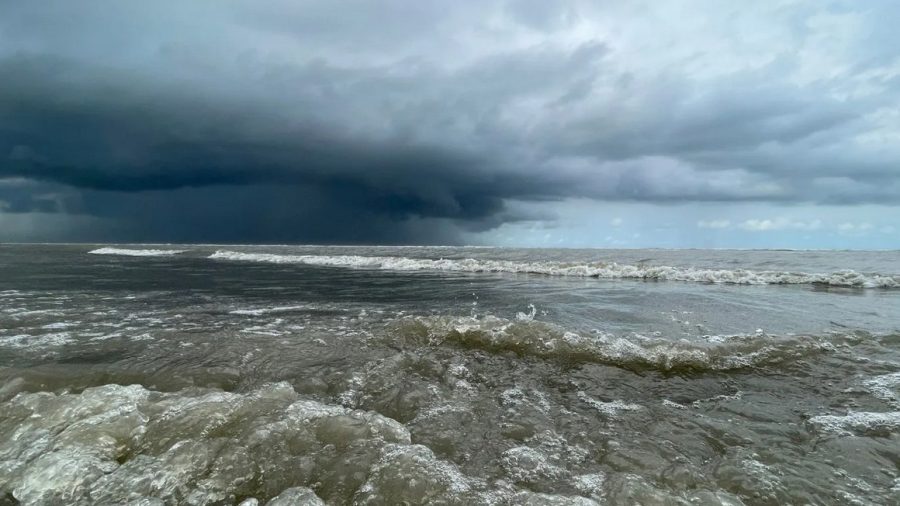
The Bay of Bengal illustrates the need to go beyond the military framework of maritime governance. The region is strategically important because it links South Asia to Southeast Asia and serves as a key trade and energy corridor. At the same time, environmental degradation, marine pollution, illegal fishing, coastal erosion and the ordeals of climate change are threatening it.
The Bay of Bengal offers Bangladesh opportunities for its economy and security. The blue economy can contribute to national development through fisheries, maritime trade, port development, offshore resources, marine tourism and beyond. But opportunities can only be realised through sustainable management of resources and strengthening environmental protection and effective regulatory institutions.




Therefore, Bangladesh needs an integrated maritime governance system that can converge national security, economic planning, environmental management, scientific research and international cooperation. This would help prevent institutional fragmentation and ensure maritime development in the national interest.
International law also plays a key role in governing the sea. The United Nations Convention on the Law of the Sea (UNCLOS) is a comprehensive set of laws that define the rights and responsibilities of people who use the sea, its resources, and its navigation, as well as how disputes over the sea are settled peacefully. Smaller maritime states must be familiar with international law. Legal structures can be used to assert sovereign rights, reduce uncertainty and provide a means of resolving disputes. The maritime boundary delimitation experience in Bangladesh illustrates the importance of legal processes in addressing maritime entitlements and facilitating resource development.
But agreements alone do not guarantee good governance. States must also create institutions that can enforce maritime laws, monitor marine operations, and act when those laws are infringed. Required investments include maritime law enforcement, hydrographic surveys, marine research, environmental monitoring and professional training.
Strategic competition for power is growing in the Indo-Pacific, while the region also faces common maritime challenges that only the region can solve. Climate change, marine pollution, illegal fishing, natural disasters and maritime crime often transgress nation-states. Regional cooperation should focus on practical areas such as information sharing, maritime domain awareness, search and rescue, disaster response, marine scientific research and environmental protection. Dialogue and cooperation platforms, such as BIMSTEC and the Indian Ocean Rim Association, can help, but their effectiveness will depend on political will, institutional coordination and implementation.
Cooperative maritime governance could be a significant development in the Bay of Bengal. Concern is shared about the region on maritime safety, marine ecosystem conservation and sustainable economic activities among Bangladesh, India, Myanmar and other countries in the region. This kind of co-operation does not imply loss of national security interests for the countries. It may, however, strengthen national capacities, overcome misunderstandings, foster trust and reduce common risks.
Naval power is not the only measure of the future of maritime security. Power and capability at sea are important in a nation’s defence and strategic deterrence, but overall maritime security and the environment are equally dependent on the law and legal frameworks, institutions, economic sustainability, environmental protection and regional cooperation. The Bay of Bengal is a great opportunity for Bangladesh, as well as a strategic responsibility. An integrated governance approach can help protect the nation’s maritime interests, foster its blue economy and promote regional peace and security.
The primary objective should be to create a secure maritime order – but not a militarised one. An economically productive maritime order but not an environmentally corrosive one. A strategically capable maritime order – but not one where cooperation has been lost. Maritime capability is defined as having ships as well as being able to use the sea responsibly, protecting marine resources, respecting international law and working with neighbours, and that is how maritime strength will be measured in the 21st Century. The bigger challenge than naval power is building a sustainable and peaceful maritime future.
The views expressed in this article are solely those of the author
The writer is a Professor, Department of International Relations, University of Chittagong, Bangladesh. Director, Hong Kong Research Center for Asian Studies-Bangladesh Center (RCASBC). Email: [email protected]