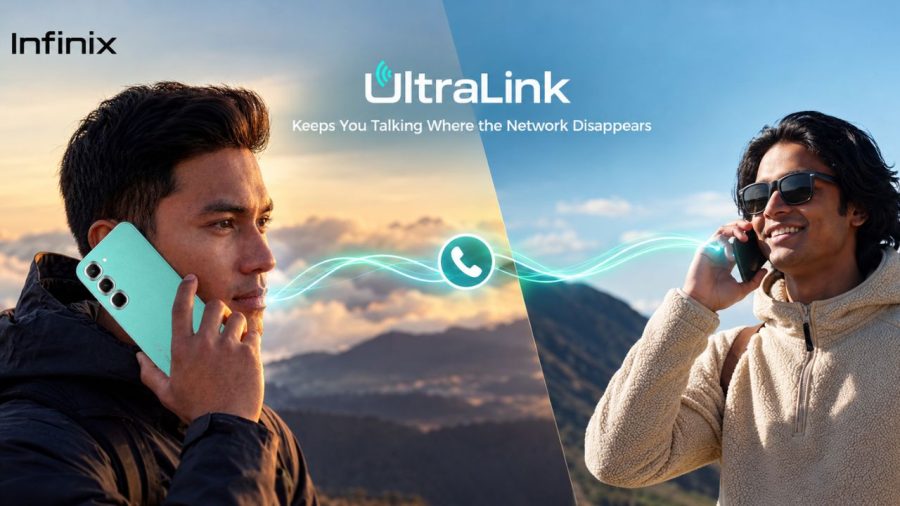



Infinix’s UltraLink allows compatible phones to communicate directly with each other without relying on a mobile tower. The feature requires neither a SIM signal nor a data connection. Two UltraLink-enabled devices establish a direct phone-to-phone connection, creating a link that exists independently of cellular infrastructure, said a press release on Monday.
How the connection works
The technology is designed for situations where conventional network coverage is limited or unavailable. Rather than waiting for a mobile network to become available, supported devices establish their own direct link within the feature’s available range. The connection is between two compatible devices rather than through any intermediary infrastructure.
Tested range and its limits
According to Infinix’s in-house lab testing, HOT 70 Pro 5G achieved a maximum tested UltraLink range of 1.5 kilometres. That figure was recorded in an open environment with a clear line of sight between the devices.

Infinix, however, states that actual range may vary depending on the surroundings and other conditions.




What the link carries
UltraLink supports three functions between compatible devices:
- Voice calls
- Text messaging
- Image transfer
The image transfer capability allows users to share photographs directly between devices without going through a messaging app, cloud service or data connection.
Where it is intended to be used
Infinix identifies several scenarios where UltraLink may be useful. Trekkers moving through areas beyond conventional coverage can maintain contact. Travellers exploring unfamiliar places can stay in touch when signals drop. Friends and family members moving in different directions can use a direct connection between compatible devices rather than waiting for network coverage to return, said the press release.
UltraLink is available across three model ranges: HOT 70, NOTE 60 and Smart 20 series.
What UltraLink is not
Infinix in the press release said the feature is not positioned as a replacement for cellular networks. It addresses a specific gap- moments when coverage is out of reach but users are still relatively close to each other. For situations where coverage drops away, it provides an alternative way to stay connected.