


The greatest deliverable of the 18th BRICS Summit in New Delhi was not any one declaration, speech or bilateral meeting, but the overall message regarding the shift in world politics. The summit indicated that the international system is entering a new stage, where no power centre can dictate global rules as conclusively as it was previously. It also demonstrated, however, that the emergence of various power centres does not necessarily form a coherent alternative world order. Rather, the new order seems multipolar and more institutionally fragmented.
New Delhi Declaration denounced unilateral sanctions and trade embargoes, reforms in international institutions and demanded representative status of developing nations in global governance. It promoted broader use of national currencies, enhanced cross-border payment systems, and an increased role of the New Development Bank. Indian Prime Minister Narendra Modi emphasised that BRICS is not directed at anyone and said that the Global South must no longer be a rule-taker but a rule-maker.
However, the Middle East conflict was addressed significantly at the summit. Instead of making a single demand for an immediate regional ceasefire, BRICS made a call for maximum restraint, focusing on dialogue, diplomacy, civilian protection, and upholding humanitarian values. In the case of Gaza, however, the declaration took a more definite stance, in favour of the ceasefire remaining, humanitarian aid being free and without any restrictions, and in favour of the forced displacement of Palestinians.

This variation of phraseology indicated the variety of interests BRICS itself has. Directly concerned with the tensions in the region is Iran, whereas Saudi Arabia and the UAE have varying security concerns and agendas with the United States. India is trying to negotiate its relations with the United States, Russia, Iran, Israel, and Gulf countries at the same time. Meanwhile, China and Russia tend to advocate stronger opposition to Western hegemony in international affairs. In such a case, a highly unbalanced statement would have probably divided the group. Given the past differences that made the BRICS foreign ministers fail to agree on a unanimous declaration on Iran, coming to a consensus during the New Delhi Summit was a diplomatic win.
Thus, BRICS cannot be considered an anti-Western military or political bloc. It doesn’t have any collective defence pledge like NATO. It lacks supranational powers like the European Union. Neither do its members share a common foreign policy. India seeks strategic autonomy, China seeks more influence in the world, Russia seeks to be less reliant on Western financial systems, and Iran seeks to be less isolated economically exist on the same platform, but each goal is not the same.




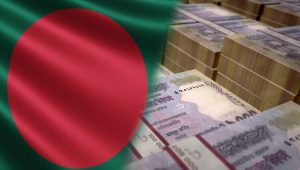
This is why the idea of having a BRICS currency in the future is frequently exaggerated. An economic integration of this scale, institutional coordination, monetary discipline and political trust among the BRICS members is necessary to form a currency just like the euro. The more realistic change is occurring by using national currencies more in trade, closer integration of payment systems and more financing with local currencies by local institutions like the New Development Bank. Digital payment systems, like UPI in India and Pix in Brazil, indicate that the idea of decreasing reliance on the dollar does not always imply its total substitution. Instead, it entails developing alternative mechanisms and minimising exposure to one financial system.
This is a greater change in the international order. The institutions established in the post-Second World War system led by the US are also powerful, and the US dollar is still dominant in world finance. Nevertheless, it is becoming increasingly popular among nations to become more maneuverable in their strategies and not to become over-reliant on a single political, economic, or security hub. It is not that likely that the new world order will be split into two strict blocks of the West and states of the BRICS. Rather, nations are supposed to seek open relationships on the basis of certain interests. A state can collaborate with the United States on technology, China on infrastructure, Russia or Gulf countries on energy, India on connectivity, and international institutions on development financing. This is a period of multi-alignment.
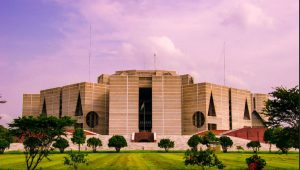
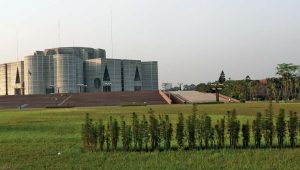
This new global environment has a special significance to Bangladesh. The fact that Bangladesh has been a member of the New Development Bank since 2021 indicates its desire to seek alternative sources of development finance. As an alternative to choosing between the Western and BRICS-oriented allies, Bangladesh could pursue strategic multi-alignment, which would be beneficial in terms of infrastructure, trade, energy security, climate action, technology and investment, by having different international relations.
Lastly, the impact of BRICS cannot be measured in terms of its ability to challenge Western institutions. It is the long-term credibility of this group that will depend on its potential to transform its economic, demographic and political power into working collaboration. It can be a powerful pillar of global governance, should BRICS manage to put in place effective conflict management, humanitarian coordination, food and energy security, development finance and institutional reform. Nevertheless, its influence will be minimal, should it continue to serve primarily as a means of criticising the status quo.
The New Delhi Summit thus brings out a two-sided reality. On the one hand, the emergence of BRICS shows that the old days of overwhelming Western-centred unipolarity are slowly transforming, and power is increasingly becoming more decentralised and the developing countries are insisting on a more significant role in the global decision-making process. Conversely, the demise of one leading center does not necessarily result in the emergence of another. BRICS itself is an embodiment of this transitional stage: power is becoming decentralised among various actors, and it is becoming increasingly harder to reach consensus as national interests become more varied.
The writer is an Associate Professor, Department of Public Administration, University of Rajshahi, E-mail: [email protected]