A proposal advanced by US President Donald Trump for an “energy ceasefire” between Russia and Ukraine has gained diplomatic attention following confirmation from Ukrainian President Volodymyr Zelenskyy that Kyiv is prepared to agree to a mutual halt on energy system strikes.
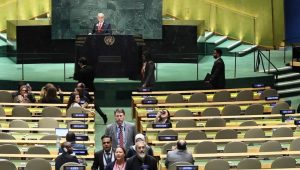
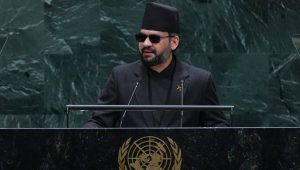
The announcement followed a 40-minute bilateral meeting between Trump and Zelenskyy on Tuesday on the sidelines of the United Nations General Assembly in New York, as Russia’s full-scale invasion of Ukraine enters its fifth year, reports Al Jazeera.
Speaking to reporters at the UN headquarters, Zelenskyy affirmed that Ukraine would refrain from targeting Russian fuel processing facilities provided Moscow stops attacking Ukraine’s electricity, heating, water supplies, and energy grid.
Zelenskyy noted a shared objective with Washington to end the hostilities prior to winter but maintained that lifting sanctions against Moscow remains non-negotiable whilst Ukrainians face daily missile and drone threats.
He further warned via Telegram that Russia is actively preparing a new major assault.

Political drivers, policy conflicts
Trump raised concerns over extensive damage inflicted on Russian fuel-processing capacity, arguing that reduced refining output drives up global diesel prices and impacts US fuel costs ahead of the November midterm elections, where his domestic approval ratings have hit record lows.
However, Trump’s attempt to restrict Ukrainian strikes contrasts with a recent US Congressional bill granting his administration broad authority to enforce tariffs and sanctions against buyers of Russian crude.
While Zelenskyy has requested additional Patriot air defence missiles to shield critical infrastructure from ballistic attacks, Washington’s inventory remains constrained due to the US-Israel conflict with Iran and the blockade in the Strait of Hormuz.
Persistent military engagements
The ceasefire initiative emerges against a backdrop of uninterrupted military operations from both combatants.




Ukraine has expanded its long-range drone strikes up to 3,000 kilometres into Russian territory, targeting oil refineries and Arctic gas condensate units to disrupt Moscow’s war financing.
A 20 September strike forced Moscow’s primary oil refinery, which processed roughly 230,000 barrels of crude daily in 2024, to suspend operations.
Conversely, Russian jet-powered drone strikes in Kyiv on Wednesday killed one person, injured seven, and struck a petrol station operated by Ukrainian energy firm Ukrnafta, marking the sixth such site hit in recent weeks.
Kremlin demands, previous ceasefire failures
While welcoming the US proposal for an energy moratorium, the Kremlin demanded that any agreement encompass Russian seaborne energy exports and provide sanctions relief.
Historical attempts at ceasefires since Russia launched its full-scale invasion on 24 February 2022 have repeatedly collapsed.
In May, temporary ceasefire declarations fell apart amid mutual accusations of breaches and deadlocked negotiations concerning Ukraine’s eastern Donetsk region.
Direct talks between Ukrainian and Russian representatives in Istanbul in March 2022 and May 2025 failed to secure a permanent end to hostilities, although the May 2025 session produced an agreement to exchange 1,000 prisoners of war from each side.
Analyst skepticism on truce viability
The experts remain doubtful regarding the feasibility and durability of an energy truce. Amanda Paul, senior policy analyst at the European Policy Centre, noted that halting attacks would bolster Russia’s war economy and warned that Moscow could exploit vague terms to justify renewed winter offensives.
She stressed that Trump should exert greater pressure on Russia to stop its aggression rather than focusing on the impact of Ukrainian strikes on fuel prices.
Marnie Howlett, associate professor of international relations at the University of Oxford, said the onus rests on Russia to stop attacks, pointing to Moscow’s history of violating ceasefire pledges.
Christopher Pool, researcher at King’s College London’s Department of War Studies, observed that Trump holds minimal leverage over Ukraine’s deep-strike strategy, but suggested that severe winter conditions, following temperatures of minus 25 degrees Celsius last year, alongside domestic energy strains in Russia might push both sides toward a temporary moratorium.