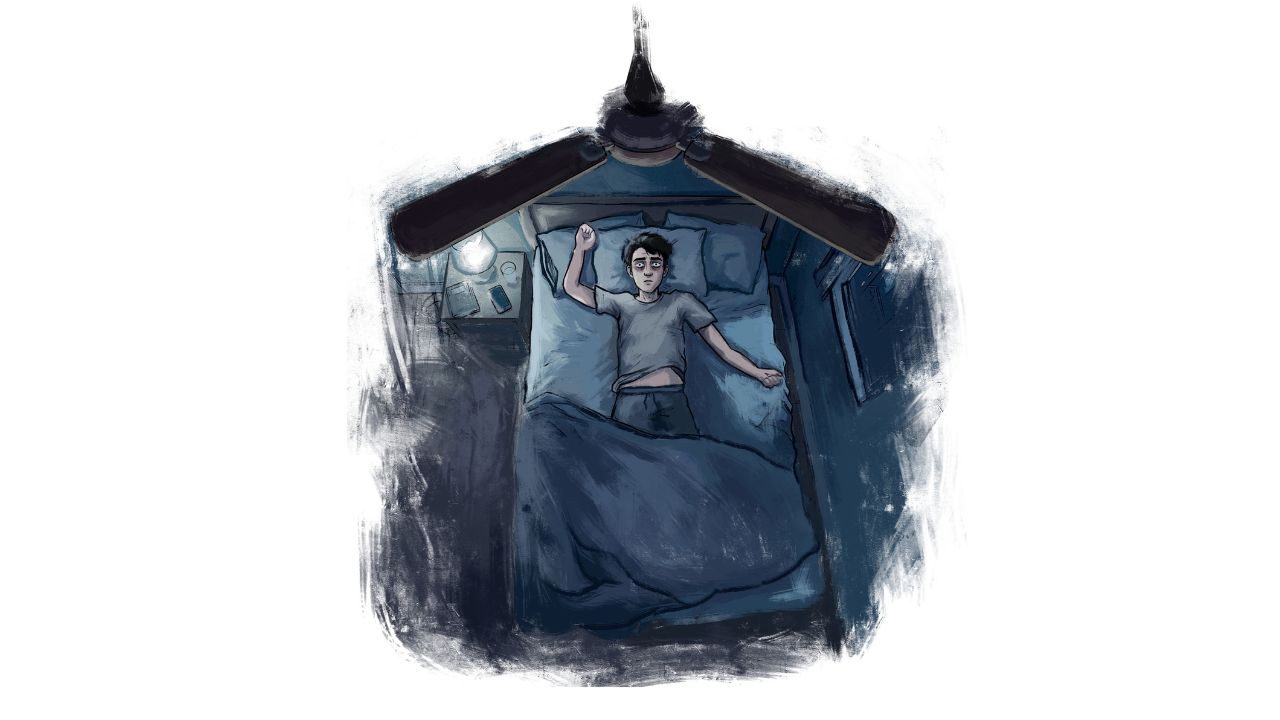



At 2am in a Dhaka bedroom in July, the ceiling fan is on its highest setting, the sheets are damp, and sleep still hasn’t come. The daytime heat has technically broken – the thermometer has dropped a few degrees since noon – but the air feels no different against the skin.
That sensation isn’t imagined. It is, according to sleep researchers, humidity doing exactly what humidity does: Making it physically harder for the body to let go of heat, even after the sun goes down.
Falling asleep is, among other things, a thermoregulatory event. As bedtime approaches, blood vessels in the hands, feet and face dilate, releasing heat from the body’s core and triggering the internal temperature drop that helps initiate sleep. Sweat evaporation is the body’s next line of defence against residual heat through the night, but evaporation depends on a difference between the moisture on skin and the moisture already in the surrounding air.
In high humidity, that difference collapses. Sweat simply sits on the skin rather than evaporating, and the cooling effect it’s supposed to provide barely functions.
A now-classic sleep laboratory study captured exactly how much this matters. Researchers monitored healthy volunteers sleeping under four conditions combining two temperatures with two humidity levels, and found that hot, humid conditions – 35°C at 75 per cent relative humidity – suppressed the deep, slow-wave sleep and REM sleep that cooler, drier conditions preserved, while increasing how often subjects woke during the night.

Related research has found the same humid-heat combination raises heart rate and sweat loss through the night and can dampen the body’s melatonin secretion, the hormone most responsible for regulating the sleep-wake cycle. None of this requires extreme heat to kick in; it is precisely the everyday combination of high temperature and high humidity that does the damage, night after night.
That laboratory scenario is not a hypothetical for Bangladesh. Dhaka’s July nights average a relative humidity of around 81 per cent, with a “feels like” heat index that has averaged near 47°C in recent Junes and Julys even as the actual air temperature sits lower. Urban heat compounds the problem: Dhaka’s dense concrete, asphalt, and glass absorb heat all day and release it slowly overnight, meaning the city rarely gets the cooler post-midnight window that rural or greener areas might.




For a household without reliable air conditioning – or facing one of the power cuts that still periodically affect parts of the country – a bedroom’s overnight conditions can sit uncomfortably close to the exact combination that sleep labs use to demonstrate impaired sleep.
Cooling a room to sleep-lab conditions isn’t realistic for most Bangladeshi households, but several adjustments can meaningfully offset humidity’s effect even without central air conditioning.
Airflow matters more than raw coolness. A ceiling fan combined with a cross-breeze from two open windows helps sweat evaporate even in humid air by constantly replacing the moisture-saturated air right at skin level with slightly drier air from elsewhere in the room, an effect a stationary body in still air never gets.
Bedding and sleepwear make a measurable difference. Lightweight cotton or linen sheets and sleepwear allow both airflow and moisture-wicking that synthetic fabrics block; a top sheet alone, rather than a heavier blanket, reduces trapped heat considerably.
Timing a shower before bed can help rather than hinder, though the instinct to blast cold water is often counterproductive. A lukewarm shower an hour or so before sleep dilates surface blood vessels in a way that supports the body’s natural pre-sleep cooling process, whereas an icy shower can trigger vessels to constrict instead, working against that same mechanism.
Reducing ambient moisture in the room itself is worth the effort where possible. Avoid drying wet laundry indoors overnight, using a dehumidifier if one is available and keeping mattresses and pillows aired out in direct sun periodically to prevent the dampness that humid climates leave behind in fabric and foam.
Diet and hydration in the hours before bed matter too. Heavy, spicy, or very hot meals raise core body temperature at exactly the time it needs to be falling, while staying well hydrated through the day (rather than only right before bed) supports the body’s ability to sweat effectively when it needs to.
For households facing load-shedding, a charged battery-powered or rechargeable fan kept specifically for overnight use can bridge the gap during outages, when the difference between moving and still air can be the difference between a broken night’s sleep and none at all.
Poor sleep from heat and humidity is not only an inconvenience. For young children, elderly family members, and anyone with cardiovascular or respiratory conditions, prolonged heat stress overnight compounds the same fatigue, dehydration and heat-exhaustion risks that daytime heatwaves carry, particularly during Bangladesh’s hottest months from April through July. Symptoms such as persistent dizziness, confusion, or an inability to sweat despite the heat warrant medical attention rather than another night of pushing through.
None of this changes Bangladesh’s climate, and no bedroom hack fully substitutes for reliable cooling. But treating humidity, not just heat, as the actual target – through airflow, fabric choice, timing, and moisture control – gives households a genuine, evidence-based way to claw back some of the deep sleep that a Dhaka summer night otherwise quietly takes away.