


Israel has some of the world’s most stringent air travel security measures.
The United Arab Emirates proudly adheres to international aviation safety standards.
Yet those safeguards failed to prevent a flight between the countries from taking a dangerous plunge during an alleged attack in the cockpit.
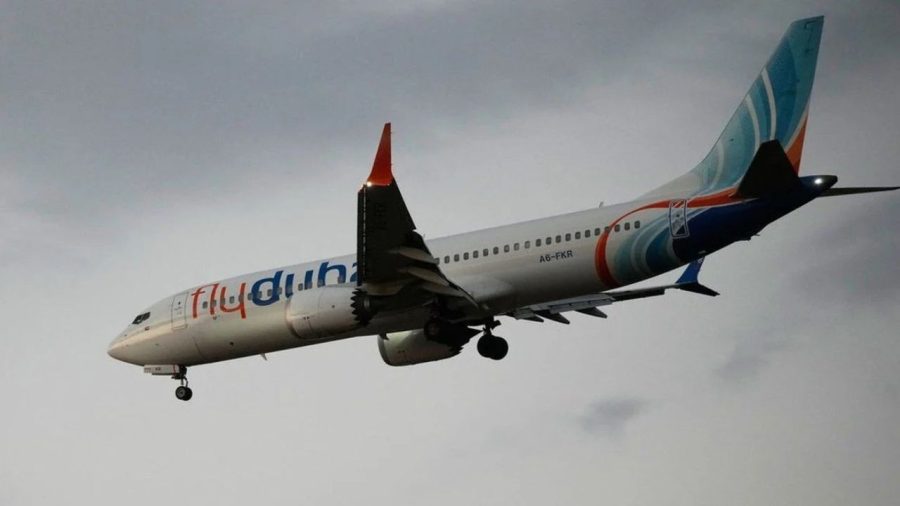
The copilot allegedly stabbed the captain in the cockpit before passengers intervened aboard FlyDubai Flight FZ1073 after taking off from Dubai, UAE, with 182 people including eight crew members flying to Tel Aviv, Israel, on Wednesday, reports AP.
The incident is under investigation by Saudi, Emirati and Israeli authorities, with the United States and Oman assisting efforts to determine a motive.
“Until this event, the possibility of a threat originating from a pilot or crew member was not considered a likely scenario. Security efforts have traditionally focused much more heavily on passengers and their luggage,” said Eyal Hulata, Israel’s former national security adviser.

“That will probably change now and crew members will be subject to heavier screening.”
Israel’s security protocols focus heavily on Israeli airlines and departing flights from Ben-Gurion International Airport.
A potential Achilles’ heel lies overseas, where procedures for Israel-bound flights vary and are harder for Israeli authorities to oversee.


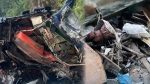

Investigators have not publicly identified the object used to stab the flight’s captain or said whether it was carried onto the plane or came from inside the aircraft.
Preflight screening of flight crews should generally “mirror very closely what a passenger goes through,” although security procedures vary around the world, said Dave Komendat, a senior security adviser at risk management firm International SOS and former chief security officer for Boeing.
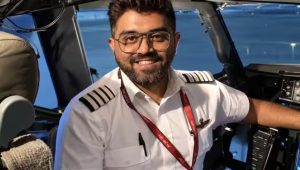
The Indian airline captain who helped thwart an apparent attempt to crash a FlyDubai flight described Friday how he fought for his life in the minutes after his co-pilot stabbed him and the plane began a steep descent.
Captain Smit Machchhar, recovering in an Abu Dhabi hospital, told Indian Prime Minister Narendra Modi in a televised video call that he knew he had to get back on his feet to save his passengers.
“I had so many wounds. I had fallen down,” he said from the hospital, his head bandaged and tubes in his nose, before breaking down as he recalled the attack.
“I was fighting for my life. At one point, I realised that if I didn’t get up … then passengers would lose their lives,” he told Modi.
Machchhar, who is from Mumbai, was seriously injured in Wednesday’s attack but managed to open the cockpit door, allowing passengers to enter and restrain the attacker as the Boeing 737 descended sharply, witnesses and Israeli authorities said.
He has been hailed as a hero, with world leaders saying he helped avert a disaster.
Israeli Prime Minister Benjamin Netanyahu said the attacker, an Omani national, was arrested in Saudi Arabia and was undergoing interrogation there. The motive for the attack was not immediately clear.
Netanyahu said that Israel has long-standing agreements with foreign carriers to keep pilots from flying into the country if they are citizens of nations that don’t maintain diplomatic relations with Israel.
He said the flight’s injured captain saved the aircraft and the 182 people on it by resisting the copilot’s attacks long enough to open the 737’s cockpit door, enabling passengers to subdue the suspect and other FlyDubai crew members to take the controls and land the plane.
Modi told Machchhar his “courage, patience, and presence of mind” saved many lives.
Machchhar said his flying experience allowed him to sense the plane’s steep descent even after he was knocked down by the attacker.