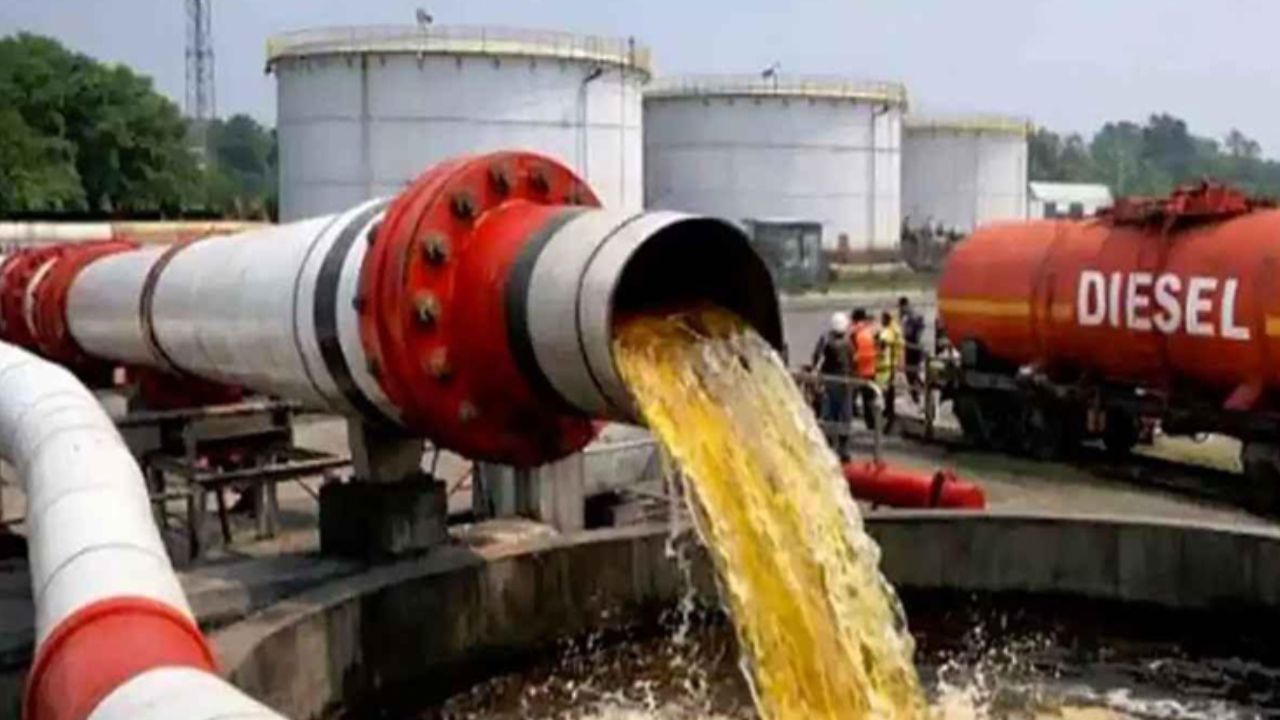



Member countries of the Group of Seven (G7) have agreed to deploy up to 100 million barrels of crude oil and diesel fuel stockpiles over a four-month period to curb surging global fuel prices.
Following a virtual summit convened by French President Emmanuel Macron, US President Donald Trump confirmed the joint intervention on Truth Social, stating that European allies had committed to releasing substantial quantities of diesel and that distribution would begin immediately.
The G7 emphasised in an official statement that addressing public concerns regarding escalating energy costs remains a primary priority, reports NBC News.
Under the agreed framework, member states will execute the stockpile release over four months, featuring a significant initial discharge of diesel within the first 20 days.
Alongside emergency reserve disbursements, G7 leaders agreed to synchronise maintenance timetables across their domestic oil refineries.

This joint scheduling aims to prevent simultaneous facility shutdowns and temporarily boost processing utilisation where achievable, even as many American and European refining plants already operate at full capacity.
Impact on global markets and pump prices
Global energy tariffs have escalated following the joint attack on Iran by the United States and Israel on 28 February. Diesel prices experienced further upward pressure during the summer after the Russia-Ukraine conflict escalated in July.
In the United States, average pump prices for diesel have jumped 70 per cent since late February to reach $6.37 per gallon.




According to Andy Lipow, president of Lipow Oil Associates, the four-month release of 100 million barrels of diesel will effectively substitute banned Russian exports lost to Ukrainian drone strikes on refining infrastructure.
Lipow noted that while the action could lower retail diesel prices by roughly 25 cents per gallon temporarily, it fails to expand fundamental refining capacity.
The initiative follows a March decision by International Energy Agency (IEA) members to release 400 million barrels of crude oil, which provided only temporary relief before prices resumed their upward trajectory.
As of Friday, Brent crude traded above $100 per barrel – falling 3 per cent in anticipation of the announcement, yet remaining more than 60 per cent higher since the start of the year.
Transatlantic diplomacy and election pressures
The G7 accord followed a week of sustained pressure by the Trump administration on European allies, notably Germany and France, which hold substantial shares of the European Union’s diesel reserves.
US Treasury Secretary Scott Bessent stated on X late Thursday that American businesses, farmers, and truckers should not be left to bear the burden of a global diesel deficit alone.
The agreement comes amidst political friction in Washington ahead of the 3 November midterm elections, where Republicans face unfavourable economic polling numbers.
Recent NBC News survey data indicates that 41 per cent of registered voters approve of President Trump’s handling of the economy, whereas 56 per cent express disapproval, with economists cautioning that his policies are driving inflation, roiling financial markets, and upending global trade.
While the US administration sought to demonstrate progress on high fuel prices, President Trump simultaneously weighed a potential domestic ban on diesel exports, which would have severely affected the EU and the United Kingdom.
Although the European Commission initially rejected any proposed export restrictions, European Commission President Ursula von der Leyen subsequently welcomed the G7 decision not to impose export bans on allies, praising ongoing partner solidarity.