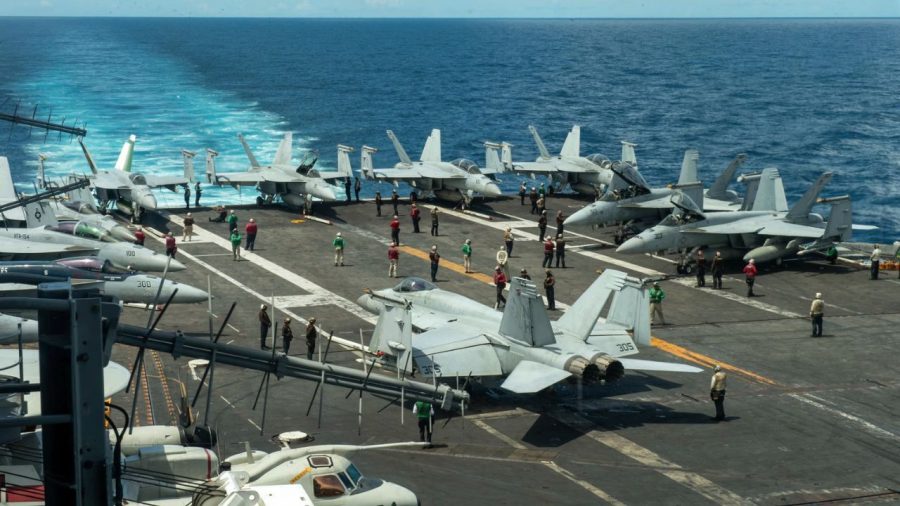



As the war between the United States and Iran enters its eighth month, Washington has initiated a major military buildup, dispatching additional naval assets and thousands of service members to the Middle East.
The move comes amid a complex backdrop of stalled diplomatic negotiations, intensifying economic sanctions, and looming political pressures ahead of the US midterm elections, according to an Al Jazeera report.
Understanding the scale of the newest troop movements, the history of American military presence in the region, and the state of diplomatic talks provides key context for whether this surge represents an impending military escalation or a high-stakes negotiating strategy.
What forces are currently being deployed?
According to a United States official, the USS Theodore Roosevelt aircraft carrier strike group departed its naval base in San Diego, California, setting sail for Middle Eastern waters.
A day later, the Makin Island Marine Expeditionary Unit (MEU) followed, transporting over 2,000 Marines to the region.
Reporting by The Wall Street Journal indicates that this naval surge, which includes sailors and Marines assigned to the carrier strike group and supporting vessels, will draw an estimated 9,000 to 10,000 additional US troops into the theatre.
By the end of November, three US aircraft carriers and two amphibious landing groups are scheduled to be positioned in close proximity to Iran.

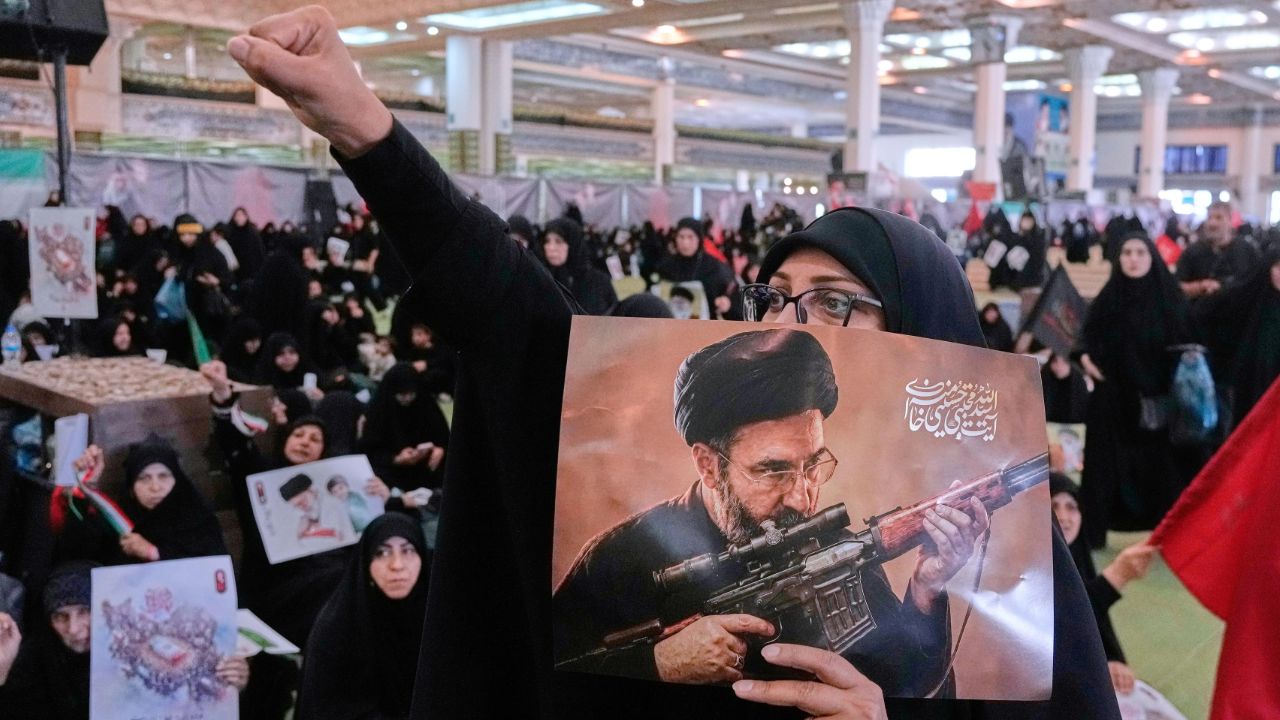
This force expansion also features advanced F-35 fighter jets. The incoming forces will supplement an estimated 50,000 US service members already stationed throughout the region.
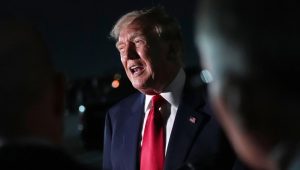
Pentagon and White House sources cited by reporting from Washington indicate that the deployment is intended to provide President Donald Trump with a broader range of military options regardless of diplomatic developments.
Defense Secretary Pete Hegseth confirmed that American forces remain “ready to go” should the president order further strikes, while the Department of Defense maintains no plans to pull back assets even if a diplomatic agreement is reached.
How extensive is the existing US military footprint?
The United States has maintained military personnel and installations across the Middle East for several decades.
The earliest major deployment occurred in July 1958 during the Lebanon crisis, when American combat forces were dispatched to Beirut, eventually peaking at nearly 15,000 soldiers and Marines.



Data from the Council on Foreign Relations reveals that the US operates from at least 19 military sites – comprising both temporary outposts and permanent installations – across the Middle East.
Eight of these are permanent military bases located in Bahrain, Egypt, Iraq, Jordan, Kuwait, Qatar, Saudi Arabia, and the United Arab Emirates. As of mid-2025, between 40,000 and 50,000 American military personnel were stationed across these locations.
What military assets were deployed earlier in the conflict?
Washington began augmenting its regional posture earlier this year. Initial movements included deploying warships, such as the USS Abraham Lincoln aircraft carrier, to the Arabian Sea.
Since early February, military flight-tracking data and open-source intelligence show that more than 120 aircraft have been moved to the Middle East, representing the largest influx of US airpower into the region since the 2003 Iraq War.
These aircraft – originating from bases in Europe and the US – include E-3 Sentry Airborne Warning and Control System (AWACS) aircraft, F-35 stealth strike fighters, F-22 air superiority jets, as well as F-15 and F-16 fighter aircraft, supported by cargo planes and aerial refuelling tankers.
In March, the Pentagon deployed three distinct task forces, adding nearly 7,000 troops to the regional force layout. The first was the Tripoli Amphibious Ready Group, centred around the America-class assault ship USS Tripoli and the 31st Marine Expeditionary Unit.

The second was the Boxer Amphibious Ready Group, led by the Wasp-class assault ship USS Boxer and the Southern California-based 11th Marine Expeditionary Unit, which together added 4,500 Marines and sailors.
In addition, approximately 2,000 airborne infantry soldiers from the 82nd Airborne Division’s Immediate Response Force based at Fort Bragg, North Carolina, who specialise in parachute assault operations, were dispatched to bolster the force presence.
Where do diplomatic negotiations and economic measures stand?
Indirect peace negotiations mediated through Qatar have failed to produce a breakthrough. During discussions held on the margins of the United Nations General Assembly (UNGA) in New York, Iranian officials proposed a seven-day roadmap.
Under the proposal, Tehran offered to reopen the Strait of Hormuz and re-engage in nuclear talks. In exchange, Iran demanded an end to the US naval blockade, unfreezing of Iranian financial assets, lifting of economic sanctions, and a regional ceasefire encompassing Lebanon and Yemen.
President Trump rejected the offer, stating in an interview with Time magazine that the proposal contained terms he “wouldn’t have approved a year ago” and “wouldn’t have today.”

United States Ambassador to the UN Mike Waltz told NBC that releasing frozen assets and lifting sanctions were non-negotiable, noting that restrictions were backed by seven UN Security Council resolutions regarding Iran’s nuclear weapons programme.
Washington has insisted that issues such as Iran’s nuclear activities must be addressed prior to agreeing to ceasefire terms.
Concurrently, the US Treasury Department has heightened economic pressure, imposing sanctions on Iranian rail and automotive conglomerates following broader trade sanctions introduced last month.
In response to the rejected proposal, Iranian Foreign Minister Abbas Araghchi stated to NBC that Tehran was “fully prepared” to resume military hostilities, while maintaining on social media platform X that Iran came to New York to “forge peace” rather than sell a war.
What signals is Washington sending regarding future escalation?
The military expansion coincides with sharp rhetoric and upcoming political milestones. The deployment takes place one month before the US midterm elections, where President Trump’s Republican Party faces political headwinds over the handling of the war.
In his interview with Time magazine, President Trump acknowledged it was “possible” that bombing operations against Iran could be intensified following the midterm elections.
Later, speaking at a Peterbilt Motors plant in Denton, Texas, President Trump warned that the standoff would end “very soon,” cautioning that Iran must act appropriately or “they won’t be around very long,” while expressing skepticism regarding Tehran’s willingness to honour agreements.
While some analysts interpret the massive force deployment as leverage to compel Iranian concessions at the negotiating table, the refusal to withdraw military assets ensures that Washington maintains full operational readiness for direct conflict escalation.