


Delhi is preparing for a major protest against India’s Chief Election Commissioner Gyanesh Kumar, with the Cockroach Janta Party (CJP) mobilising its supporters for a demonstration at Jantar Mantar.
In anticipation of the gathering, authorities are planning extensive security arrangements, including the deployment of more than 20,000 personnel from the Delhi Police and the Central Armed Police Forces to maintain law and order, NDTV reports.
The preparations come against the backdrop of the 20 July protests over the alleged paper leak, which were marked by chaos and police action and eventually led to the resignation of Education Minister Dharmendra Pradhan.
With those events still fresh in the minds of both the authorities and protesters, the latest demonstration is expected to pose another significant challenge for the city’s security apparatus. However, the extensive restrictions and heightened security measures suggest that the authorities are determined to prevent a repeat of the earlier unrest.
Police permission for the proposed protest has not been granted. Several measures have consequently been put in place to restrict movement, secure sensitive locations and prevent demonstrators from assembling in prohibited areas.
Meanwhile, more than 400 people have already been detained, including criminals, across the capital.
As part of the arrangements, entry and exit gates at 45 Delhi Metro stations, including Rajiv Chowk, New Delhi, Central Secretariat, Patel Chowk and Kashmere Gate, will remain closed.
In addition, more than 250 trains from other states, along with local trains scheduled to arrive at New Delhi and Hazrat Nizamuddin railway stations between 4 am and 2 pm on Saturday, have been cancelled.

Internet services have also been suspended within a four-kilometre radius of the Janpath-Kartavya Path crossing for 24 hours, beginning at 10 pm on Friday.
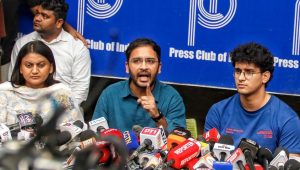
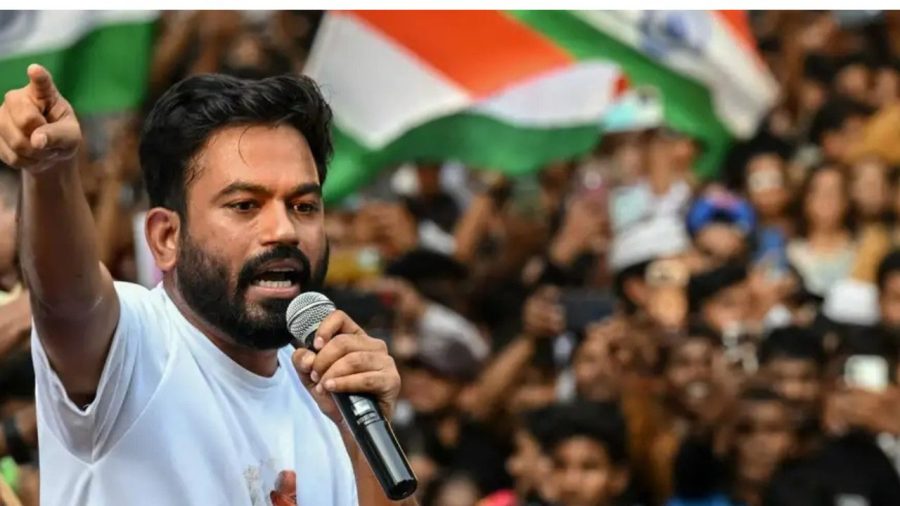
Despite the restrictions, CJP founder Abhijeet Dipke has said the party’s volunteers and supporters remain committed to proceeding with the planned demonstration at Jantar Mantar.
Questioning the rationale behind the restrictions, Dipke said the measures themselves could cause the very inconvenience that authorities have cited as a concern.
“On the one hand, you say protests will lead to inconvenience. On the other hand, you have shut down the Metro, railways and blocked roads. Will this not lead to inconvenience?” he asked.
Delhi Police’s Security Plan
The Delhi Police’s security strategy centres on two priorities: preventing a breakdown of law and order and ensuring that its handling of the demonstration does not invite another round of criticism over the use of force or alleged misconduct.
According to officials, the instructions are clear: protesters must be prevented from entering the New Delhi district, and those found in restricted areas must be removed as quickly as possible.




The police have identified an approximately 1.5-kilometre radius as a highly sensitive security zone. The area encompasses several key locations, including Jantar Mantar, Janpath, the Election Commission’s office and the Delhi Police headquarters.
More than 6,500 personnel will be deployed within this stretch, effectively turning the area into a heavily guarded zone, an official said.
Surveillance has also been intensified across the district. More than 300 closed-circuit television (CCTV) cameras equipped with audio-recording capabilities have been installed at sensitive locations to help authorities monitor developments and track activity in real time.
The extensive deployment and surveillance arrangements are intended to enable the police to respond quickly to any escalation and prevent protesters from breaching restricted areas.
Seven Layers of Barricading at Jantar Mantar
Security at Jantar Mantar, the proposed protest venue, has been reinforced with multiple layers of barricading. At least seven layers of barricades have been erected along the road leading to the site, with some of the innermost layers welded together to make them more difficult to breach.
Authorities have also installed loudspeakers at sensitive locations to broadcast recorded announcements informing the public that permission for the proposed demonstration has not been granted. The announcements urge people not to assemble for the protest, raise slogans, damage public property or assault police personnel.
The effort to discourage participation extends beyond the immediate protest area. Community centres, mosques and resident welfare associations (RWAs) have been asked to circulate the message that the demonstration has not been authorised.
People travelling to New Delhi to take part in the protest have also been warned that they could face arrest and legal action.
As part of the preventive measures, police personnel have been checking lodges and hotels across New Delhi and Central Delhi. Hotel managers are being asked to discourage guests from participating in the demonstration.
Airbnb hosts and other property owners have also been advised against renting out their premises to individuals planning to join the protest. They have further been asked to alert the police if they suspect that anyone staying at their properties intends to participate in the demonstration.
Together, these measures form part of a wider effort to identify potential participants, discourage mobilisation and limit the movement of demonstrators towards restricted areas.
Videography and Documentation of Police Action
Another major priority for the Delhi Police is to ensure that the handling of the demonstration is documented comprehensively. The focus comes amid allegations of police misconduct and the use of excessive force during recent protests.
Following demonstrations held earlier in the month, videos circulated on social media purportedly showing misconduct by police personnel. The allegations included claims of assault and molestation involving a woman protester, bringing the conduct of the force under increased scrutiny.
Against this backdrop, the police have stepped up arrangements to record events from multiple angles and maintain a detailed account of how the protest unfolds.
Body cameras have been provided to senior officers, including those of the rank of additional commissioner of police and above, as well as other personnel deployed for security duties.
In addition, hundreds of photographers and videographers have been engaged to document the demonstration and the police response in real time.
Officials expect the recorded footage to help establish the sequence of events, provide verifiable evidence in response to potentially misleading claims and support investigations if any incident occurs.
The documentation measures are particularly significant given the scrutiny surrounding the police response to previous demonstrations. A comprehensive visual record could help clarify disputes over the conduct of protesters and police personnel, should allegations arise during the latest protest.
Delhi Police Appeals for Restraint
Alongside the extensive security preparations, the Delhi Police has issued an open letter appealing for restraint and understanding from all sides.
The letter reminds the public that police personnel are human beings with families waiting for them at home. It calls for humanity and restraint, emphasising that wearing a uniform does not diminish an individual’s humanity.
The appeal comes as the authorities prepare for a high-security operation involving extensive personnel deployment, multiple barricading layers, surveillance equipment and restrictions on public transport and internet services.
With permission for the demonstration still ungranted and CJP maintaining that its supporters intend to proceed with the planned protest, the situation presents a delicate law-and-order challenge for the capital. The authorities’ approach combines preventive restrictions, a substantial security presence and extensive documentation, while the police’s appeal for restraint underscores the importance of avoiding a repeat of the confrontations and controversies surrounding earlier demonstrations.