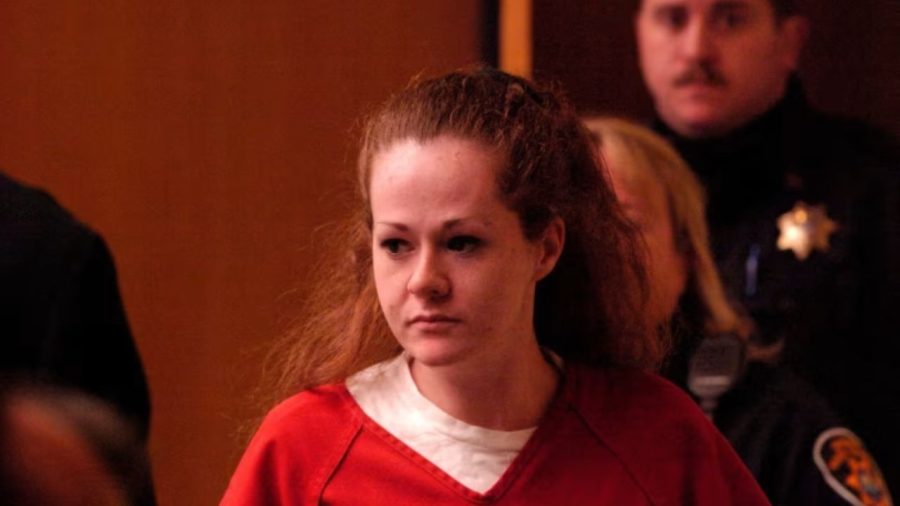



US death row inmate Christa Pike has been discharged from hospital and returned to prison 10 days after surviving a failed execution attempt, her lawyers said on Saturday.
Pike, 50, has been transferred back to the Tennessee prison where she has spent the past three decades on death row.
According to her legal team, she continues to receive medical treatment following the failed execution on 30 September. Pike survived two injections of the lethal drug pentobarbital, which left her in critical condition and triggered a rare and unprecedented legal and medical situation. Her lawyers said she regained consciousness earlier this week and has resumed speaking, a development that surprised doctors, hospital staff and members of her legal team.
The case is believed to be without precedent in the United States, as Pike is thought to be the only person known to have survived an execution attempt by lethal injection.
In a statement, her lawyers said Pike was grateful to the emergency responders and medical personnel who treated her during what they described as extraordinary circumstances.

Her current medical condition remains unclear, and prison officials have not disclosed details of the treatment she is receiving. Her legal team has previously said she faces a lengthy recovery process.
Questions also remain over why the execution failed. The Tennessee Department of Correction has not provided a detailed explanation, although it has defended the execution procedure used.
During a court hearing on Wednesday, Tennessee Assistant Attorney General Will Ayers said he did not know whether the state planned to make another attempt to carry out Pike’s execution.
The judge overseeing the matter ordered state authorities to preserve all evidence related to the failed injections, which could become central to future legal action against the state.




Pike was 18 years old when she and her then-boyfriend, Tadaryl Shipp, were convicted of the 1995 torture and killing of Colleen Slemmer, 19. The three had met while attending a job-training programme for disadvantaged young people.
Shipp avoided a death sentence because he was not legally an adult at the time of the crime and remains imprisoned.
Pike’s scheduled execution would have made her the first woman executed in Tennessee in more than 200 years.
Over the past three decades, her lawyers have pursued numerous appeals and legal challenges to overturn her death sentence. However, in the days before the execution date, both the US Supreme Court and Tennessee Governor Bill Lee declined to intervene.
Following the failed execution, Pike’s lawyers renewed calls for her sentence to be commuted to life imprisonment without the possibility of parole.
Pike lost consciousness shortly after the execution attempt and was taken to a nearby hospital.
For several days, her lawyers believed she was unlikely to survive and feared she had suffered catastrophic brain damage. They said they expected doctors could remove life support at any moment.
Instead, Pike regained consciousness on Tuesday and began speaking again.
Her attorney, Randy Spivey, said her first questions after waking up were: “Where am I?” and “Who are you?”
At a news conference on Wednesday, Pike’s legal team said she remained shackled to her hospital bed and was suffering from pneumonia, severe swelling in her arms and difficulties swallowing.
Spivey said it remained unclear what long-term physical and psychological effects the failed execution would have on his client.
“We don’t know the toll all of this will take,” he said, referring to Pike’s mental health. According to her lawyer, Pike has been left feeling “angry and confused” by the ordeal.