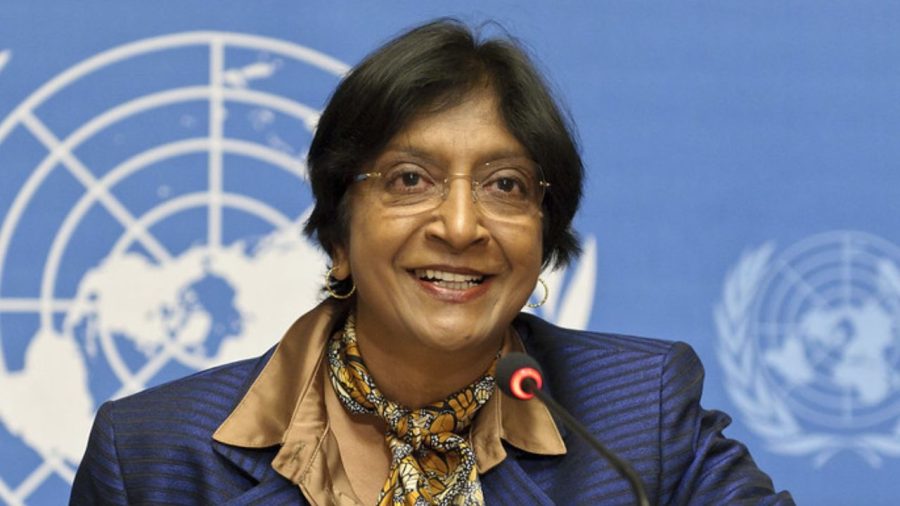



In a powerful endorsement of international law over power politics, the Norwegian Nobel Committee on Friday announced it will award the 2026 Nobel Peace Prize to South African jurist Navanethem “Navi” Pillay for her lifelong pursuit of justice, human rights and accountability for international crimes.
The decision honours an 85-year-old legal pioneer whose six-decade career spans South Africa’s anti-apartheid struggle, landmark genocide prosecutions in Rwanda and international investigations into alleged atrocities in Gaza and Myanmar.
It also comes amid US President Donald Trump’s repeated public expressions of his desire to win the prestigious award, citing his diplomatic interventions and claims of ending conflicts.
The committee, however, chose to recognise a jurist whose career has focused on holding powerful states and individuals accountable under international law.
Born in Durban in 1941 to a working-class family of Indian Tamil origin, Pillay overcame racial discrimination under apartheid to build a distinguished legal career.

In 1967, she became the first non-white woman to establish a law practice in Natal, representing anti-apartheid activists, including Nelson Mandela.
Following apartheid’s collapse, she became the first non-white woman appointed to South Africa’s High Court in 1995.
She subsequently served at the International Criminal Tribunal for Rwanda (ICTR), where she helped establish groundbreaking legal precedents recognising rape and sexual violence as acts of genocide and crimes against humanity.




Her work also contributed to landmark jurisprudence on the role of media propaganda in inciting genocide.
Pillay later served as a judge at the International Criminal Court (ICC) in The Hague and as United Nations High Commissioner for Human Rights from 2008 to 2014.
Her more recent work has placed her at the centre of two major international justice proceedings.
From 2021 to 2025, she chaired the UN Independent International Commission of Inquiry on the Occupied Palestinian Territory, including East Jerusalem, and Israel.
The commission concluded that Israel had committed genocide in Gaza, a finding rejected by the Israeli government.
Since 2019, Pillay has also served as an ad hoc judge at the International Court of Justice (ICJ) in the genocide case brought by The Gambia against Myanmar over atrocities against the Rohingya.
Her involvement in the Myanmar proceedings gives the Nobel recognition particular significance for Bangladesh, which hosts a large Rohingya refugee population.
Marking 125 years since the first Nobel Peace Prize in 1901, the committee warned that international law and judicial institutions were facing growing political pressure amid escalating wars and conflicts.
It emphasised that lasting peace depends on a functioning international legal order in which perpetrators of atrocities are held accountable and victims can obtain justice.
The award also draws attention to the contrast between the committee’s emphasis on institutional accountability and Trump’s approach to diplomacy, centred on direct negotiations and political dealmaking.
However, the committee did not suggest that its decision was intended as a rebuke to Trump.
In honouring Pillay, it praised her judicial rigour, personal integrity and courage in defending international legal principles.