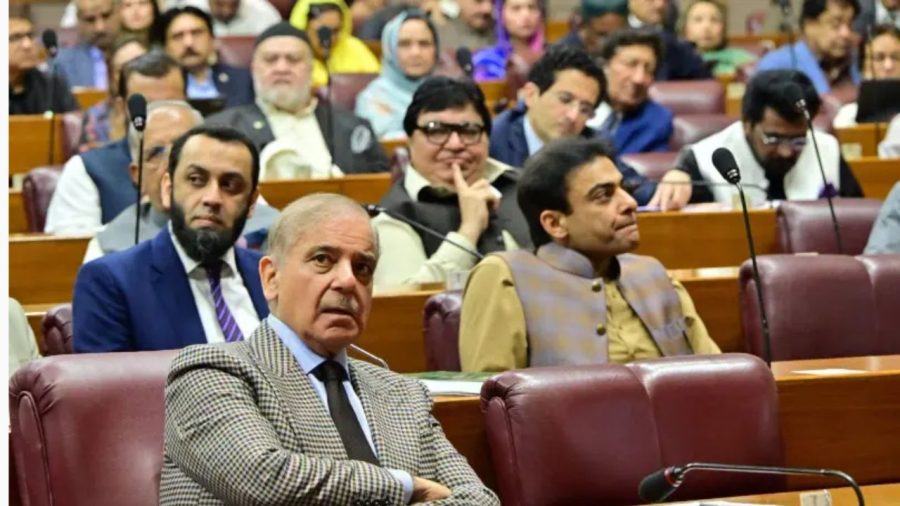



Pakistan’s National Assembly on Wednesday passed a resolution endorsing the federal government’s imposition of emergency in Khyber Pakhtunkhwa (KP), after a debate in which several speakers blamed the province’s PTI government for the crisis.
The motion was adopted by a majority vote, reports DAWN.
The Centre imposed governor’s rule and emergency in the province on Sunday, citing the provincial government’s “deliberate disengagement” from the fight against terrorism.
Parliamentary Affairs Minister Tariq Fazal Chaudhry tabled the motion after Law Minister Azam Nazeer Tarar opened the discussion, which pushed question hour aside.
Opposition members took part calmly and staged no loud protest, unlike past occasions when the PTI has objected to the Centre.
(PPP) Chairman Bilawal Bhutto-Zardari said the PTI had carried out a “political suicide attack” on its own KP government.
Governor’s rule and emergency were constitutional measures, he said, adding that the Centre had tried its best to “engage the opposition so this step did not have to be taken”.

He recalled alleged remarks by KP Chief Minister Sohail Afridi that he would not combat terrorism the way the Centre wanted.
He argued that, given the PTI’s actions and statements, neither the president, the Centre nor he had any legal or political reason left not to impose the emergency.
Bilawal nonetheless urged the federal government to extend its hand for negotiations once again, calling emergency “always a stopgap measure”.
“We cannot sustain the emergency forever,” he said.
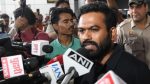
He said that during talks on 3 October between a joint PPP-government delegation and the opposition, the PTI was willing to declare areas of surging terrorism “terrorist areas”, and the sides were close to agreeing a federal-KP pact on joint counterterrorism efforts, but dialogue collapsed.
Tarar said the security situation in KP was becoming a threat to “national security”, noting that Article 232 of the Constitution required both houses of parliament to approve the proclamation.
The federal cabinet examined material on terrorism in the province on Oct 11 and advised Prime Minister Shehbaz Sharif to recommend the emergency, he said.
He said terrorist incidents in KP totalled 2,911 between 2021 and 2024, but surged to 3,787 between Oct 15, 2025, when Afridi’s government took office, and Oct 9, 2026.
He accused the chief minister of ignoring martyred security and police personnel in favour of his political designs, and said a special mechanism had been introduced for 12 districts.
Tarar also said the PTI had the agreement draft changed repeatedly before backing off.
PTI Chairman Gohar Ali Khan said his party “rejected” the move. He asked what terrorism Imran Khan’s wife or sisters had allegedly been involved in to be jailed, and said PTI lawmakers were detained.
Gohar said the PTI had raised its voice against terrorism and that action must follow the National Action Plan.
Bilawal retorted that the PTI was busy with its long march while the people of KP were being targeted by terrorists.
“I cannot insist on the government to continue talks with PTI despite being defrauded multiple times,” he said.
Opposition Leader Mehmood Khan Achakzai questioned the government’s mandate in the February 2024 general elections and alleged the ruling coalition was formed “illegally”.
Defence Minister Khawaja Asif said the PTI had tried to convince the then opposition that bringing back Tehreek-i-Taliban Pakistan (TTP) members would be better for Pakistan, referring to Imran’s resettlement plan.
He alleged Afridi took directives from a person sitting in Afghanistan, and noted the TTP had condemned the emergency.
“You do not have clean hands, you cannot demand equity,” he said.
Farooq Sattar of the MQM-P voiced confidence in the prime minister’s decision.
“This was an extremely difficult decision, but so unavoidable that you had no other option,” he said, urging the PTI to “openly condemn terrorism”.