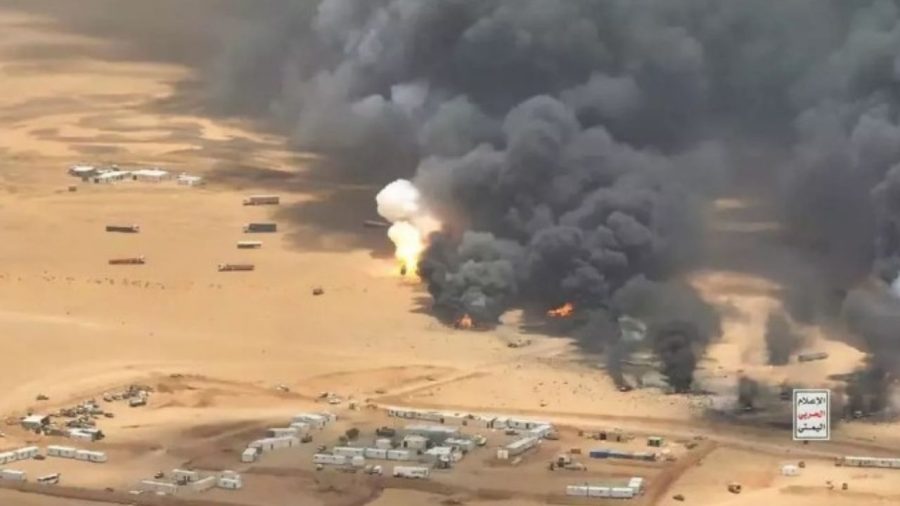



Despite spending tens of billions of dollars annually on defense and maintaining one of the Middle East’s most advanced military arsenals, Saudi Arabia remains vulnerable to missile and drone attacks launched by Yemen’s Houthi rebels.
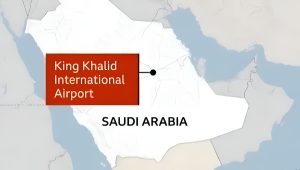
Recent deadly strikes on Riyadh’s main international airport have once again raised questions about why a country equipped with sophisticated US and European weapons systems continues to struggle against an insurgent group operating from neighboring Yemen, CNN reports.
Saudi Arabia spent approximately $83 billion on defense last year, placing it among the world’s top military spenders. The kingdom has invested heavily in modern fighter aircraft, Patriot missile defense batteries, the Terminal High Altitude Area Defense (THAAD) system, and a broad range of advanced military equipment acquired from the United States, Britain and France.
Military experts say that spending alone cannot eliminate the challenges posed by the nature of the threat Saudi Arabia faces.
One of Saudi Arabia’s greatest difficulties is geography. The kingdom covers a vast territory and must protect thousands of potential targets spread across the country.
Critical infrastructure includes airports, oil refineries, desalination plants, pipelines, military bases, data centers and industrial facilities. In addition, major cities and strategic economic projects linked to Crown Prince Mohammed bin Salman’s Vision 2030 development agenda require constant protection.
The kingdom also confronts threats from multiple directions.
To the east lies Iran, which launched about 1,000 missiles and drones at Saudi targets during the most intense phase of regional hostilities this year. To the north, Iran-backed militias in Iraq have used drones to target strategic infrastructure, including the kingdom’s East-West oil pipeline. To the south, Houthi rebels continue to launch missiles and drones from Yemen.
Protecting such a large number of targets simultaneously is an enormous challenge. Air defense operators must quickly identify incoming projectiles, determine their intended destinations, decide whether interception is necessary and issue warnings to civilians within minutes.

Even the most advanced systems can become stretched when multiple threats emerge at once.
Not Every Missile Can Be Stopped
Saudi air defenses have intercepted many missiles and drones launched by the Houthis, but preventing every attack remains virtually impossible.
Military officials face difficult decisions about where to deploy available defensive systems. Concentrating defenses around one strategic facility may leave another vulnerable. Given the large number of potential targets across the kingdom, some sites inevitably receive less protection than others.
Experts note that no air defense network in the world can guarantee a perfect interception rate. Even countries with highly advanced military capabilities occasionally experience failures when confronted with complex or large-scale attacks.
For Saudi Arabia, the challenge has become even greater as the Houthis have steadily improved their military capabilities.
How the Houthis Have Adapted
Over the past several years, the Houthis have developed increasingly sophisticated methods to penetrate Saudi defenses.



The group now combines ballistic missiles, cruise missiles and long-range drones in coordinated attacks designed to overwhelm air defense systems. Analysts say the tactic resembles methods used by Russia in Ukraine, where waves of drones are launched alongside missile barrages to complicate interception efforts.
Cruise missiles pose a particular challenge because they fly at relatively low altitudes, making them more difficult for radar systems to detect and track.
The Houthis have also introduced newer ballistic missiles that they claim possess maneuvering capabilities, allowing them to alter their flight paths and making interception more difficult.
This combination of speed, altitude variation and attack saturation increases the likelihood that at least some projectiles will evade defensive systems.
Iranian Support Has Played a Key Role
Security analysts widely believe that the Houthis’ growing capabilities have been significantly enhanced through support from Iran.
United Nations experts previously reported finding missile components, military equipment and unmanned aerial vehicles of Iranian origin that had been transferred into Yemen despite international sanctions and arms restrictions.
Subsequent assessments by UN investigators described the scale of external military assistance, technology transfers, training and financial support reaching the Houthis as unprecedented.
Defense specialists also note striking similarities between some newer Houthi missile systems and Iranian designs.
Among the weapons drawing particular attention are the Hatem-2 and Palestine-2 missiles, which analysts describe as highly accurate and capable of striking targets at long distances.
The Houthis have additionally modified Iranian-origin air defense systems for offensive purposes, enabling them to target aircraft and cruise missiles.
The increasing sophistication of these weapons has enhanced the group’s ability to challenge even modern air defense networks.
The Diplomatic Dimension
While the Houthis remain closely aligned with Tehran, their actions are also driven by local objectives.
Years of conflict between Saudi-backed forces and the Houthis caused widespread destruction inside Yemen. Although large-scale hostilities declined after 2022, tensions have persisted.
The Houthis have demanded compensation from Saudi Arabia and an end to Saudi military operations supporting Yemen’s internationally recognized government.
Iran has publicly offered to help mediate talks between Riyadh and the Houthis, though negotiations have yet to produce a breakthrough. Houthi officials have indicated that previous truce proposals were rejected, while warning that the conflict could expand further if no settlement is reached.
These developments suggest that military measures alone may be insufficient to end the attacks.
Riyadh’s Difficult Choices
A more aggressive military response could trigger additional Houthi missile attacks against airports, energy infrastructure and economic projects. Such disruptions threaten the kingdom’s efforts to attract foreign investment, expand tourism and transform itself into a global business hub.
The Houthis are deeply entrenched, possess extensive combat experience and operate in Yemen’s mountainous terrain, which gives them significant defensive advantages.
Recent history has also demonstrated the limits of air power. A major US bombing campaign against Houthi targets last year failed to eliminate the movement, even though it inflicted damage and killed some commanders.
As a result, many analysts believe Saudi Arabia will continue seeking a combination of stronger defenses, international support and diplomatic engagement.
The kingdom is already working to build broader regional backing against the Houthis. Pakistan has deployed troops to assist in defensive operations, while Egypt and other allies have expressed support. Saudi Arabia may also seek additional air defense systems from Western suppliers.
However, even that option faces obstacles. The United States has reported shortages in some missile defense inventories following recent regional conflicts, limiting the speed with which new systems could be supplied.
For now, Saudi Arabia remains caught between military necessity and political reality. Despite one of the world’s largest defense budgets, the challenge of protecting a vast country from increasingly sophisticated and persistent missile and drone attacks means that absolute security remains elusive.