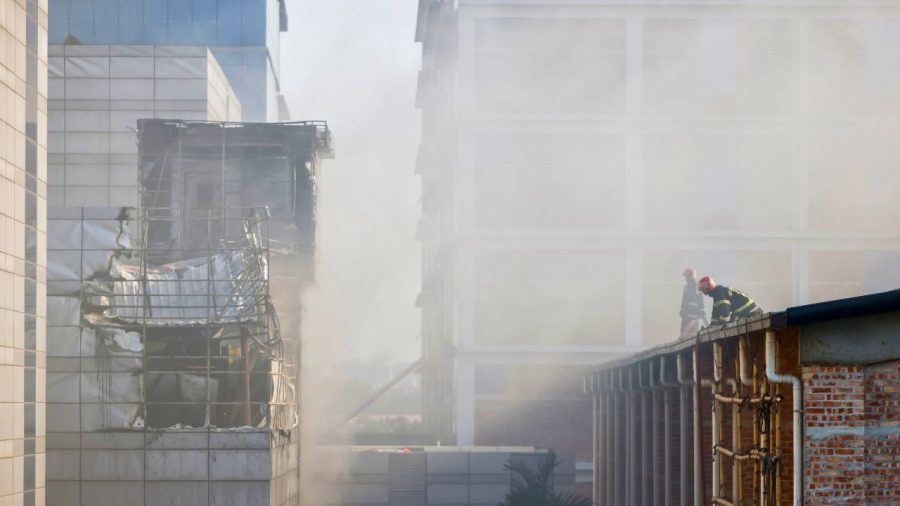



Thick, chemical-laden smoke blanketed nearby neighbourhoods in Tongi on Wednesday following a major fire at a pharmaceutical factory, triggering widespread panic and forcing thousands of residents to flee amid severe fears of toxic fumes, hazardous chemical exposure, and acute respiratory illness.
The blaze broke out at Drug International Limited’s production facility on Squibb Road in the Cherag Ali area at around 10:14am.
The fire rapidly consumed industrial materials, sending towering columns of pungent, dark smoke into the atmosphere and leaving local residents suffering from immediate eye, throat, and nasal irritation.
Medical experts and environmental authorities have raised serious concerns regarding the acute toxicological risks posed by the disaster.
Because the blaze engulfed pharmaceutical compounds, raw chemical ingredients, and specialised manufacturing equipment, the resulting smoke carries an exceptionally high concentration of hazardous airborne particulates.
Shaheed Tajuddin Ahmad Medical College Hospital Director Aminul Islam issued a stern medical warning, stressing that the inhalation of combusted medicines, chemical reagents, and synthetic raw materials presents significant health dangers.

He explained that soot and chemical particulates can trigger immediate bronchospasms, severe coughing fits, and acute mucosal burning in the eyes and respiratory tract.
Children, the elderly, and individuals with underlying pulmonary conditions such as asthma are at heightened risk of lasting lung damage.
Health officials have urged residents to evacuate the smoke path immediately and seek urgent medical treatment if breathing difficulties develop.
Local lawmaker M Manjurul Karim Rony, who visited the scene on the instructions of Prime Minister Tarique Rahman, confirmed that an antibiotic production plant was among the destroyed facilities.




He warned of dangerous airborne exposure after scores of nearby residents complained of stinging eyes and respiratory discomfort.
However, environmental authorities have yet to conduct comprehensive toxicological air testing to identify the exact chemical composition or safety thresholds of the substances released into the atmosphere.
The public health threat was felt most acutely in the Bengal Math slum, situated directly behind the factory walls, where thousands of working-class families live in densely packed housing.
As dense toxic plumes engulfed the settlement, panicked residents evacuated their homes, covering their faces to escape the suffocating fumes.
Witnesses described a sharp, acrid chemical stench and radiant heat that caused instant dizziness and irritation, forcing families to flee to open roads further away from the drifting smoke clouds.
Twenty-one Fire Service units, alongside contingents from the army, Border Guard Bangladesh, local police, and the Gazipur City Corporation, battled the fire for nearly four hours before bringing the main flames under control at 1:55pm.
Fire Service and Civil Defence Director General Brigadier General Sultanul Afrain Zunaid noted that rapid multi-storey fire spread and acute local water shortages severely hindered initial suppression efforts.
Demonstrating the harsh toxic conditions at the scene, one firefighter suffered acute respiratory distress from heavy smoke inhalation during the operation and required emergency medical treatment.
Officials warned that dampening-down operations and extinguishing remaining chemical pockets could continue until Thursday morning, prolonging local air contamination.
Gazipur Deputy Commissioner Nurul Karim Bhuiyan noted that recurring water shortages during emergency operations have prompted a city-wide initiative to re-excavate 57 municipal ponds to bolster future firefighting capacity.
Meanwhile, Drug International Senior Administration Manager Shahidul Islam said that an electrical short circuit was suspected as the preliminary cause, though formal investigations are underway.
While confirming heavy structural damage to two buildings, he claimed no factory personnel were injured and denied allegations of safety lapses, asserting that the facility maintained 7,50,000 litres of water alongside standard fire suppression equipment.
Lawmaker Rony urged members of the public to stay well clear of the factory perimeter, warning that lingering smoke clusters continue to pose a direct hazard to public health while crowds risk obstructing ongoing emergency operations.
Although the primary flames have been contained, the unresolved chemical nature of the smoke leaves nearby communities facing lingering anxieties regarding their long-term health and environmental safety.