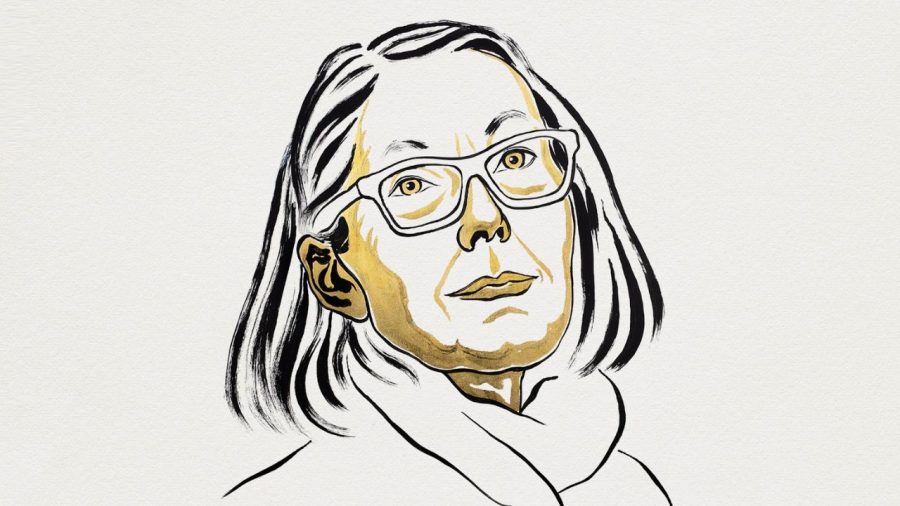



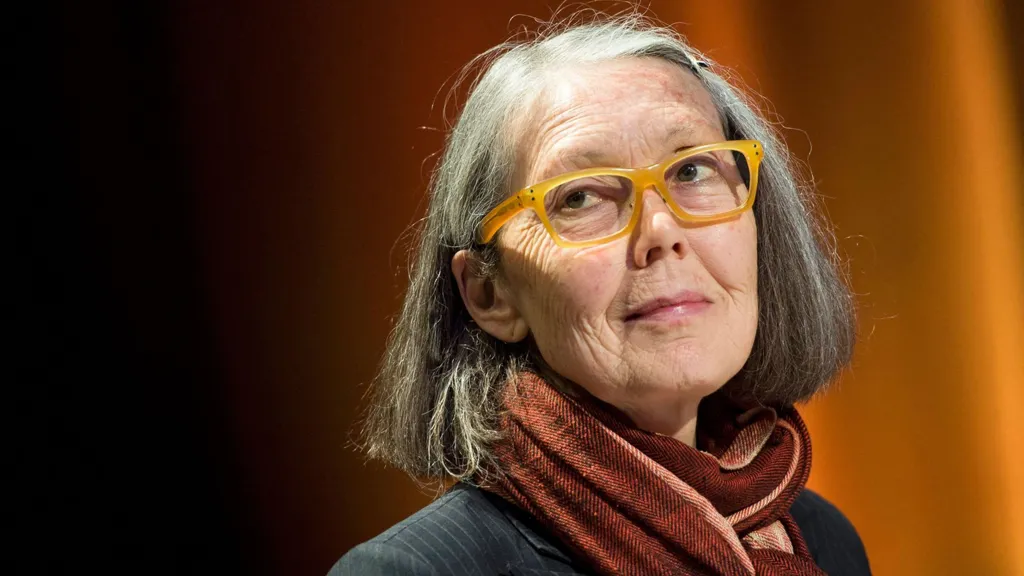
In a stunning celebration of literary innovation, Svenska Akademien, the Swedish Academy, on Thursday announced its decision to award Canadian poet, essayist, and classicist Anne Carson the 2026 Nobel Prize in Literature.
The accolade recognises a formidable body of work that has quietly transformed contemporary writing, dissolving traditional boundaries to construct a singular creative universe that feels both ancient and remarkably modern.
Born in Toronto in 1950, Carson earned her doctorate in Classics in 1981 with a thesis on ancient love poetry. Over four decades, her career has fused rigorous philological scholarship with an audacious poetic imagination.
Her intellectual journey began with word etymologies and the charged distance between lovers, concepts, and historical periods.
In her seminal 1986 essay, Eros the Bittersweet, Carson drawn on Sappho’s famous compound adjective to formulate a theory of desire, proposing that love derives its power precisely from the gap separating the lover and the beloved, an insight that has shaped everything she has written since.

At the heart of her relentless pursuit of language lies a quiet, almost mystical dedication to observation. In a 2024 interview with the Paris Review, Carson reflected:
“Sometimes, what I end up writing about is just the way the light is. And there seems to be some kind of contract that’s already in place between me and the light to say – in this notebook, which no one will ever read – what the light is like today, to get exactly the right words. I don’t know what that contract is. But it seems to underlie all the other writing. After the light, we could talk about my mother or what I’m having for dinner or Proust’s theory of translation. But the important thing is over. The light was the important thing. It remains a mystery to me why that’s the case, or where that contract came from.”
This profound commitment to capturing precise truths illuminates her most celebrated masterpiece, Autobiography of Red (1998).




Reimagining an ancient Greek myth about the winged red monster Geryon, Carson crafted a tender, queer coming-of-age novel in verse tackling trauma, longing, and the heartbreak of loving someone who will destroy you.
Critics still hail it as one of the finest long poems of the late twentieth century.
Throughout her career, Carson’s formal restlessness has proved legendary. Her self-proclaimed arch-enemy has always been boredom, a foe she confronts with fierce wit and structural experimentation.
In The Beauty of the Husband (2001), she mapped out a bitter marital row across twenty-nine “tangos,” prefaced by the poetry of John Keats.
Her moving 2010 work, Nox, took the physical form of an accordion-fold box filled with letters, photographs, and translations to mourn her late brother alongside the Roman poet Catullus.
Recent works like Float (2016), a collection of twenty-two unbound chapbooks designed to be read in any sequence, and Wrong Norma (2024) showcase her endless eagerness to shatter genre conventions.
Beyond her original compositions, Carson is an acclaimed translator, delivering vibrant English versions of Sappho (If Not, Winter), Sophocles (Antigone), and Euripides (Bakkhai).
These are never mere renderings; they are original works that speak with contemporary urgency while remaining faithful to the classical pulse.
Central to Carson’s brilliance is her “stereoscopic vision”, an ability to hold two distant perspectives in equipoise at once.
Whether pairing Simonides of Keos with Paul Celan, Thucydides with Virginia Woolf, or Emily Brontë with a woman grieving on the Yorkshire moors, Carson yields work that is playful, ironic, intellectually rigorous, and emotionally devastating.
Carson’s influence extends far beyond the page into theatre, opera, visual art, and dance through multi-disciplinary collaborations.
In honouring her with literature’s highest prize, the Swedish Academy celebrates an author who has made the classical tradition feel urgently alive and demonstrated that form itself can be an act of discovery.