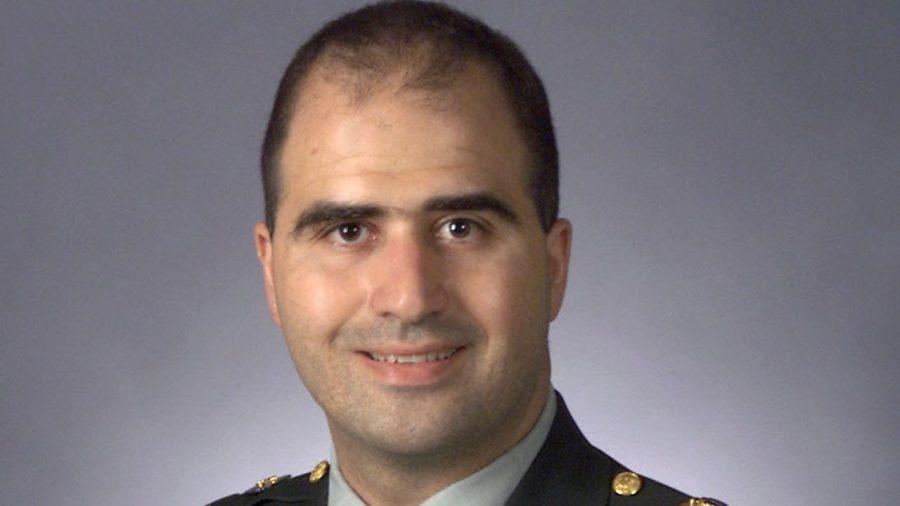



The public will be able to watch the execution of a former US Army major by firing squad, US Defence Secretary Pete Hegseth has said.
A Defence Department official told the BBC the execution of Nidal Hasan, who shot dead 13 unarmed US soldiers at Fort Hood in 2009, would be livestreamed.
It is believed it would be the first public execution in the US in almost a century.
The decision to livestream it is “unprecedented in the modern era” and “on uncertain legal terrain,” said John Mills, a lawyer who works with inmates sentenced to death.
“People need to understand that there’s serious consequences for these types of things,” said Hegseth.
The UN human rights office told AFP that livestreaming it would be “tantamount to a public execution and would breach the absolute prohibition of torture”.
Democratic Senator Chris Murphy told CNN that the idea was “disgusting” and reminiscent of executions carried out by the Islamic State group.
The Pentagon announced earlier this week it would execute Hasan in the first military execution in more than 60 years.

Hasan, a US Army psychiatrist from Virginia, admitted fatally shooting 13 unarmed soldiers in a crowded medical building at Fort Hood.
Alonzo Lunsford, a former US Army sergeant who was shot seven times in the attack, told the BBC’s Today programme that he supported the execution by firing squad, as a method “befitting” for what he did.
He does not believe everyone should be able to watch the livestream, concerned about the message it sends younger people, but says it is important that those affected by the shooting are given the opportunity.
“As far as the families of the fallen and the families of the survivors, and the survivors themselves, yes, I think we should be able to look at it uncensored.”
Lunsford says he plans to attend the execution and before they pull the trigger he wants Hasan to look him in the eyes.




“I want him to know he failed. I’m still here.”
Hegseth said in an interview with conservative TV outlet Real America’s Voice that Hasan is “gonna get a firing squad of soldiers. As it should be”.
Asked if Hasan had made any final requests or reached out to President Donald Trump, Hegseth said: “Don’t care. We’ll see him on December 3rd.”
A Pentagon spokesperson said on Monday that Trump had approved the defence secretary’s recommendation.
The BBC has asked the White House whether Trump supports a livestreamed public execution.
While there were more than 2,700 executions across 17 countries last year, only two countries carried them out publicly.
Eleven public executions were known to have been carried out in Iran in 2025, and another six in Afghanistan, according to Amnesty International.
The execution is scheduled to take place at Fort Hood in Texas on 3 December.
It will be the first military execution by firing squad since the end of World War Two.
In court Hasan apologised for “any mistakes”. He said during his court martial in 2013 that he believed he was protecting Muslims and the Taliban in Afghanistan.
A military execution requires approval from the US president, according to military law.
It also requires appellate review, where a higher court inspects the decision, and a final judgement on its legality to move forward.
The appellate process for Hasan is not over, Mills said, and he is likely to seek review of his conviction and sentence in federal court, which would likely stay the execution.
As such, Mills said that he would be surprised if the execution happened.
“Seeking to make it livestreamed, a firing squad execution, is little more than attention-seeking by the Trump administration and is unlikely to occur, much less deliver any semblance of justice,” he added.
Certain states require some form of public viewing of executions. Many states require journalists to be present, and the person due to be executed can invite people.
Others also allow ordinary citizens to volunteer as witnesses.
But “there hasn’t ever been a livestreamed execution,” says Deborah Denno, a law professor at Fordham University, who has studied US execution methods.
A livestreamed execution would “force a level of transparency that we have probably never seen before in this country”, she said.