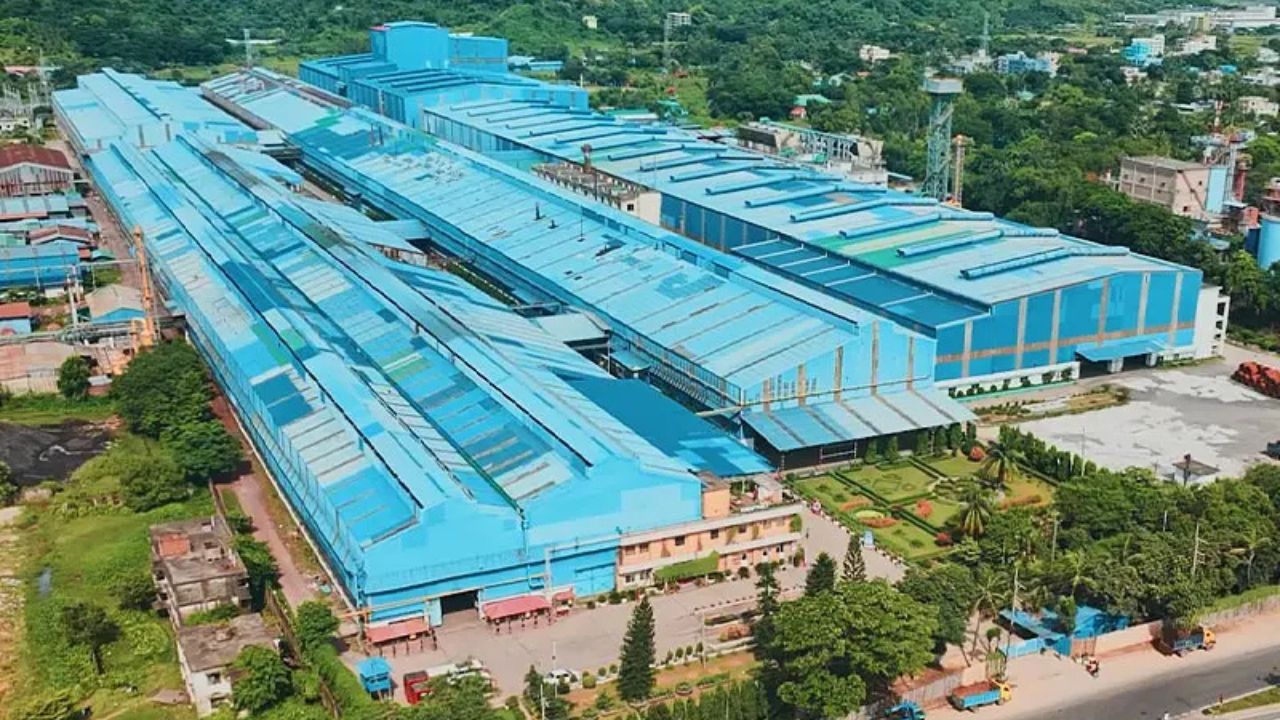

Bangladesh’s construction industry has made a major stride with the commissioning of the world’s fastest rebar (reinforcing bar) rolling mill by Abul Khair Steel Limited, a concern of Abul Khair Group, in Sitakunda, Chattogram.
The ultra-high-speed mill, fully supplied by German engineering firm SMS group, has an annual capacity of 1.6 million tonnes of deformed bars, enough to cater to more than a fourth of the national demand.
Abul Khair Steel said in a statement on Tuesday that this facility will help meet the country’s rapidly rising infrastructure and housing demands.
According to SMS group, the plant set a new global benchmark in rolling speed, producing 2×10 millimetre deformed bars at 55.04 metres per second. The record-breaking performance highlights Bangladesh’s growing industrial capabilities and the adoption of world-class technology.
The project represents a strategic investment in automation and precision rolling that positions Abul Khair Steel among Asia’s most advanced steel producers.

The new mill can produce bars ranging from 8 millimetres to 40 millimetres and incorporates several cutting-edge systems. Among them is the ECO Flame+ burner, which is designed to cut nitrogen oxide emissions while improving fuel efficiency.
It also uses an Exotherm induction furnace that recovers billet heat loss to maximise thermal efficiency, and the Endless Bar Rolling System (EBROS), which enables continuous billet welding to increase productivity by up to 8% and improve material yield by about 2%.
The plant also features MEERdrive blocks — modular units with individual motors that allow greater flexibility and consistent product quality — reducing the need for roll-ring stocks by roughly 60 percent compared to traditional rolling setups.
Its High-Speed Delivery (HSD) system ensures precise rebar transfer at top speed, allowing for smoother, maintenance-free operation.


SMS group said these integrated systems will reduce both capital expenditure (CAPEX) and operational expenditure (OPEX), enabling Abul Khair Steel to deliver competitively priced, high-quality steel with lower environmental impact.
For Bangladesh, which is implementing large-scale infrastructure projects nationwide, the new facility marks a turning point in industrial capacity.
By increasing domestic rebar output, Abul Khair Steel will help reduce reliance on imports, strengthen the local manufacturing base and create significant employment opportunities in Chattogram’s industrial corridor.
The company said the project aligns with Bangladesh’s commitment to sustainable industrialisation by incorporating low-emission technology and energy-recovery mechanisms that shrink the plant’s carbon footprint.
Bernhard Steenken, chief sales officer for Asia-Pacific (APAC) and Middle East and Africa (MEA) at SMS group, said the milestone demonstrates their technical expertise in combining speed, efficiency and sustainability.
“By achieving record-breaking rolling speeds and ensuring reliable performance, we are helping Abul Khair Steel support Bangladesh’s infrastructure growth and serve its customers more effectively,” he said.
Abul Khair Group head of corporate affairs and legal Sheikh Shabab Ahmed said the project reflects a new chapter in Bangladesh’s industrial growth.
“At Abul Khair Steel, we have partnered with SMS group GmbH, the world-renowned German engineering and plant construction company with over 150 years of heritage, to bring state-of-the-art steelmaking technology to Bangladesh,” he said.
“The commissioning of the world’s fastest rebar rolling mill marks a significant leap forward in fulfilling Bangladesh’s infrastructure vision. Beyond technology, this project has created more than 3,000 new jobs, empowering local talent and driving inclusive industrial development,” he said.
He added that the new facility will produce globally benchmarked high-strength steel with a yield strength of 500 megapascals (MPa) and above, supporting the government’s goal of building a safer, earthquake-resilient and sustainable nation.
With this facility, Abul Khair Steel has gained a decisive competitive advantage in the construction steel market.
As demand rises for urban, coastal and disaster-resilient infrastructure, the mill’s output and quality standards are expected to set new benchmarks for the industry.