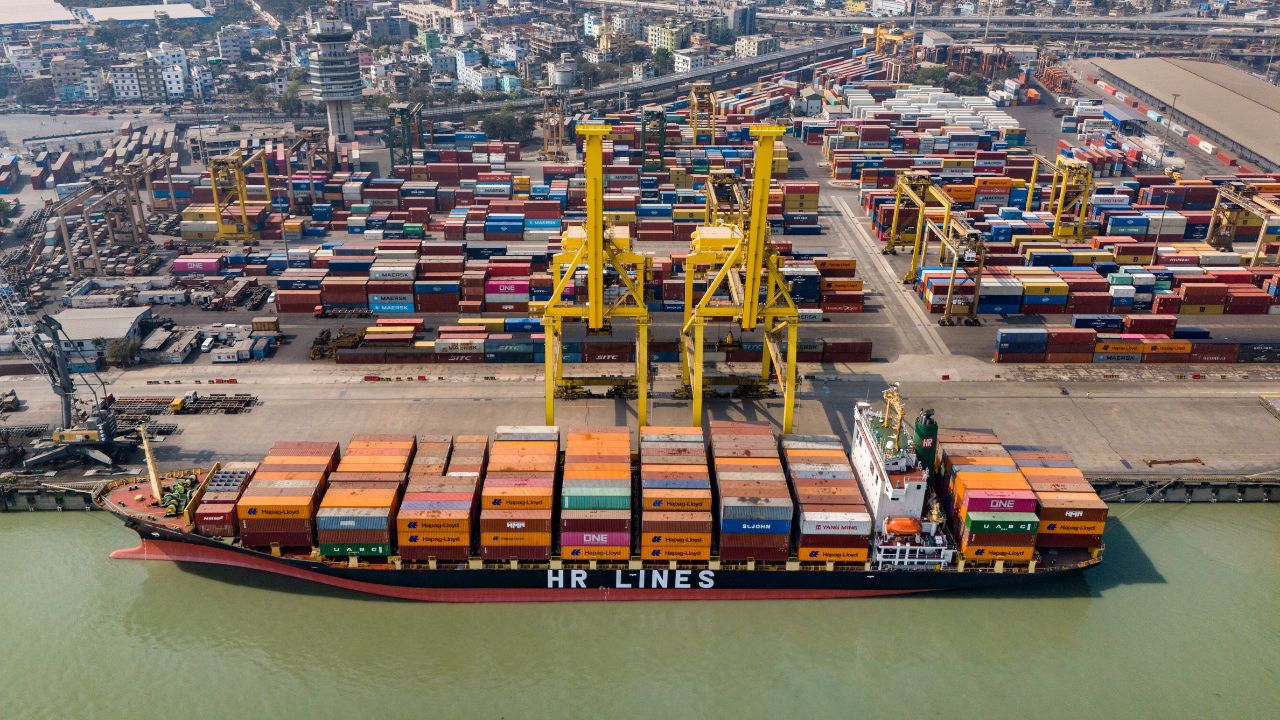

Chattogram Custom House locked 1,451 import consignments during the 2025-26 fiscal year over suspected irregularities, recovering Tk111.72 crore in evaded revenue and penalties after filing 843 Customs cases.
The irregularities involved attempts at revenue evasion through HS code alteration, excess goods and false declarations.
After physical examinations and scrutiny of documents, Customs recovered Tk52.08 crore in evaded revenue and Tk59.63 crore in penalties.
The Customs Audit, Investigation and Research (AIR) unit identifies and locks suspicious consignments and conducts 100 per cent physical examinations to detect irregularities.
The unit typically locks more than 100 consignments a month on suspicion, and when discrepancies are detected, internal Customs cases are filed against the concerned importers.
In some months, more than 70 such cases are filed.
In August alone, Chattogram Custom House realised Tk20 crore in revenue and fines through 60 cases.
In one case, M/S Yasin Textile, an importer based in Narsingdi, imported screws and second-hand shuttle looms and submitted a Bill of Entry on 16 August through its appointed C&F agent Coastal Trading Company for clearance of the consignment at Chattogram Custom House.

Before clearance, Customs officials physically examined the consignment and found self-drilling screws and second-hand shuttle looms.
According to Customs findings, the importer attempted to evade Tk6,956,872 in revenue by declaring another HS code.
Although Customs did not impose a separate financial penalty for the HS code alteration, the consignment was released only after the importer paid the full amount of the additional revenue assessed by the authorities.
A similar case involving excess goods and an attempted duty evasion through HS code alteration was detected in another consignment.
On 22 August, C&F agent Masfyang Trade International Ltd submitted a Bill of Entry to Chattogram Custom House on behalf of Dhaka-based importer Rayhan Enterprise for clearance of a consignment of hot-rolled products.
During physical examination, Customs officials found goods in excess of the quantity declared in the Bill of Entry.



The examination also revealed an attempt to evade Tk20.52 lakh in duties by changing the HS code.
Customs authorities imposed a Tk22 lakh fine in the case.
The consignment was subsequently released after payment of a total Tk42.52 lakh, including the additional duties, taxes and fine.
Shamsul Kabir Chowdhury, custom Sarkar (C&F Agent staff) of Coastal Trading Company, the C&F agent appointed by Yasin Textile, told TIMES of Bangladesh that the additional duty was paid because of a dispute over the HS code and the applicability of an SRO benefit.
“Under the Textile Association’s SRO, concessional benefits are available for machinery parts imported by textile mills. We claimed the SRO benefit by declaring HS Code 7318.15.19 in the Bill of Entry. However, after inspection, Customs changed the HS code to 7318.14.00,” he said.
According to Chowdhury, Customs determined that the specific screws imported in the consignment did not qualify for the concessional benefit under the SRO applicable to textile machinery.
“The importing firm believed it was entitled to the SRO benefit. However, due to Customs’ classification and interpretation, the benefit was not granted. We cleared the consignment after paying the additional duty assessed by Customs,” he said.
According to Chattogram Custom House data, 1,451 import consignments were locked during the 2025-26 fiscal year over suspected irregularities.
Following physical examinations and scrutiny of documents, 843 Customs cases were filed over irregularities and revenue evasion.
The Customs House subsequently realised Tk111.72 crore in evaded revenue and penalties.
Of the total amount, Tk52.08 crore was recovered as evaded revenue, while Tk59.63 crore was collected in penalties.
Customs data show that, depending on the nature and severity of an irregularity or fraud, penalties can be imposed at up to twice the amount of the evaded revenue under the applicable rules.
Chattogram Custom House has at least 20 sections responsible for assessing imported goods based on product type, HS code and serial number.
During the assessment process, the AIR unit identifies and locks consignments considered suspicious for further examination.
The locked consignments undergo 100 per cent physical inspection, along with scrutiny of relevant documents.
If fraud, duty evasion, false declaration, excess goods or incorrect HS codes are detected, an internal Customs case is filed against the importer.
After hearings, the relevant Customs authority issues an adjudication order.
The importer can clear the consignment after paying the duties, taxes and penalties determined in the order.
An importer who disagrees with an adjudication order can seek legal remedies before the relevant Customs tribunals and higher courts, as permitted under law.
Sharif Mohammad Al Amin, Assistant Commissioner and spokesperson for Chattogram Custom House, told TIMES that the AIR unit is working to prevent fraud and revenue evasion through the identification of irregularities in import consignments.
He said recovering substantial amounts of revenue by detecting irregularities is an important part of Customs’ efforts to protect government revenue and strengthen overall revenue collection.