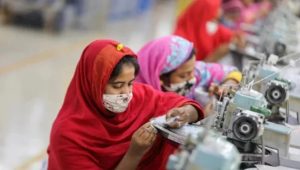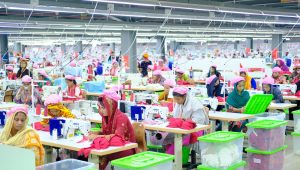

Gas supply to industrial units has begun to improve following assurances from Prime Minister Tarique Rahman, but the crisis remains far from resolved. Many factories continue to operate well below capacity, whilst several remain completely shut. Furthermore, the reliance on alternative fuels has driven up production costs across key manufacturing sectors.
Industrial units in various parts of Gazipur are still grappling with low gas pressure, preventing boilers and gas-dependent machinery from running at full load. Consequently, some factories have been forced to deploy diesel-powered alternatives to maintain operations.
Ibrahim Khalil Faisal, manager of Rabbani Washing Factory in the Tongi BSCIC area, told TIMES of Bangladesh: “The factory will only be able to return to full production capacity once gas supply normalises completely. That will also allow us to deliver goods to foreign buyers on schedule.”
Similarly, Shibli Sarker, administrative officer at Shishir Knitting and Dyeing Factory in Paghar, noted that machinery in their dyeing unit had been idle for an extended period due to the severe shortfall. “Although pressure has improved slightly over the past two days, we are still unable to operate all our machines,” he said.

At Fu Wang Ceramic, General Manager Hamidur Rahman reported that whilst the facility requires a gas pressure of 15 pounds per square inch (psi) to maintain production, it is currently receiving a mere 1 to 1.5 psi. “This is severely disrupting production and damaging our business,” he explained.
By contrast, factories with lower gas dependencies have managed to cushion the impact. Mohammad Sabur Hossain Sardar, Managing Director of Smile Apparels, said his plant has secured just enough gas to keep its boilers running. “As a result, we have avoided major production disruptions so far,” he noted.




Other manufacturers have turned to expensive workarounds. Rezaul Karim, factory in-charge at Epic Garments Limited, explained that whilst most of their machinery runs on diesel systems, gas is essential for steam ironing. “To tackle the crisis, we set up our own gas generation system to fire the boilers. Whilst this has kept production moving, it has significantly escalated our operational costs,” he said.
According to June data from the Gazipur regional sales office of Titas Gas, the area hosts 2,764 gas-dependent industrial units. Titas Gas Deputy Managing Director, Engineer Shakhawat Hossain, assured that supply was steadily recovering. “As gas is piped from Chattogram, it may take a few more days for the situation to fully normalise,” he stated.
Superintendent of Police Mohammad Khalilur Rahman of Gazipur Industrial Police-2 informed TIMES of Bangladesh that officers would visit industrial zones within the next two days for on-site assessments, noting that a clearer picture would emerge following the inspection.
In Narsingdi, another major manufacturing hub, local Chamber of Commerce and Industry President Rashedul Hasan Rintu struck an optimistic note, stating that factory output had already shown signs of recovery. “We are hopeful that the crisis will be completely resolved soon,” he remarked.
However, Bangladesh Textile Mills Association (BTMA) spokesperson Abdullah Al Mamun offered a more cautious assessment, stating that gas pressure had yet to show a meaningful surge. “It remains largely unchanged. However, based on trends observed over recent days, we anticipate a marked improvement from Tuesday night,” he observed.
At a meeting with business leaders on Monday, Prime Minister Tarique Rahman assured industrial leaders that gas and power supplies would improve from Tuesday, forecasting that industrial gas delivery would return to levels seen six weeks ago.
In July, a technical fault at one of the nation’s floating storage and regasification units (FSRUs) caused average gas supply to plunge to between 2,100 and 2,300 million cubic feet per day (mmcfd). Since Monday, supply has recovered to approximately 2,600 mmcfd, with output from the country’s two floating liquefied natural gas (LNG) terminals climbing above 990 mmcfd after remaining constrained below 700 mmcfd for over a month.
Additional reporting by Asaduzzaman Ripon from Narsingdi.