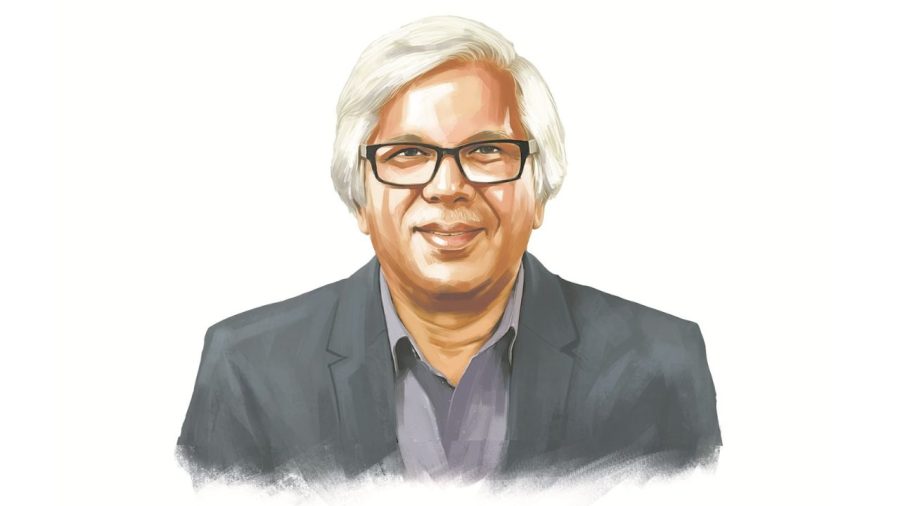

Bangladesh’s investment challenge is increasingly becoming a question of credibility rather than a shortage of capital, according to Bangladesh Chamber of Industries President Anwar-Ul Alam Chowdhury Parvez.
The country can attract investment only when businesses believe that commitments made before investment decisions will be honoured after capital has been deployed, he said.
In an interview with TIMES of Bangladesh, Chowdhury argued that when the state fails to deliver promised gas, electricity, infrastructure or regulatory support within agreed timelines, investors should not be left to absorb the entire financial burden.
“An investor has already made the investment, but the promised utility connection has not come. How will the investor start production?” he asked.
He said Bangladesh’s private sector is ready to invest, but repeated delays in essential services are turning completed projects into stranded assets, increasing financial pressure on businesses and weakening the country’s reputation among investors.
Investment without delivery
Chowdhury pointed to the experience of major industrial groups as evidence of how state-delivery failures can disrupt investment.
He cited City Group and Meghna Group as examples of companies that have invested heavily in industrial facilities but have faced operational challenges due to delayed infrastructure and utility support.
At City Group’s Hoshendi Economic Zone in Munshiganj, factories built for sectors including cement, sugar, paper, shipbuilding and LPG-related businesses remain unable to operate at full capacity despite thousands of crores of taka invested in infrastructure.

“The loan repayment period starts, but the factory is yet to start production,” he said.
“Who will bear the liability of that loan and the business losses?”
For an investor, he said, a completed factory without electricity, gas or supporting infrastructure is not a functioning business.
The consequences also extend beyond individual companies. Idle factories mean lost production, fewer employment opportunities and increased risks for banks that financed those projects.
An entrepreneur will invest only when there is confidence that essential services will arrive on time and remain reliable, he said.
“If the government gives an assurance before investment and the investor acts on that assurance, the investor should not be left alone to bear the consequences when the commitment is not fulfilled,” he said.




A case for accountability
Chowdhury proposed introducing a compensation mechanism under which government agencies would share financial responsibility when investment losses occur due to state failures.
He said the principle should be reciprocal. Private companies face penalties when they fail to meet contractual obligations, and similar accountability should apply when public agencies fail to deliver promised services.
“If private companies are compelled to pay fines for delays in promised commissioning of power plants, why should it not apply to the government, too?” he asked.
Such a system, he said, would not only compensate affected investors but also improve discipline within government agencies.
“It would restore confidence because investors would know that commitments have consequences,” he said.
The issue has become particularly important as Bangladesh promotes economic zones as drivers of industrial expansion.
Land alone, he said, cannot make an economic zone attractive.
“If you ask investors to come to economic zones, you have to make the zones investment-ready.”
Reliable gas, electricity, roads and logistics facilities are essential for turning industrial zones into productive hubs. Without them, economic zones risk becoming places where companies invest in land, buildings and machinery but remain unable to begin commercial operations.
Predictability is the missing ingredient
Beyond utilities, Chowdhury said investment decisions are also being affected by broader economic uncertainty, including high interest rates, exchange-rate volatility and policy unpredictability.
A sudden increase in borrowing costs can undermine the entire financial structure of a project.
“If interest rates suddenly rise, the entire financial plan and the viability of the project can be destroyed,” he said.
He also stressed the importance of exchange rate stability. After years of maintaining the currency at an artificially strong level, the sharp depreciation of the taka in 2022 and 2023 increased the cost of imports and foreign currency liabilities.
Companies had to rapidly adjust their business plans as imported machinery, raw materials and external obligations became significantly more expensive.
Such shocks, he said, make long-term planning difficult.
“An economic system, its administration and management need to be reliable and predictable for investors who need stability and want to look ahead,” he said.
Chowdhury warned that weakening the private sector would create wider economic risks, particularly as Bangladesh prepares for the challenges of post-LDC graduation.
“We need a robust private sector to meet the post-LDC challenges,” he said. “If the private sector becomes weaker, the economy will face a much bigger risk.”
For Bangladesh to sustain growth, he said, the government must move beyond encouraging investment and focus on ensuring that commitments made to investors are delivered.
“Once the investor has made the investment, the government cannot simply say that the offered facilities or support will come later,” he said.
“The commitment has to mean something.”
Anwar-Ul Alam Chowdhury Parvez is the President of Bangladesh Chamber of Industries.