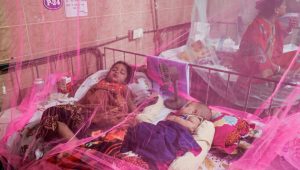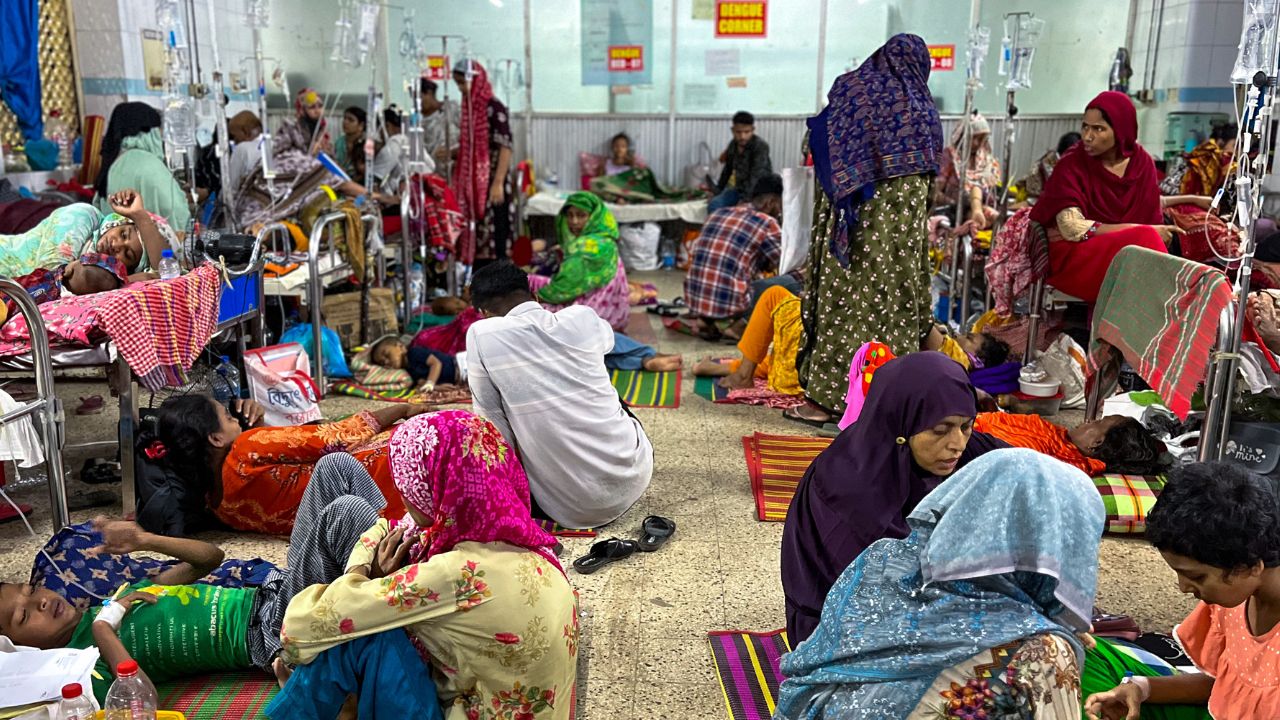

Patient safety remains a grave concern across Bangladesh, where official investigations, state data, and public health experts paint a troubling picture of rampant doctor absenteeism, severe administrative failures, and lax infection control.
As the nation marks World Patient Safety Day on 17 September, systemic vulnerabilities continue to expose patients to severe risks across every level of the healthcare system.
A recent investigation by the Directorate General of Health Services (DGHS) into the deaths of six newborns at Ad-din Medical College Hospital in Moghbazar, Dhaka, highlights the real-world consequences of these failures.
All six infants died within hours of each other on 27 May.
The DGHS inquiry revealed that the babies were born healthy and stable, requiring no specialized incubator care initially.
However, they were placed in an enclosed, 900-square-foot post-operative ward devoid of natural light or ventilation.
Investigators discovered that the ward’s five-ton air-conditioning unit was switched off between 02:00 and 06:00, severely impairing the infants’ breathing and contributing directly to their deaths.
Furthermore, despite roughly 50 patients occupying the ward, no duty doctor was present.

From the moment the newborns exhibited respiratory distress until their conditions became critical around 06:00, no physician was called to evaluate them.
Citing gross nursing negligence, physician absenteeism, and irresponsible administrative oversight, the DGHS concluded the ward was entirely unfit for post-operative care.
In a bizarre finding, the inquiry also noted the presence of an unauthorized commercial bakery operating on the hospital premises.
The tragic incident reflects broader national trends.
A 2025 survey by the Bangladesh Bureau of Statistics revealed that 38 per cent of healthcare seekers nationwide experienced negligence, carelessness, or mistreatment in hospitals, a figure rising from 36 per cent in rural areas to 44 per cent in urban centres.



Overstretched staffing exacerbates these risks.
A study conducted at Dhaka Medical College Hospital, titled Factors Influencing Medication Errors Among Nurses at a Tertiary Level Hospital in Bangladesh, documented a 38 per cent medication error rate among nursing staff.
The research linked these errors to acute understaffing, chaotic ward reassignments, and poor communication between physicians and nurses.
Hospital nurses, speaking anonymously, confirmed that high patient-to-staff ratios routinely push them past operational limits.
To address the shortage, the government announced plans to recruit 100,000 health workers, roughly 80 per cent of whom will be women.
However, experts argue that expanding the workforce alone will not resolve institutional defects.
Dr Abu Muhammad Zakir Hussain, a former member of the Health Sector Reform Commission and former senior World Health Organization (WHO) official, highlighted administrative fragmentation as a core driver of non-accountability.
“Nurses currently operate under an independent administrative structure outside the direct control of hospital management,” Dr Hussain explained.
“Without centralized administrative accountability at the hospital level, essential teamwork collapses.”
He urged reforms to integrate nursing oversight into hospital management to enforce coordination and curtail negligence.
Failures in basic hygiene and infection control further endanger public health.
At Shahid Shamsuddin Ahmed Hospital in Sylhet, two wards, including an intensive care unit (ICU), were designated as a measles isolation facility.
Despite housing highly vulnerable patients, the unit operated without basic security or access controls, permitting unrestricted foot traffic and routine breaches of ICU infection protocols.
The WHO classifies measles as exceptionally contagious, warning that a single infected individual can transmit the virus to 12–18 people through airborne droplets.
Responding to the findings, Dr Mahbubul Alam, Divisional Director of Health for Sylhet, promised an immediate investigation into the ICU protocol breaches.
Legal recourse for victims remains exceptionally rare.
A report by rights group Ain O Salish Kendra recorded 504 documented cases of medical negligence between 1995 and 2008, yet almost none led to formal convictions.
Dr Hussain stressed that clinical outcomes rely on three fundamental pillars: “behaviour, skill, and the tools used to apply that skill.”
He called for comprehensive professional training, modern medical equipment, and robust institutional accountability to protect patient welfare and rebuild public trust in Bangladesh’s healthcare system.