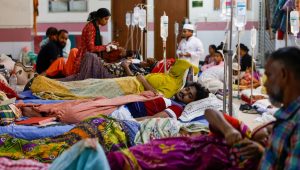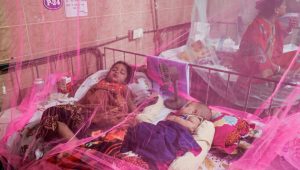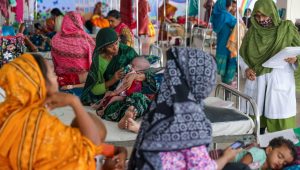

Bangladesh’s dengue situation has worsened sharply this year, with hospital admissions up 43% and deaths also rising, as the country enters the peak dengue period of August to October.
Dengue deaths have reached 164 this year, compared with 155 during the same period last year, while monthly figures show a sharp rise in admissions in recent months.
Public health expert Mushtuq Husain said Bangladesh could face another major dengue outbreak in 2027, based on the pattern of major outbreaks in 2019 and 2023. However, he warned that the worsening situation this year could mean the country faces another outbreak earlier than expected.
According to Directorate General of Health Services (DGHS), 55,163 dengue patients were admitted to hospitals across the country until Tuesday this year. During the same period in 2025, 38,527 patients were admitted; indicating an increase of 16,636 admissions, or about 43%.

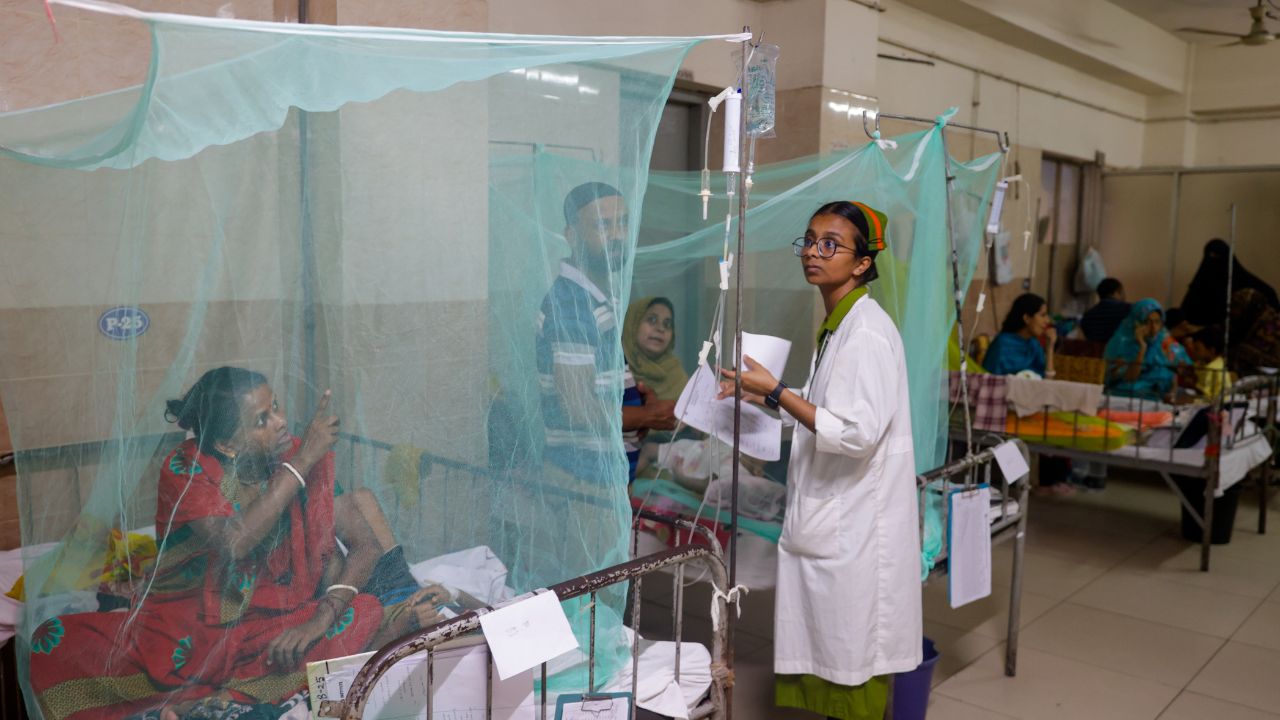
The latest daily figures further highlight the severity of the situation. According to the DGHS report on Tuesday, 1,593 dengue patients were admitted to hospitals in the previous 24 hours, while seven more people died. A total of 4,058 dengue patients were receiving treatment in hospitals across the country.
Monthly figures also show a sharp rise in dengue admissions in recent months. A total of 19,317 patients were admitted in August, while 2,536 were admitted in the first 15 days of September. Of the 55,163 patients admitted this year, 50,941 have recovered and been discharged.
In response to the worsening situation, the government has launched a three-month programme to strengthen dengue prevention and cleanliness drives. Prime Minister Tarique Rahman inaugurated the programme and directed authorities to take necessary measures to prevent the disease from spreading across the country.




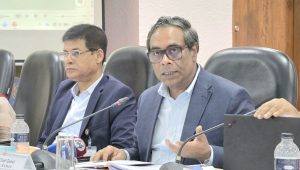
Speaking at a workshop on a strategic action plan for dengue prevention on Monday, Local Government, Rural Development and Co-operatives Minister Abdul Moyeen Khan said necessary measures would be taken in coordination with the health ministry.
As the situation worsens, entomologists and public health experts say hospital-based treatment alone will not be enough to contain dengue. Former IEDCR chief scientific officer Mushtuq Husain said reducing dengue deaths requires measures beyond hospital-based treatment, including community-level testing of fever patients, early identification of danger signs and closer monitoring of high-risk groups.
He also recommended treating vulnerable patients at secondary-level hospitals to ease pressure on major hospitals and reduce deaths. “This year, the prevalence of dengue is higher than in the past few years and higher than the five-year average,” he said.
He also called for continuous, scientific mosquito control and an assessment of the government’s three-month campaign.
Entomologists said dengue control requires evidence-based, target-specific Aedes mosquito management, with control measures focused on areas with high concentrations of breeding sites. Otherwise, resources may be wasted without significantly reducing transmission.
Dr Kabirul Bashar, medical entomologist and professor of zoology at Jahangirnagar University, told TIMES that vaccination should not be treated as a standalone dengue-control measure because vaccines have limitations in age eligibility and effectiveness, with some offering greater protection against particular serotypes.
Bangladesh therefore needs integrated vector management, he said. With cases and deaths exceeding those recorded during the same period last year, he stressed that the challenge is not only treating patients but also stopping transmission.
“Public participation is very important. People need to feel that controlling mosquitoes is also their responsibility. We must ensure that there are no mosquitoes in our homes or around our premises,” he added.