

Dengue is no longer a disease confined to Dhaka or the monsoon months. Repeated outbreaks in recent years, along with a growing number of cases outside the capital, have turned it into a persistent public health threat across Bangladesh.
The disease is mainly transmitted by infected Aedes mosquitoes and typically causes high fever, intense headache, muscle and joint pain, nausea and rash. Many patients recover within a week or two, but some develop severe dengue, which can lead to serious complications and become life-threatening.
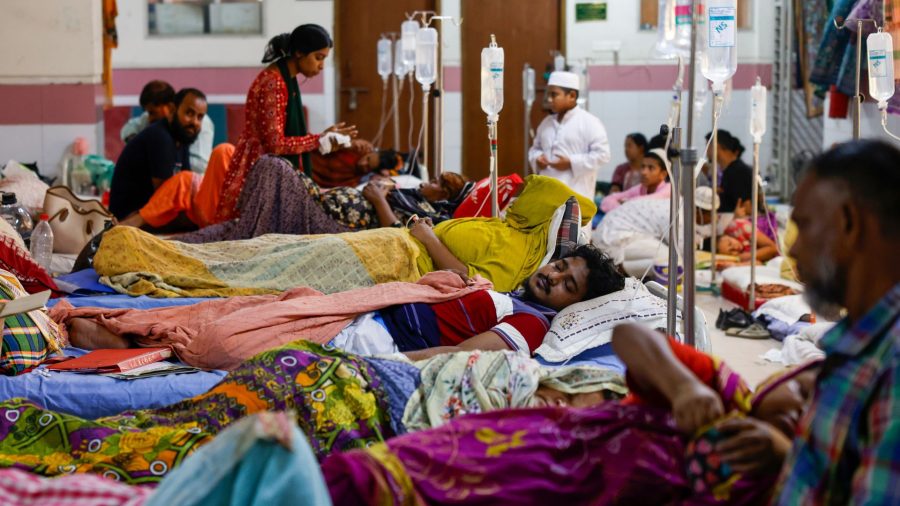
The scale of the problem became particularly clear in 2023, when Bangladesh recorded 3,21,179 dengue cases and 1,705 deaths, the country’s largest outbreak since dengue was first detected in 2000. The outbreak placed significant pressure on hospitals and demonstrated how quickly the virus could spread across the country.
The situation improved in 2024, when 1,01,214 cases and 575 deaths were officially reported. But dengue remained a major public health concern in 2025, with 102,861 cases and 413 deaths.
The figures suggest that dengue did not disappear after the dramatic peak of 2023. Rather, transmission persisted at a level that could fuel another large outbreak when environmental conditions become favourable.
And in 2026, the numbers are rising again with the monsoon. As of 16 September, Bangladesh had reported 56,916 dengue cases and 171 deaths. The monthly figures were already showing a sharp increase: May recorded 715 cases and 13 deaths, while June saw 2,907 cases and 13 deaths.

September is particularly concerning because conditions can be highly favourable for Aedes mosquito breeding. Experts have warned that infections could continue to rise through September, with the dengue season potentially extending into October this year.
The geography of the disease is also changing. Dhaka remains one of the epicentres, but transmission outside the capital has increased. Weather conditions, stagnant water, inadequate mosquito control and expanding breeding sites can all contribute to the spread.
Climate and environmental factors are becoming increasingly important in understanding the disease. High temperatures, rainfall and humidity create favourable conditions for Aedes mosquitoes, while poor waste management and containers holding stagnant water provide additional breeding grounds.
According to Dr AKM Jasimul Hasan, MBBS, PGT (General Practitioner), controlling these breeding sites is one of the most important ways to reduce the risk of dengue.




“The first and foremost measure is to get rid of excess water in and around the home and office,” he says, advising people not to leave containers outside where they can collect rainwater and to clean water-holding containers regularly.
Personal protection is equally important. Mosquito nets and screens can help reduce exposure, while repellents and clothing that covers exposed skin can provide additional protection, particularly during periods when mosquitoes are active.
Climate and environmental conditions are also becoming increasingly important in understanding dengue transmission. High temperatures, rainfall and humidity can create favourable conditions for Aedes mosquitoes, while poor waste management and inadequate drainage can leave behind the stagnant water they need to breed.
For those who become infected, recognising symptoms early is important. High fever, severe headache, body pain, nausea and rash are among the common signs. Anyone developing such symptoms should consult a doctor and undergo testing as advised.
Most patients recover with appropriate care, but dengue can become dangerous as the illness progresses. Severe abdominal pain, repeated vomiting, bleeding, extreme restlessness or weakness can signal the need for urgent medical attention.
“Patients should remain well hydrated, get adequate rest and continuously monitor their condition,” Dr Hasan says.
Hydration is particularly important during recovery. Oral rehydration solutions, water, soups and other suitable fluids can help maintain fluid levels. Patients can eat easily digestible foods according to their appetite, while fruits and vegetables can form part of a balanced diet.
There is, however, no particular food that can cure dengue. “Food supports recovery, but it cannot replace medical monitoring or treatment,” Dr Hasan says. Claims that specific fruits, juices or foods can cure dengue have no substitute for proper medical care.
Bangladesh’s dengue experience over the past five years points to a shift from occasional outbreaks to persistent transmission, with the potential for cases to rise rapidly when weather, mosquito breeding conditions and public health factors align.
The 2023 figures demonstrated the scale of the disease’s impact. More than 1,00,000 cases were recorded in both 2024 and 2025, showing that the threat remained significant even after the unprecedented peak of 2023.
The rise in 2026 is another indication that dengue cannot be treated simply as a problem of a particular month or a particular city.
The immediate challenge is to prevent the current surge from developing into another large-scale national outbreak. That will require more than increasing hospital beds and expanding treatment facilities after people become infected.
Preventing mosquito breeding, improving waste and water management, strengthening surveillance and raising public awareness must remain central to the response.
For the people of Bangladesh, the message is straightforward: dengue prevention should begin before the fever does. With the country entering another critical period of the dengue season, the cost of inaction could be considerable.