
For many women, pursuing a career in science is not simply a matter of academic ability. Access to education, financial constraints, social expectations and limited professional networks can all shape how far they are able to go.
For Samreen Mehak, these challenges became particularly evident after she went to the United States as an international student.
Unlike US citizens, international students are generally not eligible for many forms of federal financial aid and student loans. Samreen found that this also narrowed her access to scholarships and grants. While pursuing her studies, she was repeatedly told that funding for graduate programmes was limited, particularly for international students.
She decided to apply for a master’s programme in biology regardless. Having financed her undergraduate education through scholarships, Samreen built her application around undergraduate research, participation in scientific conferences and work experience from multiple jobs. She eventually secured an $18,000 merit fellowship for her graduate studies.

The fellowship was significant because international students often face fewer funding options when applying to graduate programmes in the US.
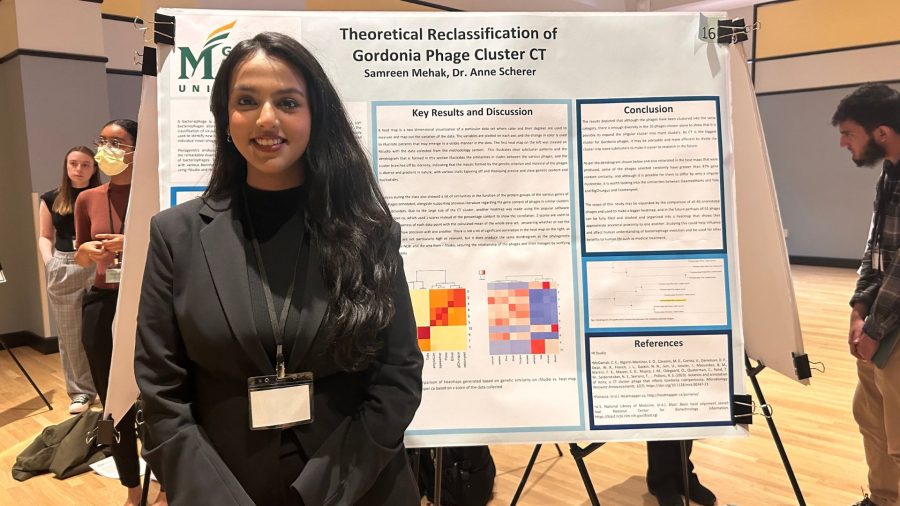
Samreen now works as a genome analyst in the United States, analysing genetic information as part of research into biological processes and disease. She has also contributed to research papers involving several institutions.




Her professional experience, however, has also made her think about the opportunities available to students in Bangladesh.
She believes many Bangladeshi students interested in research struggle to find information about opportunities, funding, academic pathways and professional networks. For her, addressing that gap is becoming an important part of what she wants to do next.
Samreen hopes to support young people in Bangladesh who are considering careers in science, particularly those who may not have access to the guidance she believes can make a difference at an early stage.
Her own path has also shaped her view of women’s participation in STEM. She argues that women should be encouraged to pursue science not simply as a matter of representation, but because their participation is necessary across medicine, research and academia.
Her advice to young women is straightforward: make use of opportunities to learn, build connections and develop professionally. She also stresses the importance of financial and personal independence, particularly for those trying to establish themselves in unfamiliar academic or professional environments.
For Samreen, the next step is not only to continue her work in genomics, but also to make some of that experience useful to students back home.
Her journey from Bangladesh to the US has shown her both the opportunities available in scientific research and the barriers that can make those opportunities difficult to access. She now hopes to help make that path somewhat clearer for others.