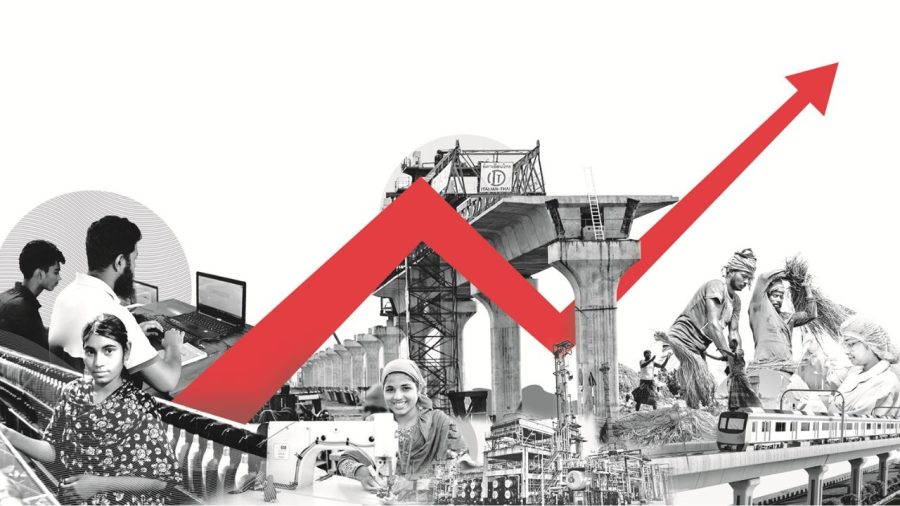

Bangladesh’s impending LDC graduation is forcing a harder question than whether the country can secure more time and utilise that time effectively before losing trade preferences: Is the economy ready to compete without them?
The answer is uncomfortable. Some macroeconomic pressures have eased, but several growth drivers remain sluggish — private investment has stagnated, domestic job creation has slowed, exports remain concentrated, energy security has deteriorated, and fiscal capacity is too weak to finance the infrastructure and human capital needed for the next phase of growth.
These problems predate the current government, which inherited years of accumulated weaknesses, largely stemming from governance and policy failures. Six months is too short to reverse them. The real test is whether the foundations are being built for a turnaround in one to two years.
The LDC transition makes that test more urgent. Bangladesh first met the graduation criteria in 2018, and the recommendation was endorsed in 2021, giving it a substantial preparation window. That time was not used effectively to strengthen competitiveness.
The government has sought a three-year extension. The UN Committee for Development Policy has said an extension would be appropriate if Bangladesh makes significant progress on domestic reforms addressing its persistent structural vulnerabilities. That makes the extension a critical reform window, perhaps a reform lifeline, not simply additional time.
The macroeconomic picture is better than at the height of the foreign-exchange crisis, but far from secure. The FX market has stabilised since September 2024, and the taka has remained broadly stable for around 20–22 months, with modest depreciation recently. Net reserves, after falling to roughly $19–20 billion, have recovered to around $32 billion.
That matters because Bangladesh must import raw materials, capital machinery, intermediate goods, fuel and agricultural inputs. Reserves therefore determine the economy’s capacity to sustain production and investment. Inflation has fallen below 9 per cent, helped partly by lower food inflation, but remains high enough to raise capital costs, squeeze households and weaken demand.
Fiscal capacity is the bigger structural constraint. Revenue mobilisation has deteriorated for more than a decade, with tax revenue below 7 per cent of GDP. A decade of foreign-funded projects has also increased debt-servicing obligations, while some investments may not have generated returns commensurate with their cost. Last fiscal year, foreign borrowing came close to foreign-loan repayments, leaving little net development financing.
Private investment has consequently had to carry more of the burden, yet it has remained around 24 per cent of GDP since 2017–18 and is now below 22 per cent. Productive capacity has not expanded fast enough for a growing labour force.

That is ultimately an employment problem.
Bangladesh needs about 2.2 million jobs a year. Domestic activity creates only around 1–1.2 million, while another 1–1.1 million workers seek opportunities abroad. Domestic employment creation has slowed since roughly 2017–19, while the garment sector’s capacity to generate jobs has weakened despite export growth. Automation, skills shortages and inadequate private investment are driving that shift.
The export model is exposed to similar structural challenges. Roughly 82 per cent of exports are concentrated in one sector. Exports were negative for most of the last fiscal year before a sharp increase in the final two months, leaving the year roughly 1 per cent lower. Labour unrest and persistent energy disruptions disrupted production, while the US reciprocal tariff regime has altered market conditions, and China, India and Vietnam are competing aggressively in Europe, Japan and Australia.
This is the real LDC challenge.
It is not simply the loss of tariff preferences. RMG still accounts for more than 81 per cent of exports, while most alternative sectors remain far from globally competitive. European buyers are imposing stricter environmental, social and governance requirements, making compliance, traceability and certification increasingly integral to market access.
Bangladesh therefore needs new trade agreements, stronger standards and compliance capacity, lower logistics costs, product and market diversification, and FDI in emerging sectors. Higher export targets without removing the constraints on market access will achieve little.




Logistics is central to that effort. Ports, customs, roads, railways, land ports and hinterland connectivity determine the cost and reliability of an export order. The National Logistics Policy needs implementation, while projects such as the Bay Terminal, which will help Bangladesh’s transition from river-based ports to sea-facing facilities with a globally proven landlord model, should be treated as part of the LDC competitiveness strategy, not simply infrastructure spending.
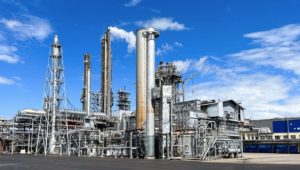
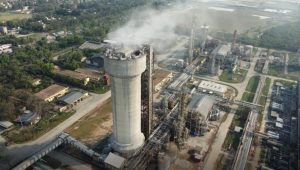
Energy is an even more immediate constraint.
The gas shortage was already around 1,100 million cubic feet a day before the Iran-US conflict and subsequently rose towards 1,500 mmcfd. The crisis, therefore, cannot be explained by geopolitics alone.
For more than a decade since 2012, Bangladesh has pursued an increasingly import-dependent gas strategy, while domestic production has declined by around 4–4.5 per cent a year. That decline could become much steeper as existing fields mature.
Exploration was neglected for years. The recent onshore and offshore initiatives are welcome but must become systematic and strategically promoted. Even successful exploration today may take two to three years to produce gas.
The calculation should go beyond the headline price of domestic gas. Local gas may cost more than imported LNG and still be economically preferable if it reduces exposure to international price shocks, shipping disruptions and foreign-exchange shortages.
BAPEX cannot deliver the necessary expansion alone. Years of underinvestment have constrained its capacity, making international oil and gas companies necessary partners. Bangladesh must improve bidding documents, contractual terms, commercial incentives and investor outreach because global energy companies have competing opportunities elsewhere.
LNG will remain necessary for several years. The objective should be to move from an import-heavy towards an import-light system while making unavoidable imports secure and predictable.
That requires diversified suppliers, long-term contracts and FX planning tied to future gas demand. Qatar’s force majeure exposed the danger of concentration. In addition to the US, long-term partnerships with Brunei, Malaysia and Australia should be explored, while Bangladesh should distinguish between the security offered by state-to-state or state-owned arrangements and private-supplier contracts.
Gas infrastructure is equally important. Bangladesh has only two FSRUs, leaving limited redundancy. The interim government’s cancellation of two pipeline projects may have been justified where terms were unfavourable, but replacement capacity should have been pursued immediately because such infrastructure takes 15–24 months.
The disruption at Excelerate Energy’s terminal exposed that vulnerability. A third FSRU has now been approved with a Chinese company, but with a roughly 24-month lead time, Bangladesh should already be considering a fourth.
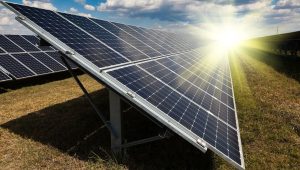
Energy security also requires a broader mix. Renewable power must expand, including offshore options, more efficient solar technologies and battery storage. Pakistan has added roughly 32 gigawatts of renewable capacity since 2019, although Bangladesh’s land constraints make a similar solar-led expansion harder.
Coal should not be excluded simply because it is politically uncomfortable. Where technically and economically feasible, some gas-based plants could be converted to coal or dual-fuel operation, using cleaner technologies to reduce environmental damage. Power imports should likewise be judged on reliability, transparent terms and economics rather than political sentiment, including imports involving India or power originating in Nepal and transiting India.
The financing challenge is equally structural.
Around 90 per cent of Bangladesh’s financing remains bank-based, while the capital market is too weak to provide the long-term funding needed for infrastructure, technology and industrial diversification.
FDI is therefore essential, not only for dollars but for technology, management capability, global supply-chain access and new industries. But investors price risk. Sovereign ratings matter because negative outlooks and downgrade risks can raise financing costs and make banks, institutional investors, private-equity funds and multinationals more cautious.
These constraints are not independent. Weak revenue limits public investment; weak private investment limits productive capacity and jobs; energy shortages constrain industry and exports; export concentration magnifies external shocks; and imported energy adds to FX pressure.
The growth forecasts reflect that vulnerability. The IMF now projects growth at 3.5 per cent in FY2027 and below 3 per cent over the medium term without decisive fiscal and financial-sector reforms, with banking, fiscal and external pressures weighing on the outlook. The Asian Development Bank forecasts 3.7 per cent growth for FY2026 and 4.5 per cent for FY2027.
At those rates, Bangladesh has little room for policy delay. The issue is no longer whether individual weaknesses can be managed separately, but whether reforms can raise the economy’s capacity to invest, compete and create jobs at the same time.
That is why the extension should be judged by what changes during it, not by how long it lasts. The priorities are clear: strengthen the financial system, raise revenue and bring debt discipline, restore private investment, secure energy, reduce logistics costs, diversify exports and attract productive FDI.
Otherwise, the extension merely delays the adjustment.
Bangladesh has already shown that it can meet the formal criteria for leaving the LDC category. The harder test is whether it can build an economy strong enough to compete after the privileges of that category fade.
Graduation should be the deadline for completing the reform agenda, not another deadline to postpone it.
Author is the Chairman and CEO, Policy Exchange Bangladesh. The views expressed in this article are solely those of the author.