
Before YouTube, Netflix and endless streaming libraries, watching a movie in Bangladesh meant finding a VCD or DVD, bringing it home and gathering around the television. For a generation, those discs were more than a way to watch films.
There was a time when watching a movie began long before the opening credits. It started with a trip to the neighbourhood video shop, browsing rows of plastic cases and deciding which film was worth taking home.
For those who grew up in the late 1990s and 2000s, films did not arrive with a few taps on a screen. They had to be found, chosen and carried home. Sometimes, choosing the right movie took almost as long as watching it.
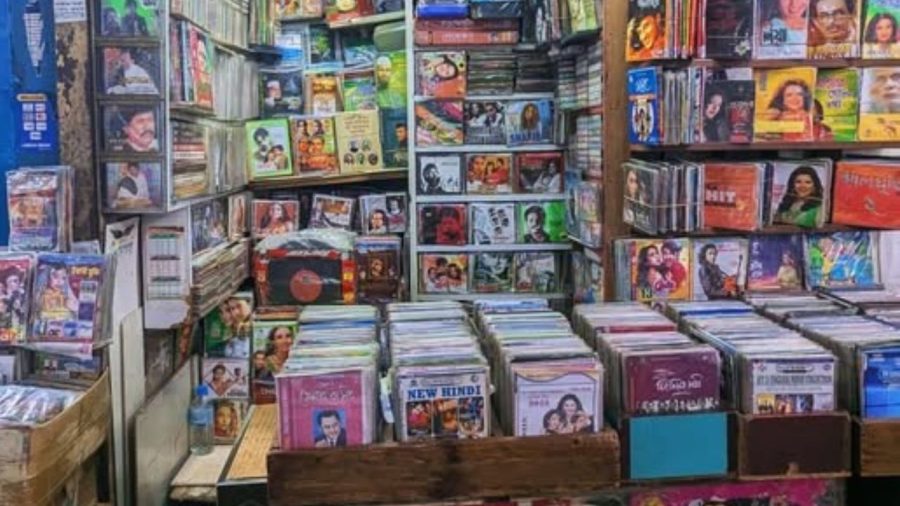
Before streaming reshaped entertainment, neighborhood video shops were gateways to other worlds. Their shelves brimmed with VCDs and later DVDs of Bangla, Hindi, and English films. Some were tiny rooms lined with plastic cases; others became familiar landmarks in bustling markets.
When the video shop was the gateway to cinema
The shopkeeper was more than a vendor. He knew regulars, their favorite stars, and the films they loved. In an era without computer, recommendations came from people.
One such hub was Surer Mela, a cassette and CD shop founded around 1997 at Aziz Super Market in Shahbagh. Established by Riaz, who passed away in 2012, it has since been managed by his sister Seema alongside the family’s boutique store.
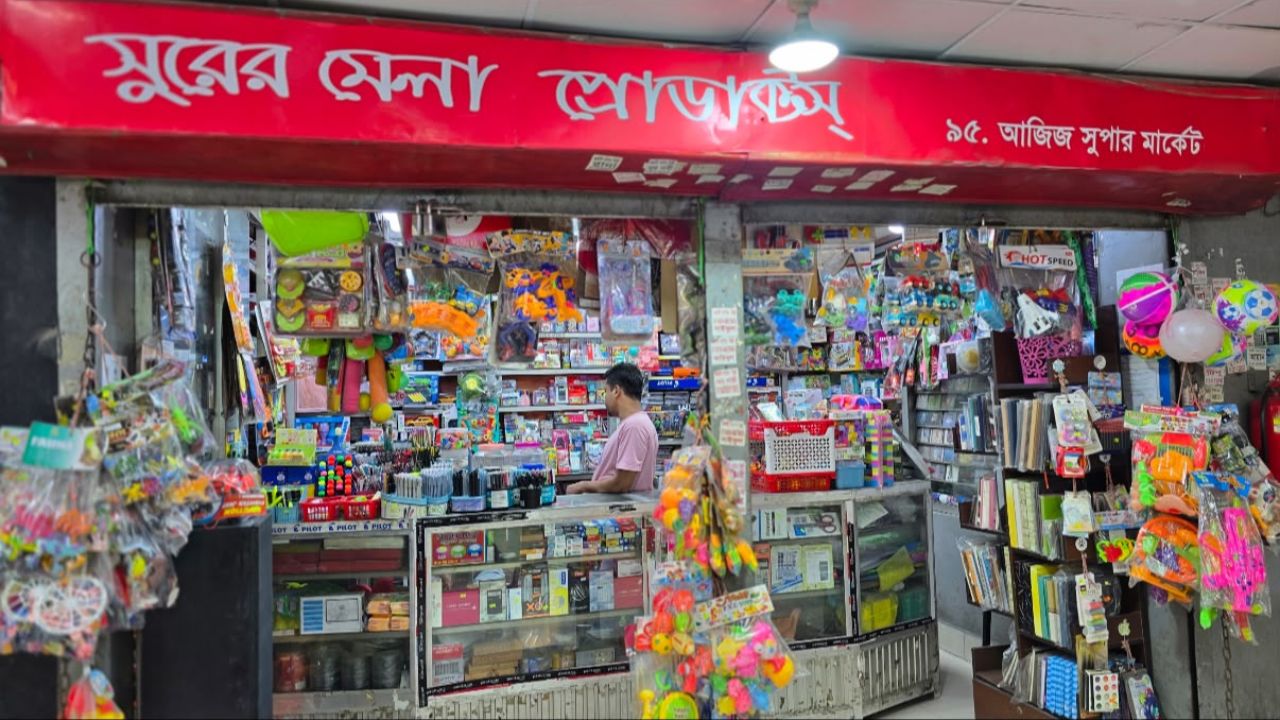
Surer Mela was once a force in Bangladesh’s music industry, releasing albums by icons like Ayub Bachchu and Bappa Mazumder. It even launched Surer Mela Production, producing CDs until demand dried up.
Between 2004 and 2006, queues stretched so long that Seema, then a student, spent her days collecting cash. Rock bands such as James, Ayub Bachchu, Hassan, and Prometheus drove the frenzy.

The shop also stocked DVDs of English, Bollywood, Kolkata Bengali, and Bangladeshi films, including Liberation War titles. Hindi films drew the strongest demand.
But as streaming rose, DVD sales collapsed. By two years ago, monthly sales had dwindled to barely five to ten discs. To survive, Surer Mela pivoted to toys, mobile accessories, computer items, and stationery.
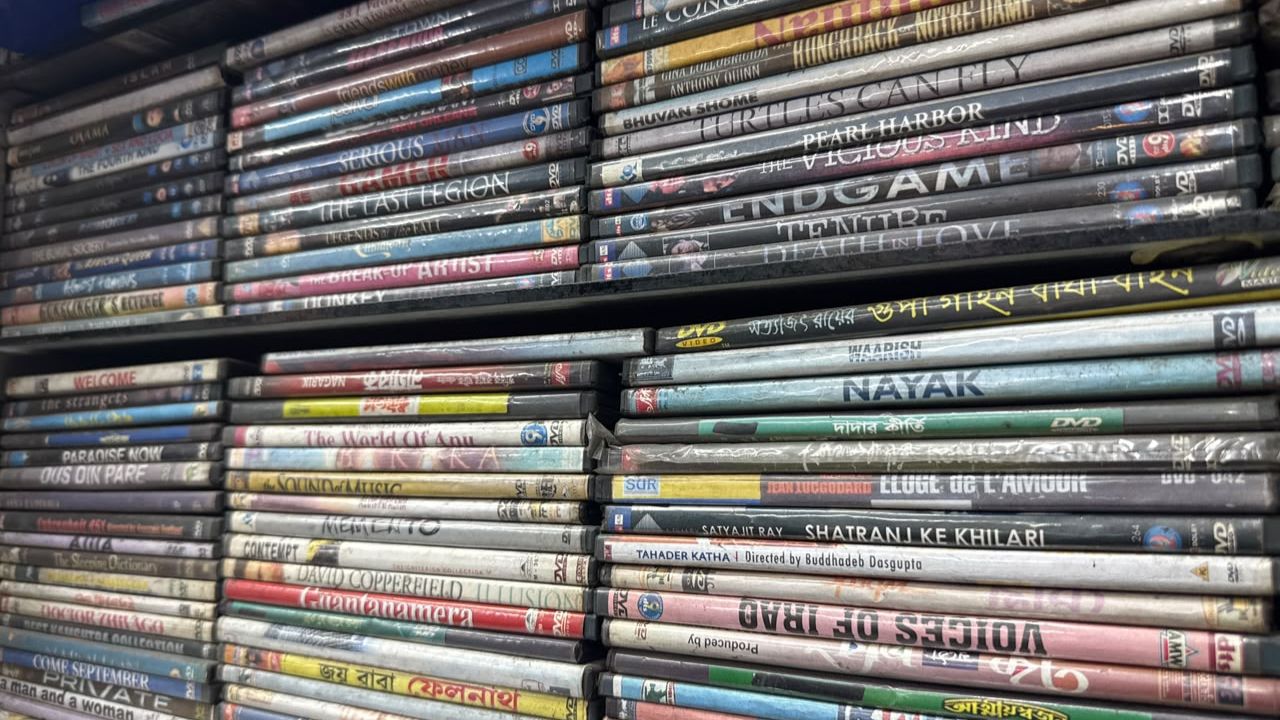
Its old physical disc collection, however, remains preserved as a reminder of an era when cinema came home in a plastic case.
The VCD era
VCDs changed how many Bangladeshi families watched films at home. Instead of waiting for a movie to appear on television, they could choose what they wanted and watch it whenever they wished.
Popular Bangla, Hindi and English films circulated from one household to another. A newly released film could quickly become the talk of the neighbourhood, with people rushing to find a copy.
Copied VCDs were common, picture quality varied and discs could freeze or lose sound at crucial moments. Some films came on two discs, meaning someone had to get up and insert Disc 2 when Disc 1 ended.




Those inconveniences became part of the experience.
Limited choice encouraged repetition. A favourite film could be watched several times, while children memorised dialogues and favourite scenes. Friends and cousins exchanged discs, and a movie borrowed from one household could soon be playing in another.
For many 90s kids, memories of films remain inseparable from the television, the VCD/DVD player and the people sitting around it.
Niloy, a master’s student at Bangladesh University of Professionals, recalls discovering DVD rentals through Dhoom 2 in 2007.
“The very first foreign language movie I watched was on a rented DVD. It was in 2007, if I am not wrong. There was a craze for Hrithik Roshan’s Dhoom 2 back then in our area. At that time, I first came to know about the DVD rental process. So, I asked my eldest brother if he could manage that. A day later, he brought the rented DVDs of Dhoom 2 along with Jahid Hasan’s film Made In Bangladesh.”
“These memories still mesmerises me and makes me nostalgic,” he said.
Then came the DVD
DVDs offered another step forward. The video quality was sharper, the sound richer and subtitles made many films easier to follow. Some also came with additional features and better packaging.
For movie lovers, a DVD collection could feel like a small personal cinema. A shelf of carefully kept discs allowed people to return to favourite films whenever they wanted instead of relying on whatever was available at the local shop.
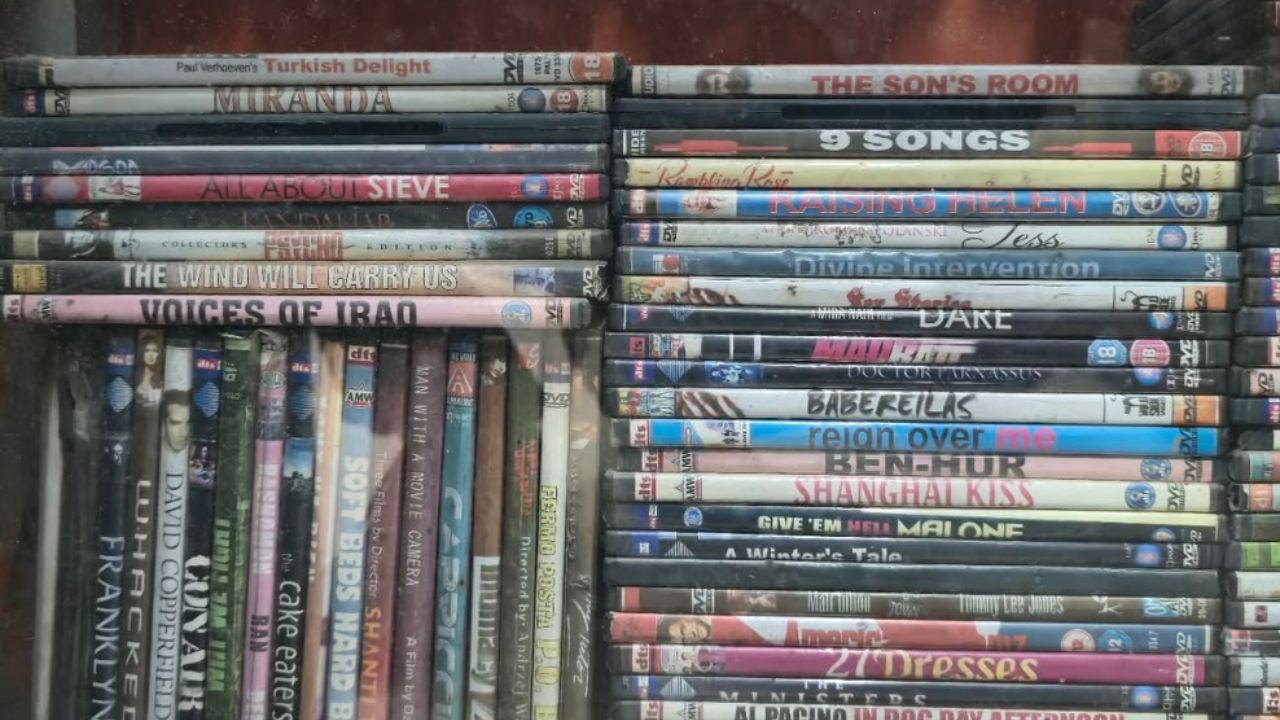
The ritual was simple: choose a film, take it home and put it into the player.
When everything went online
The internet eventually transformed film watching. YouTube and faster internet connections made physical copies less necessary, while streaming services brought enormous film libraries directly to people’s screens.
Video shops began disappearing, and shelves once filled with films became memories of another era.
Previously, viewers had to search, choose, wait and share; now, they can find a film within seconds. But the abundance can also make individual films less memorable.
The end of an era, the start of another
For G Series Founder President Nazmul Haque Bhuiyan, watching a movie in the 1980s and 1990s was more than simply pressing play. It was a social occasion.
He recalls families and friends renting a VCR player and gathering to watch popular films. Finding or collecting rare media was itself a celebration, often accompanied by home-cooked food and shared excitement.
Nazmul said, “I still remember watching a Mithun Chakraborty film with my family and friends on a random night in the 1980s, with home-cooked food and late-night gossip. Those were the days when watching a film brought a sense of excitement and anticipation.”
G Series entered media production in the 1990s with video cassettes before expanding into VCDs and DVDs after 2000. The company produced Bangladeshi films, music and dramas, becoming part of the physical-media era that shaped home entertainment.
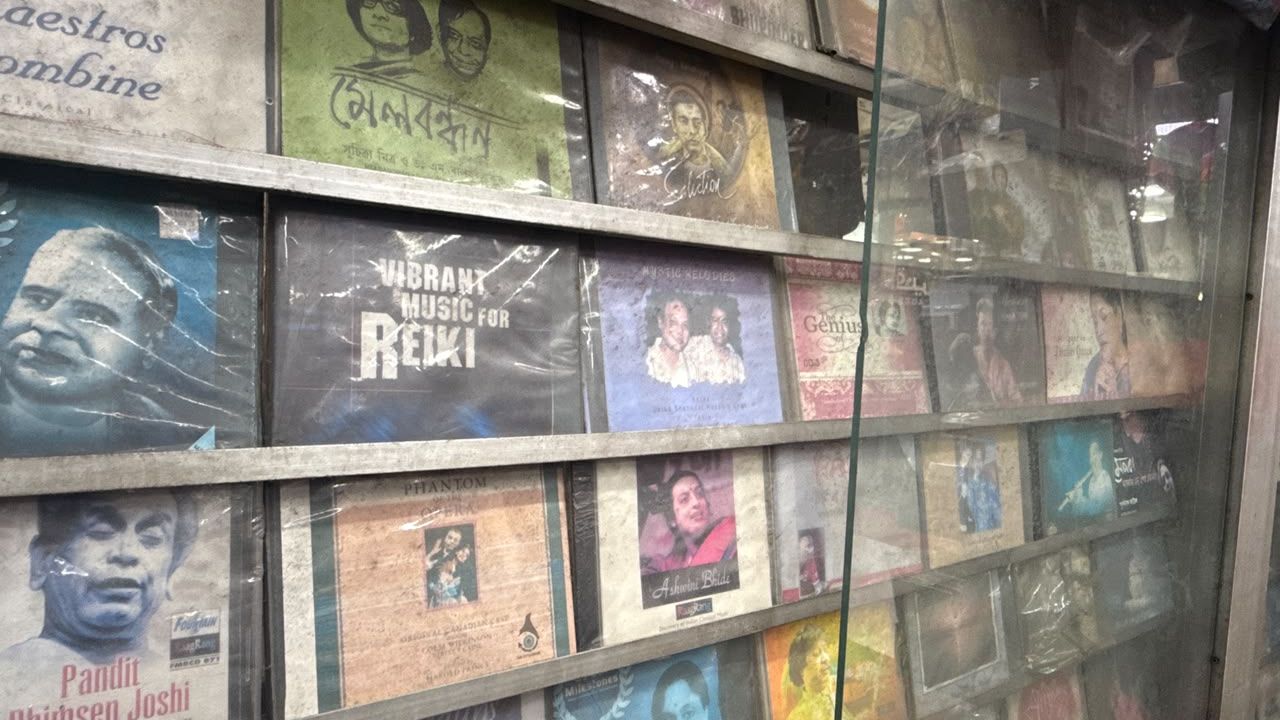
But that era eventually faded, Nazmul said adding that G Series stopped producing physical discs after 2013 as audiences increasingly moved online.
Today, the company distributes content digitally, including through YouTube channels with millions of subscribers. For Nazmul, the shift reflects the natural progression of technology.
While modern streaming has made content instantly accessible, he believes the medium itself is ultimately secondary. What matters most, he says, is the experience of seeing and hearing the story, whether it arrives through a cassette, a disc or a digital screen.
What we still miss
Today, watching a film takes only a few taps. There is no need to visit a shop, search through shelves or wait for a disc. Streaming has made films faster and easier to access than ever.
Yet the VCD and DVD era remains irreplaceable. The anticipation of finding a film, the excitement of taking it home and the shared experience of watching it made those discs part of a larger ritual. Even frozen pictures, missing sound and the interruption between two discs eventually became memories.
For a generation that grew up with VCDs and DVDs, the beauty of that era lies not only in the films themselves, but in the experience surrounding them. Technology has moved forward, but the nostalgia attached to those physical discs remains — a reminder of a time when watching a movie was not simply about pressing play, but about everything that came before and after.