
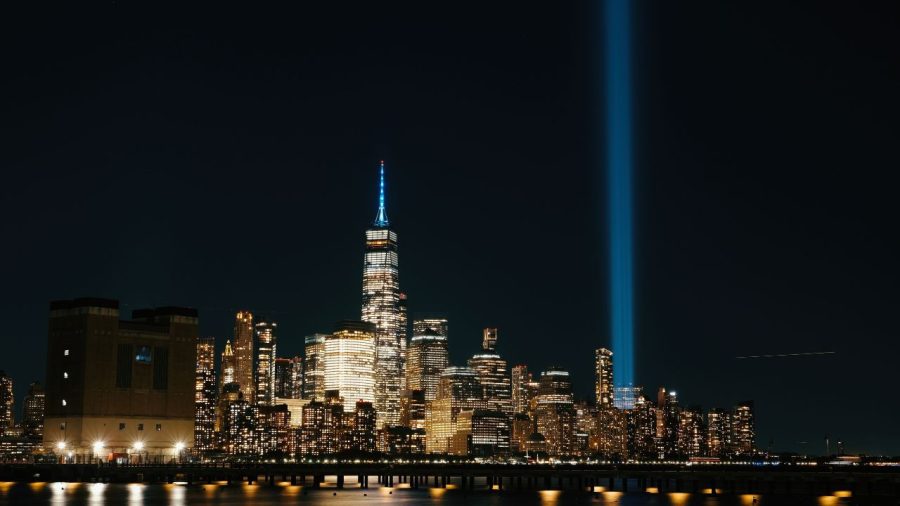

Twenty-five years have passed since the September 11 attacks, a tragedy that basically altered the global script forever overnight. For the generations who watched it unfold, the psychological scars remain fresh. Whether witnessed from Ground Zero or on a television screen, the image of the Twin Towers crumbling under their own weight has become a flashbulb memory stuck in time. But for Generation Z, born between 1997 and 2012, the event exists entirely on the other side of the historical fault line.
Because most of Gen Z were still too young to remember the events of that fateful day, 9/11 is primarily processed from a historical perspective. Considering that most of Gen Z are now young adults, the shape of historical evaluation changes radically depending on which side of the hemisphere the individual stands on.
For American Gen Z, the 25-year milestone is processed as a domestic turning point that birthed the America they know. According to reports by BBC News and academic discussions on modern media, though the generation does view the event from a patriotic perspective, it is mostly defined by critical deconstruction rather than a unified patriotism experienced by the older generation.
Lacking firsthand memory, their understanding is built from family stories, fragmented school lessons, and video telecasts, leaving many to struggle during childhood to grasp the sheer scale and meaning of the tragedy.

Speaking with BBC News, Avery Black, 20, a journalism student from the University of South Carolina, remembers hearing about 9/11 for the first time in elementary school and later from her mother at home. “She just started telling me where she was the day it happened, and just broke down in tears, explaining to me about all the firefighters that went in and never came out,” Black recalled.
As many in the generation started reaching adulthood, their perspective evolved significantly. Many began to analyse 9/11 through its long-term aftermath, specifically the rise of domestic Islamophobia, the expansion of state surveillance, and decades of foreign warfare that define modern-day America.
Across the globe, the perspective shifts dramatically as Gen Z in different parts of the world evaluate this quarter-century-old event not through the lens of American national grief, but rather through the sharp, lived realities of a transformed international landscape.




Many in the Southern Hemisphere emphasise the geopolitical turning point 9/11 triggered, which altered the Global South’s relationship with the West. In easy words, international youth view the event strictly in terms of intangible global consequences.
“What I find most interesting about 9/11 is that, as Gen Z, we process it not as a memory, but as history. To us, the Twin Towers are not simply two buildings that collapsed; they have become a historical symbol of a moment after which the world was never quite the same,” said Suvodro Sarker, 26, an undergraduate student living in Dhaka.
Historically, the aftermath paved the way for the US government to establish a sprawling global security apparatus, birthing organisations and legislative frameworks that fundamentally engineered modern surveillance paranoia.
“The aftermath of the attacks paved the way for the US government to establish sweeping anti-terror organisations and legislative acts, like the HSA and TSA, both within its borders and around the globe, effectively establishing our modern-day surveillance paranoia,” said Nurul Islam Sourav, 25, Researcher and Postgraduate Student at the University of Dhaka. He also added that it was important for Gen Z to learn about these issues.
“For Generation Z looking back after 25 years, it is essential to remain conscious of this multifaceted governance; this one-of-a-kind event shaped our contemporary security dilemma, integrated AI and cybersecurity into state control, and permanently redefined the multipolar geopolitical landscape,” said Sourav.
The history of 9/11 has also created a landscape of total narrative rejection among international youths. This is driven by profound geopolitical skepticism, raised on decentralised networks. Oftentimes, this segment of Gen Z bypasses official Western accounts to scrutinise the event as a calculated pretext and premeditated initiative, with some drawing the “false flag” narrative. By comparing the tragedy against the staggering civilian casualties that followed across the Middle East, they view mainstream history as a tightly controlled fiction weaponised to restructure global power.
Critiquing the events of 11 September 2001, Shafaiatul Islam Sourav, 29, said, “Some events are remembered for what happened; others for what followed. When fear becomes a casus belli, wars spread far beyond the original tragedy; millions pay the price. History remembers the tragedy. It should also remember what came after, and who gained from it.”
Twenty-five years later, 9/11 remains more than just a date in history. For those who remember it, it is a wound; for those who inherited it, a question. But perhaps the most important lesson for a generation born after the towers fell is not simply to remember the tragedy, but to examine what followed, whose lives were changed, and how profoundly one day shaped the world.