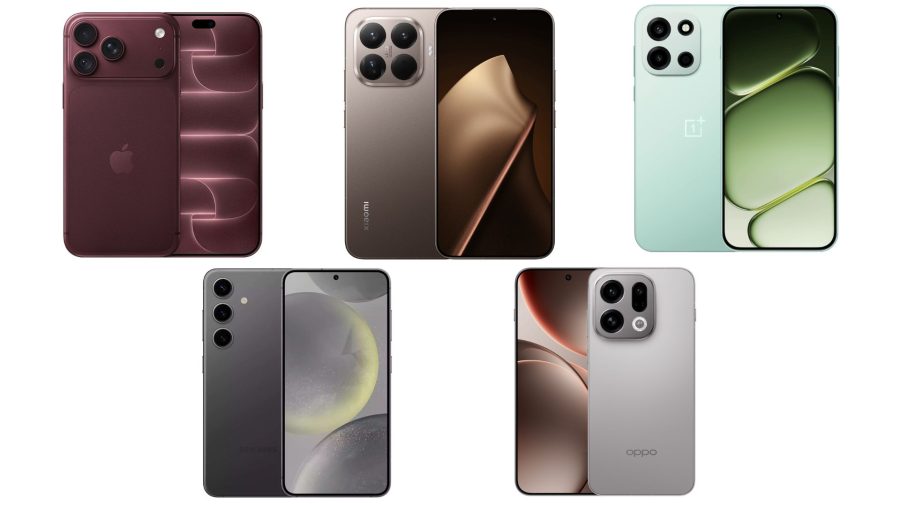

Buying a smartphone used to be relatively straightforward. You chose a device with the specifications you needed at a price you could afford. That has changed. Smartphones are now used not only for calls, messages and social media, but also for entertainment, work, payments, photography and health tracking.
With 5G, eSIM, AI-powered cameras and foldable displays becoming increasingly common, there is more to consider before making a purchase. The key is to identify what you actually need rather than paying for features you may rarely use.
Finding the right budget
Price remains the first consideration for most buyers. Smartphones generally fall into three broad categories: budget phones below Tk30,000, mid-range devices between Tk30,000 and Tk80,000, and flagship models that can cost more than Tk100,000.
Budget phones now offer plenty for everyday use, including large displays, 5G connectivity and capable cameras. Mid-range models typically add features such as AMOLED displays, faster charging and better build quality.
Flagships offer the latest chipsets and more advanced features, including sophisticated AI functions and foldable designs, but at a considerably higher price.
Before setting a budget, consider how you intend to use the phone. Someone who mainly browses social media and watches videos will have very different requirements from a gamer, content creator or professional who edits photos and videos on the device.
Processing power and RAM
The processor determines how smoothly a phone handles everyday tasks. Recent high-end chipsets include the Qualcomm Snapdragon 8 Gen 3, the new Apple A20 Pro, MediaTek Dimensity 9300+ and Samsung Exynos 2400.

For browsing, messaging and video streaming, a mid-range processor with 4–6 GB of RAM should generally be sufficient. Gamers, vloggers and users who edit photos or videos may benefit from 8–12 GB of RAM paired with a more powerful chipset.
Some flagship phones offer 16 GB of RAM, although that level is largely unnecessary for ordinary users.
Specifications alone, however, do not tell the whole story. Benchmarks, user reviews and real-world performance are worth checking. A phone with lower specifications can feel faster if its software is well optimised, while impressive hardware can disappoint when optimisation is poor.
Battery and charging
Battery life is one of the most noticeable aspects of everyday smartphone use. Most current smartphones have batteries of around 4,500–5,000 mAh, which can provide a full day’s use under normal conditions. Heavy users may need more capacity or better software optimisation.
Charging technology has also advanced rapidly. Speeds of 65W, 100W and even 150W are now available on some phones, with certain models capable of reaching 50 per cent charge within 10–15 minutes.




Wireless charging is increasingly common in mid-to-high-range devices, while reverse wireless charging can be used to power accessories such as earbuds and smartwatches.
Display matters
The display is the part of the phone users interact with most, so it deserves careful consideration. Most smartphones in 2026 have screens measuring between 6.5 and 7.2 inches, while foldable devices can provide much larger displays without sacrificing portability.
IPS LCD panels remain common in budget phones, while AMOLED and Super AMOLED displays are more prevalent in mid-range and premium devices. They offer richer colours, deeper blacks and higher brightness. At the premium end, LTPO OLED panels can adjust their refresh rate according to what is displayed, helping conserve battery life.
Most mid-range and flagship phones now offer 120Hz refresh rates, making scrolling and gaming smoother. Dedicated gaming phones can reach 144Hz.
For users who spend considerable time watching or creating content, a high-resolution AMOLED display with a 120Hz refresh rate is worth considering.
Cameras: Looking beyond megapixels
Smartphone cameras have improved significantly, with even budget devices offering multiple lenses and capable low-light photography. AI-assisted features can enhance images in real time, while flagship models may include wide, ultra-wide, telephoto and macro cameras.
Premium phones can also offer optical image stabilisation, cinematic video modes, manual controls and 4K or 8K recording. Front cameras have improved too, with some offering 32MP or higher resolutions, autofocus and 4K video.
But a higher megapixel count does not automatically produce better photographs. Real-world image samples are a more useful way to judge a camera’s performance.
Storage and connectivity
Storage can fill up quickly as applications, games and high-resolution photos and videos become larger. Most phones start at 128 GB, while flagship models can offer up to 1 TB.
For moderate users, 128–256 GB should be adequate. People who record large amounts of 4K or 8K video, download large files or keep extensive game libraries may need 512 GB or more.
Many newer phones no longer include microSD card slots, making internal storage more important. Cloud services such as Google Drive, iCloud and OneDrive provide another option.
Connectivity is another consideration. With 5G services now available in Bangladesh, buyers should check whether a handset supports the local 5G bands. Other useful features include USB Type-C 3.0 or higher, Wi-Fi 6 or Wi-Fi 7, Bluetooth 5.3, NFC and OTG support.
Software and eSIM
The operating system has a major influence on the overall experience. Apple’s iOS is known for its integration with other Apple devices, security and long-term software support, while Android offers greater flexibility and customisation. Android manufacturers also add their own interfaces, such as Samsung’s One UI and OnePlus’s OxygenOS.
Software support matters if you plan to keep a phone for several years. Some Android manufacturers now promise four to five years of operating-system updates and extended security patches, while Apple typically supports devices for five to six years.
eSIM is also becoming increasingly popular. It allows users to activate a mobile plan digitally, switch carriers more easily and manage multiple numbers. Devices supporting both a physical SIM and eSIM can be particularly useful for keeping personal and professional numbers separate.
Foldables, durability and extras
Foldable phones are becoming more mainstream, especially now with the release of the iPhone Duo. Their larger screens can be useful for productivity while retaining a compact form when folded.
Durability is another factor worth checking. IP67 or IP68 ratings offer water and dust resistance, while strengthened glass such as Gorilla Glass Victus 2 can provide additional protection.
Creative professionals may also value stylus support, while AI-powered tools such as real-time translation, document scanning and voice assistants can add practical functionality.
Ultimately, the best smartphone is not necessarily the most expensive model or the one with the longest specification sheet. It is the device that suits your everyday needs, performs the tasks you require and provides reasonable value for the money you spend.