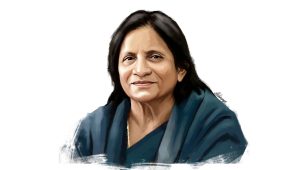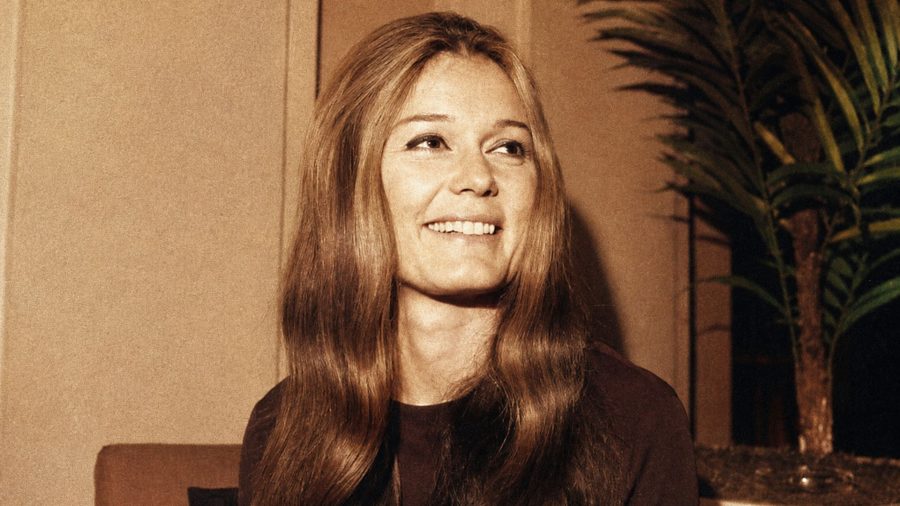

Gloria Steinem died on 2 September at her home in New York City, at the age of 92, her foundation said, “surrounded by some of the many who loved her.” Tributes followed from across American public life – from fellow writers to a former US president who once awarded her the Presidential Medal of Freedom – remembering a woman whose name became, for half a century, nearly synonymous with the American women’s movement itself. But alongside the tributes, this month’s obituary coverage has also revived a chapter of her biography that predates her feminism entirely, and that she herself spent decades explaining rather than denying: her early, well-documented work for an organisation substantially funded by the CIA.
Steinem co-founded Ms. magazine in the early 1970s and became, over the following decades, the most recognisable public face of American second-wave feminism, campaigning for abortion rights, equal pay and reproductive freedom, and remaining politically active well into her final years. Two of the lines most associated with her – “a woman needs a man like a fish needs a bicycle” and the observation about what abortion politics might look like if men could get pregnant – were, by her own account, coined by others and popularised through her platform. It was a role she embraced explicitly: not the sole author of the movement’s ideas, but the person who made sure the largest possible audience heard them.
Long before any of that, in 1958, a 24-year-old Steinem returned to the United States after two years studying in India and wanted young Americans to have a stronger presence at the World Youth Festivals, international gatherings organised by Soviet-aligned groups during the Cold War. She reached out to former officers of the National Student Association, who told her that funding might be available through the Central Intelligence Agency.

What followed was the Independent Research Service, an organisation Steinem directed from 1958 to 1962, financed substantially by the CIA – roughly $85,000 for the 1959 Vienna festival alone, according to later reporting – which recruited and organised American delegations to attend the Vienna and Helsinki festivals specifically to counter Soviet-aligned messaging among young attendees.
The arrangement became public in 1967, when Ramparts magazine exposed a wider pattern of CIA funding running through the National Student Association and affiliated groups. Rather than deny it, Steinem confirmed the funding to both The New York Times and The Washington Post, defending it without apology. “I found them liberal and farsighted and open to an exchange of ideas,” she said of the CIA officers she worked with. “I never felt I was being dictated to at all.” She maintained that almost none of the young Americans who travelled to Vienna or Helsinki knew the CIA had helped fund their trips, and insisted she was never asked to report on fellow Americans or assess foreign nationals she met at the festivals.



Not everyone accepted that account at face value. In 1975, the radical feminist group Redstockings published a report challenging Steinem’s version of events, calling her denial that she’d ever been asked to gather information “a serious lie” and pointedly asking whether her ties to the agency had continued beyond 1962, a suggestion Steinem rejected. Records show she remained on the Independent Research Service’s board as late as 1969, by which point her writing career and, soon after, her feminist organising were already taking shape, an overlap that has fuelled speculation, though not proof, about how directly one chapter of her life fed into the next.
It’s worth being precise about what is documented and what isn’t. The CIA funding itself, and Steinem’s role directing the organisation that received it, are not in dispute. She confirmed both publicly, and the CIA’s own declassified records corroborate the arrangement.
What remains genuinely contested is the further claim, advanced by some critics in the years since, that her subsequent rise as a feminist leader was itself somehow shaped, enabled or directed by that intelligence-world background, a reading her defenders call a conspiratorial stretch built on a Cold War funding arrangement common to many liberal organisations of that era, and her critics call a pattern worth more scrutiny than it has received. Mainstream historical accounts have generally treated the Independent Research Service chapter as exactly what Steinem always described it as: a 24-year-old’s earnest, government-subsidised effort to counter Soviet propaganda at youth festivals, not a covert operation running through the decades of activism that followed.
What her death makes clear is that both threads of her biography will now be argued over without her own voice in the room to keep clarifying them, as she did for nearly 60 years. For millions of women who never knew the Independent Research Service existed, her legacy remains the fight for abortion rights, equal pay and reproductive freedom carried out in plain public view for half a century. For those who have long pressed on the earlier chapter, her death has reopened a question about American institutions and their reach that neither her explanations nor her critics’ suspicions ever fully closed.