




My name includes Emon. Salman Shah’s real name also included Emon, Shahriar Chowdhury Emon. As a child, this small similarity never felt like a simple coincidence to me. It gave me a quiet sense of joy. I was born in Sunamganj, and he was born in Sylhet. So, with the same name and a connection to the same region, it was easy for me to think of him as someone from our own part of the country. Childhood does not follow the strict rules of history. Sometimes a name, a place and a familiar face are enough to make a hero feel like one of our own.
When Keyamat Theke Keyamat was released, I was in Class Five. It is difficult to explain today how popular that film was among my friends. We were not yet old enough to fall in love, but we were old enough to imagine what love could be, what it might feel like to lose someone, and how long a person could wait for someone they loved. We grew up in the age of love letters. Seeing someone from a distance, sending a letter through a friend, waiting anxiously for a reply, these were all part of the early language through which we began to understand romance. Salman Shah quickly became one of the most familiar faces in that world of imagination.
Looking back now as a filmmaker, I also have a certain conflict about that film. Bangladeshi commercial cinema has a long history of borrowing successful stories from other countries, copying them, or sometimes using them almost directly. I had concerns about this culture in the past, and I still do. But Keyamat Theke Keyamat was not a secretly copied film. It was made after buying the remake rights to Qayamat Se Qayamat Tak, the Hindi film starring Aamir Khan and Juhi Chawla. It also marked the big-screen debut of both Moushumi and Salman Shah.
The main stories of the two films are almost the same. Raj and Reshmi come from two rival families and fall in love. Their families try to separate them. They run away and try to build a life together, but their love ends in tragedy. What interests me more now is why a story from another country felt so much like our own. At that time, Indian Hindi films were not regularly released directly in Bangladeshi cinemas. So when the same story came to us through Salman Shah and Moushumi, in Bangla, with our songs and inside our own cinema halls, it became a different social experience. The origin of a story matters, but the way a society accepts that story into its own emotions and memories is also part of film history.
In 1996, I was in Class Eight. It was an age when childhood had not completely disappeared, but the restlessness, curiosity and emotion of adolescence were quickly taking over. I cannot now say exactly at what moment I first heard the news of Salman Shah’s death, but I still remember the scene clearly. We were playing in a field. It was evening, possibly around the time of the Bangla news on BTV, when the news suddenly spread that Salman Shah had reportedly died by suicide. There was no social media then. News, pictures, explanations and rumours did not reach us within minutes. A piece of news travelled from one person to another, and then everyone waited for the next bulletin or the next morning’s newspaper. I remember a deep sense of grief across our whole neighbourhood. Among friends, there was only one discussion. What happened? Why did it happen? Could Salman Shah really be gone?

A few days after his death, Sotyer Mrittu Nei was released. I watched it on the big screen in Sylhet. By then, we had already heard that Salman’s character, Joy, would face execution in the film. So when I watched that young man walking towards the gallows, it became difficult for my teenage mind to separate Joy on the screen from Salman Shah, who had died only days earlier. I still remember the crying inside the cinema hall, the low voices and the heavy atmosphere. Much later, after I began to understand cinema as a profession, I realised that we were not simply watching a film that day. We were also experiencing how the sudden death of a public figure, the emotions of thousands of people and the story on a screen could come together and turn into a shared social grief.
His death also created a major problem for the film industry. Several of his films were still unfinished. In the entertainment magazines of that time, we used to read stories about young men who looked like Salman, copied his hairstyle, dressed like him and hoped to work as his stand-in. I cannot find reliable proof today that thousands of young men from across the country were actually preparing for such roles, so I would not present that as a fact. But it is true that other actors were used in some unfinished films. Ferdous was later brought into Buker Bhitor Agun, while Amin Khan joined Shopner Nayok. Salman was also unable to complete films such as Shudhu Tumi and Prem Piyashi. For a while, it almost seemed as if the film industry itself was trying to find a way to keep an absent man alive on the screen.
There were also much darker stories at the time. We heard that some fans had died by suicide after being unable to accept Salman Shah’s death. For many years, I thought this might have been an exaggeration from the more sensational newspapers of that period. Later, I found that mainstream news reports had also mentioned the suicides of several fans, although there is no reliable confirmed number. I do not want to present this as some dramatic proof of his popularity. To me, it is instead a painful sign of how deeply a film star had entered the emotional world of young people.


When I look back at Salman Shah’s films today, one of the most important things for me is the kind of male characters he played. His heroism was not always built around physical strength. In Ei Ghor Ei Songsar, Mintu’s world is shaped by his sister, brother-in-law, brother, wife and the tensions of family life. In Shopner Prithibi, Masum is the son of a cruel and powerful father, but he stands against his father’s injustice and supports those who are being oppressed. In Shopner Thikana, the love between Suman, from a rich family, and Sumi, from a poor one, faces the pressure of class difference. In Anondo Osru, Khosru is more sensitive and fragile. He loves music, falls in love, becomes the victim of a conspiracy and suffers a mental breakdown. In these characters, strength exists alongside kindness, responsibility, helplessness and a sense of duty towards others.
Perhaps these stories also played a role in shaping how our generation first understood love. In the commercial films we watched, love was rarely only a private matter between two people. Parents, brothers and sisters, class, family honour, waiting, sacrifice and responsibility were almost always part of it. Our generation sometimes makes sharp comments about the way younger people approach relationships today, although it is not fair to judge one generation entirely by the standards of another. Still, there is no denying that our idea of romance was shaped by stories where loving someone did not simply mean being with that person. It also meant dealing with the relationships and responsibilities around that love.
If we step away from personal memory and look at Bangladesh at that time, another reason for Salman Shah’s rise becomes clear. By the mid-1990s, around 23 million people in Bangladesh were between the ages of 15 and 24. In 1994, the country had about 1,500 cinema halls. During the 1990s, around 80 full-length films were released each year, and more than one million people watched films in cinemas every day. Even in 1995, only around 8 percent of households had their own television set. Entertainment was not divided across hundreds of screens and platforms as it is today. A popular film, song or actor could become part of the same cultural experience for a huge number of people in cities, small towns and villages.
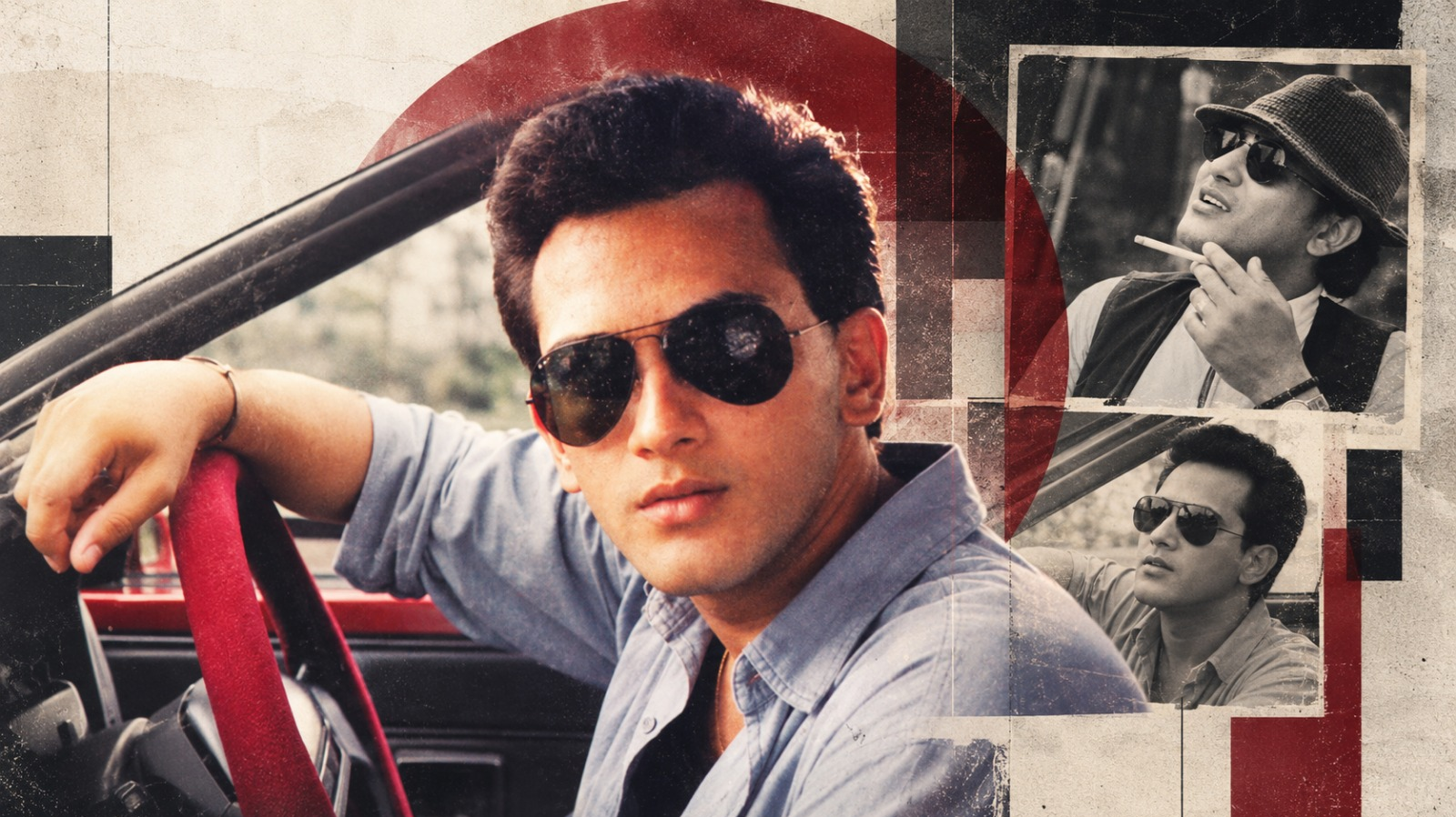
Salman Shah became the hero of this large audience, but he was not limited to the traditional mass audience. His hairstyle, clothes, sunglasses, way of walking, natural dialogue delivery and emotional openness also reflected something new for urban middle-class youth. On one side, his films were built around familiar Bangladeshi families, villages, class differences and social conflict. On the other, the young man standing at the centre of those stories looked and behaved in a new way. As a filmmaker, I think this may have been Salman Shah’s greatest cultural success. He placed the young man of a changing Bangladesh inside stories that the country already understood.
Then death fixed that image forever. A 15-year-old who first watched him in 1993 is 48 today. A 20-year-old from that time is now 53. Their lives have changed. They have families, children and different ideas about relationships. But they never saw Salman Shah become middle-aged. They never saw a long period of failure, the slow decline of a star, or the struggle to adjust to a new era. None of that became part of our memory of him.
Technology later gave that memory new ways to survive. One generation saw him in cinema halls. The next found him through television and home video. Young people today discover his songs, scenes, clothes and hairstyles on social media. At the same time, his family’s long struggle over the circumstances of his death has never fully ended. Even in 2026, the case remains under investigation. These events bring his name back into the news, but I do not think the mystery around his death is the main reason he is still present in our culture. A mystery can keep a dead star in the headlines. It cannot create the memories of an entire generation.
Later, I studied at the University of Dhaka and made cinema my profession. After watching films from many parts of the world, my own ideas about cinema and love changed many times. Salman Shah also slowly became a more distant childhood memory. But when I began thinking about him again, and speaking with other people, I realised that almost everyone seemed to have a different Salman Shah of their own. For someone, he was their first visit to a cinema hall. For someone else, a first love song, a colourful star photograph, a hairstyle, or a particular scene with Shabnur. When so many private memories come together, an actor becomes more than a popular star. He becomes part of the cultural memory of a time.
I would not make the simple claim that Bangladesh in Salman Shah’s time understood love better than Bangladesh does today. But popular films of that period often imagined a society where being modern did not mean leaving family behind, where love could exist with responsibility, where a man could be gentle, and where rebellion did not always mean cutting off every relationship. Perhaps that is also why his films do not feel like only old films from the 1990s when we return to them today. Inside them, we can also see part of the social history of how we grew up.
We have travelled a long way since Salman Shah left us. Bangladeshi cinema has changed, the language of love has changed, and I have travelled far from the Class Five boy I once was. But the Emon I found on the screen because his name matched mine never grew older in my memory.
Writer : Abu Shahed Emon (Filmmaker)


