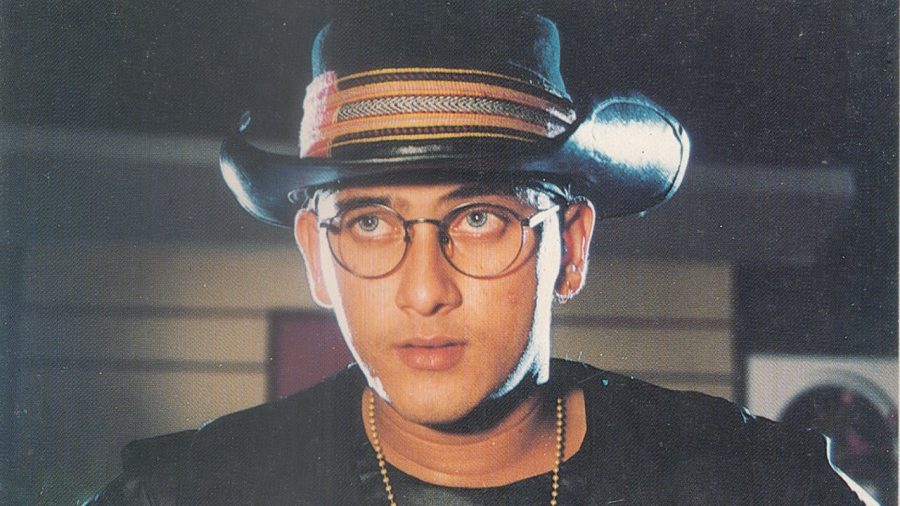



Put on a Salman Shah song today and, for a few seconds, time turns back. The old melody begins, his face appears, familiar clothes and hairstyles return, and suddenly the 1990s do not feel 30 years away. It feels as if Salman Shah is still there — young, charming and smiling into a future that seemed endless.
His clothes belong to the 1990s, his hairstyles to another era, his songs to a different Bangladesh. Yet he remains untouched by time, frozen at 25 with the promise of a career destined to go further.
That is the haunting part of his legacy. He left not only films, but a version of himself that never had the chance to grow older or change.
His career lasted barely four years, but in that brief window he became one of the defining faces of Bangladeshi cinema in the 1990s. Films such as Keyamot Theke Keyamot, Tumi Amar, Shotter Mrittu Nei and Tomake Chai introduced a different kind of leading man — one with a distinctive voice, effortless style and an urban ease that felt new. His clothes and hairstyles became part of his appeal, while his songs stayed with audiences long after the credits rolled.
For many viewers, Salman Shah felt like the beginning of something.

Then, suddenly, there was no more beginning.
Salman Shah died on 6 September 1996, and several investigations later concluded that he had died by suicide, a finding his mother Neela Chowdhury has always rejected; the case was reopened as a murder investigation in 2025, with one accused now arrested.




Yet Salman Shah’s story is also about what might have been.
He never grew into the veteran actor, father, mentor or industry elder audiences might have known. What would he have looked like at 30 or 40? What roles would he have taken? Would he have moved beyond romance or reinvented himself? There are no answers, only imagination.
And somehow, that imagination keeps him alive.
Every 6 September, fans organise milad and prayer gatherings. Team Salman Shah continues to keep his memory alive on social media. Regular Bangladesh Film Archive screenings of films such as Tomake Chai still draw younger audiences, many born after his death.
The people who first watched Salman Shah have grown older. Bangladesh has changed. Cinema has changed. The way audiences watch films has changed. Salman Shah has not.
His story is therefore more than that of a young star who died too soon. It is about a future that disappeared with him, the films he never made, the characters he never played and the older Salman Shah audiences can only imagine.
Time moved on. Salman Shah never got the chance to.