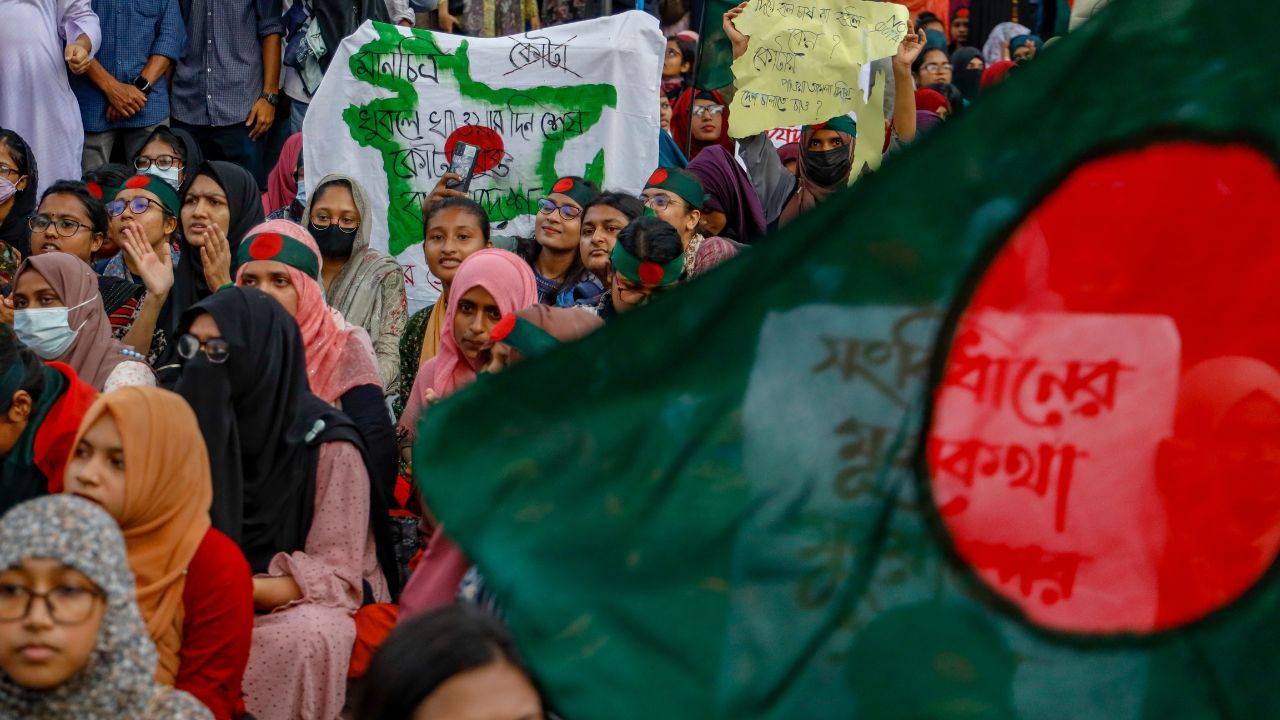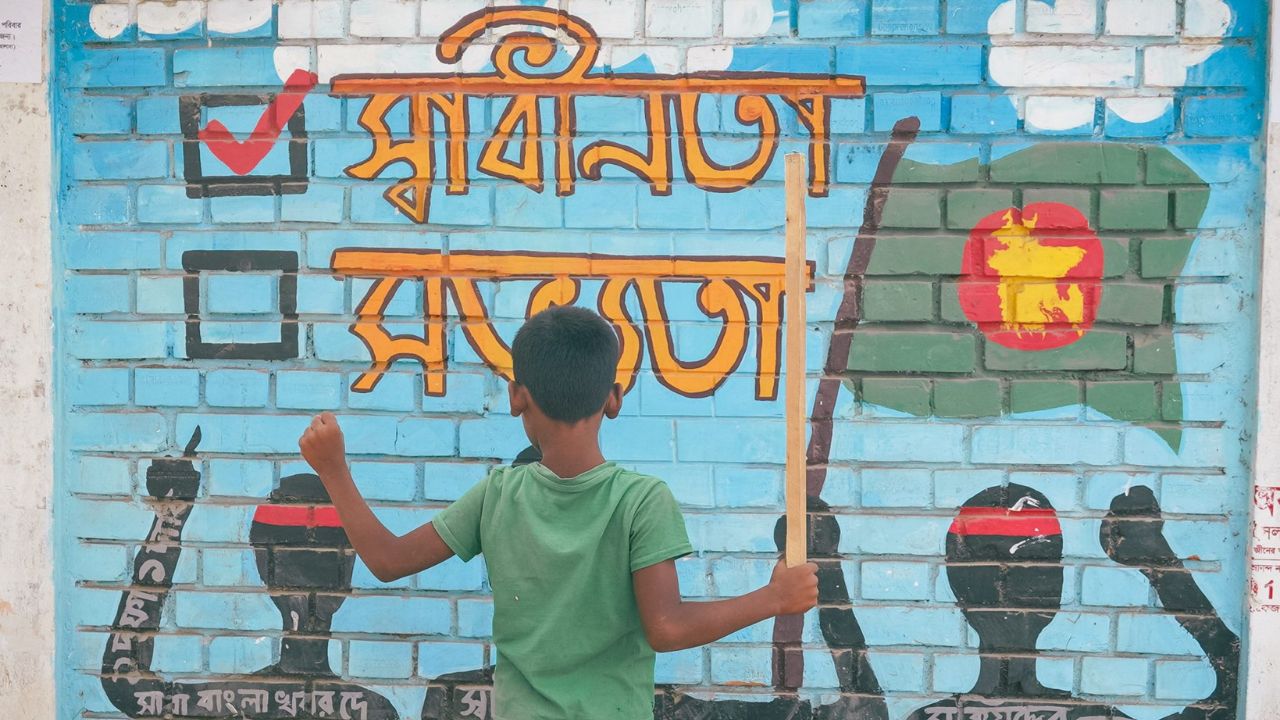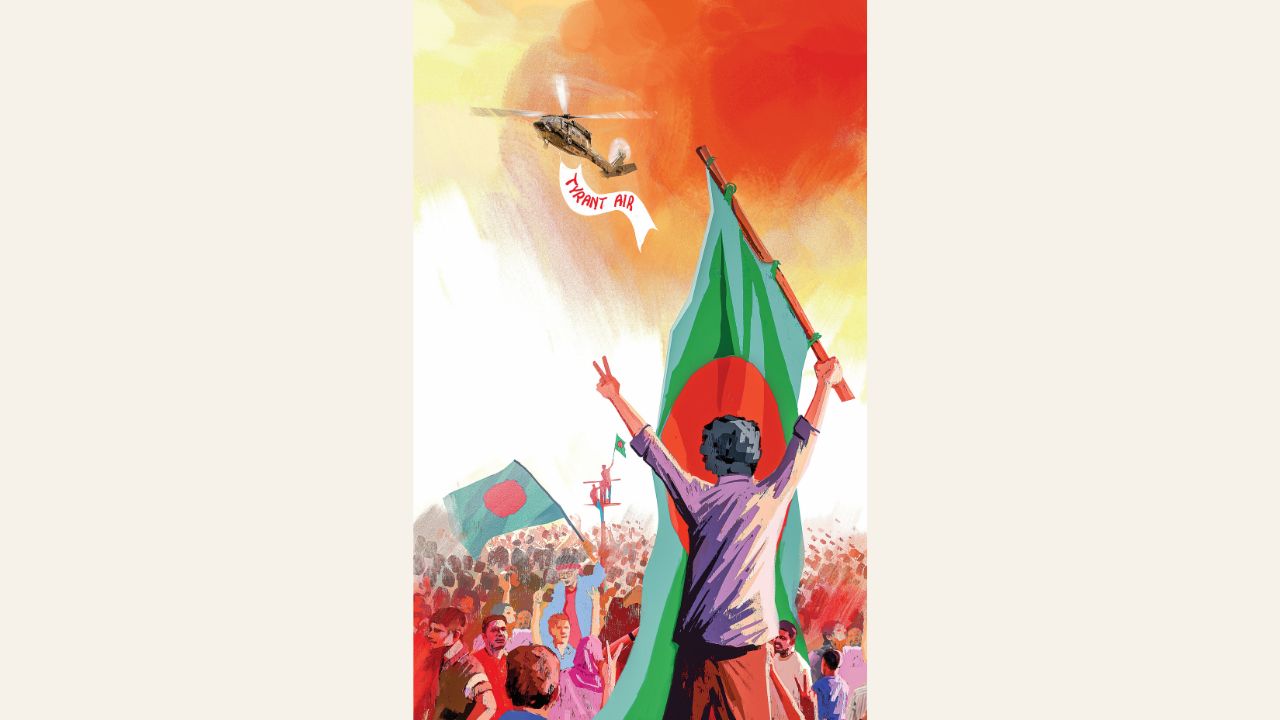



Two years after the July mass uprising, which left hundreds dead and thousands injured, the ousted Awami League has shown no sign of accepting responsibility for the bloodshed. Instead, the party’s leaders, activists and hardline supporters continue trying to portray the July uprising as a “conspiracy”.
Political analysts, researchers and politicians told TIMES of Bangladesh that Awami League’s refusal to apologise stems from its determination to preserve its long-standing political narrative, maintain the morale of its supporters, and justify the decisions of its leadership.
According to them, Awami League is following a familiar pattern in Bangladeshi politics, where parties rarely admit mistakes or apologise. Rather than expressing remorse, the party appears determined to move forward with a sense of vengeance. They also believe this approach is pushing the party further away from mainstream politics.
When the movement against the government job quota system escalated into a mass uprising in July 2024, the AL government collapsed on 5 August and the then prime minister and party president Sheikh Hasina fled the country and took refuge in India. Most of her party’s senior leaders also escaped to India and other countries.
The interim government subsequently initiated trials at the International Crimes Tribunal, treating the killings during the uprising as crimes against humanity. Hasina has already been sentenced to death in one case. Trials are also underway against several ministers of the ousted government, advisers to the prime minister, and senior leaders of the party and its allied parties.
Awami League’s political activities have also been banned and its grassroots leaders and activists living in Bangladesh are now in severe hardship due to fear of arrest and financial difficulties.
Despite facing the biggest political crisis since its founding, the party has shown no initiative toward self-criticism, apologising, or accepting responsibility for the loss of lives. Nor has it attempted to examine why it was forced to flee from power.

Political analyst Altaf Parvez explains that in Bangladesh, there is an old culture of refusing to admit wrongdoing and Awami League is no exception. Unless a political party is intellectually mature and modern in its thinking, it never wants to look at itself in the mirror. Awami League is not even trying to do that. So how will it realise that it made mistakes?
“General Ershad never admitted his mistakes either. Jamaat also never apologised despite committing crimes against humanity during the 1971 Liberation War. Even BNP, when it was in power, has been reluctant to acknowledge its own mistakes in many cases,” he told TIMES.
Why doesn’t AL accept responsibility?
According to political analysts, when a political party publicly accepts responsibility for crimes, it inevitably calls into question its long-standing political position, leadership decisions and the political narrative it has established among its supporters. As a result, party leaders often choose to maintain their previous position rather than apologise.
In a recent interview, author Mohiuddin Ahmad said, “If they apologise, people in this country generally forgive. But the reality is that Awami League has not apologised and probably never will. Because if they apologise, their politics ceases to exist.”

BNP Standing Committee member Selima Rahman argues Awami League’s lack of remorse is part of its political culture. “Since independence, whenever the party has been in power, it has justified killings by branding people with various labels. The United Nations report has established that mass killings took place during the 2024 uprising, and the people of this country know it well. Yet if you listen to Hasina, it sounds as though nothing happened.”
What Awami League says
AFM Bahauddin Nasim, joint general secretary of the ousted party, shows no sign of remorse.
“If Awami League has made mistakes, there would be no problem apologising to the nation. But Sheikh Hasina has done nothing wrong, so why should she apologise?” he threw this question to TIMES
Now exiled in India, Nasim described the mass uprising as a domestic and foreign conspiracy.
Explaining the situation, political scientist Dilara Choudhury said Awami League is essentially a cult-like, personality-driven party. The statements of its top leaders are treated almost like sacred texts. Therefore, it is unrealistic to expect remorse among its leaders and activists even after mass killings.
Can the party return to politics?
The biggest question is now whether Awami League can return to politics.
“Until Awami League analyses why it was removed from power and undergoes genuine self-reflection, it has virtually no chance of returning to politics,” Altaf Parvez said and adding, “I do not believe the current leadership is capable of doing that. Therefore, the party’s prospects of making a political comeback are extremely slim.”
Dilara Choudhury believes Hasina’s repeated statements from India about returning to Bangladesh and resuming political activities are primarily intended to keep party workers motivated.
According to her, many AL activists themselves no longer believe in Hasina’s narrative about returning to active politics.
Where did uprising originate?
Soon after forming the government in 2009, Awami League faced allegations of suppressing opposition parties. Later, despite differences within the party, it abolished the caretaker government system for overseeing elections following a High Court verdict.
The party subsequently retained power through the one-sided and manipulated elections of 2014, 2018 and 2024, but questions over the legitimacy of those elections also emerged from within the party itself, while opposition parties continued to intensify pressure over the issue.
Mahmudur Rahman Manna, president of Nagorik Oikya, “The destruction of the electoral system left many veteran Awami League leaders marginalised within their own party. Combined with growing pressure from the opposition, the public and internal dissatisfaction, these factors eventually led to the uprising against the party.”
He said that the party abandoned politics and became blinded by its obsession with power.
AL supporters’ changed attitudes
Some incidents that occurred after the mass uprising have also reinforced a defensive mindset among Awami League supporters. They argue that events such as the vandalism of the house at Dhanmondi 32, have united its supporters, rather than weakening the party.
Immediately after the uprising, many grassroots Awami League leaders and activists felt remorse, considering mindless corruption, enforced disappearance and extrajudicial killings, and suffering endured by ordinary people under the party’s rule.
However, they say that when supporters themselves began facing attacks and criminal cases after being branded with various labels, many gradually abandoned that sense of remorse and adopted a more defensive attitude.