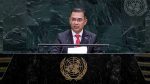
In an unprecedented move, Foreign Minister Md Khalilur Rahman has said he would take a one-year leave from his government post if elected president of the United Nations General Assembly (UNGA).
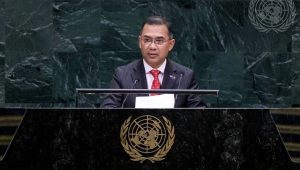
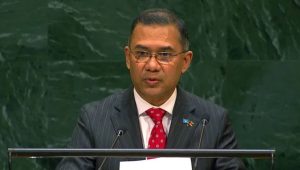
He revealed this during an informal interactive dialogue at the United Nations on 13 May while responding to a question from a representative of Andorra.
The delegate asked whether serving as full-time president of the General Assembly would require him to resign from his position as Bangladesh’s foreign minister.
In response, Khalilur said, “Will I resign? No. My prime minister has made it very clear that I will be released for one year to take up the position as full-time responsibility. Resignation is not the only option. I can go on leave.”
His statement indicates that the leave plan has already been discussed with Prime Minister Tarique Rahman and settled.
The one-year leave proposal surprised many officials in Bangladesh’s foreign ministry, as they were unaware of any such arrangement.

Analysts and former diplomats note that foreign minister has spent much of his early tenure abroad focused on his UNGA campaign, raising questions about the prioritisation of Bangladesh’s national interests under the new BNP-led government.
It has also triggered debate among diplomats and policy observers about the functioning of the foreign ministry.
Under Bangladesh’s Rules of Business, the prime minister has the authority to grant leave to a minister. During that period, the prime minister may either assume responsibility for the ministry directly or assign another minister to oversee its activities on an interim basis.
Talking to TIMES of Bangladesh, some former diplomats said it would be unprecedented for a serving foreign minister to take a year-long leave to work in another international position.


They also raised broader questions about the management and direction of Bangladesh’s foreign policy since the formation of the BNP-led government on 17 February.
Diplomatic outreach and campaign focus
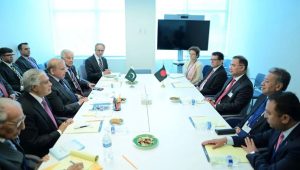
Since assuming office, he has undertaken several high-profile foreign visits, including trips to India, China, the United States, Brussels and Ethiopia.
His first official visit to New Delhi came during a stopover en route to Mauritius, where he attended the Indian Ocean Conference in April. During the trip, he met Indian External Affairs Minister S Jaishankar, Commerce Minister Piyush Goyal and National Security Adviser Ajit Doval.
Following the visit, Bangladesh’s foreign ministry issued statements highlighting discussions on energy cooperation, visa processing and the extradition of deposed prime minister Sheikh Hasina.
During his subsequent visit to Beijing, Khalilur met Chinese Foreign Minister Wang Yi. The visit focused heavily on cooperation relating to the proposed Teesta River project and preparations for Prime Minister Tarique Rahman’s planned visit to China.
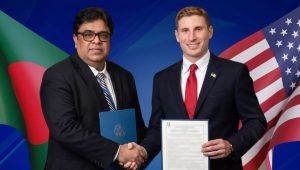
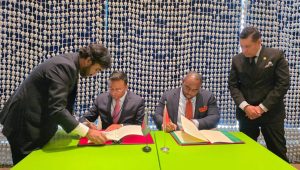
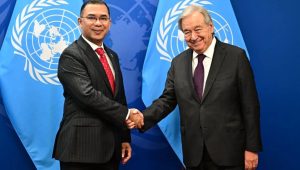
In May, Khalilur travelled to the United States, where much of his time was reportedly devoted to his UNGA campaign in New York. He also briefly visited Washington to sign a memorandum of understanding on energy cooperation.
Questions over diplomatic priorities
Foreign policy analysts say the first year of any government is crucial for setting strategic direction, projecting confidence and advancing national interests internationally.
Some observers argue that Bangladesh’s diplomatic engagement under the new administration has lacked dynamism and strategic clarity.
They contend that many of the foreign minister’s recent overseas engagements appeared more closely tied to his UN campaign than to broader national priorities.
The election for the presidency of the 81st session of the UNGA is scheduled for 2 June.
Former diplomats noted that the BNP returned to power after 17 years and inherited a challenging regional and global environment requiring active and carefully coordinated diplomacy.
“Foreign minister is a full-time responsibility,” one former diplomat said. “The position requires sustained engagement with foreign governments to pursue and secure Bangladesh’s national interests.”
From diplomat to minister
Khalilur Rahman previously served in the interim administration led by Muhammad Yunus, where he held the roles of High Representative on the Rohingya issue and later National Security Adviser.
After the BNP formed government following the 12 February election, he joined the cabinet as a technocrat minister.
A career diplomat, Khalilur topped Bangladesh’s first regular civil service examination and joined the foreign service in 1979. He later left government service to work within the United Nations system from 1991, holding senior positions in New York and Geneva under the United Nations Conference on Trade and Development (UNCTAD).
Academically, he completed his master’s degree in economics from University of Dhaka, later earning a degree from Fletcher School of Law and Diplomacy, and a PhD in economics from Harvard Kennedy School. He is also a founding member of East West University.