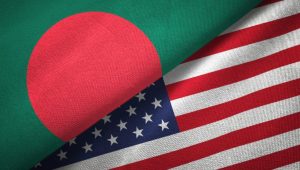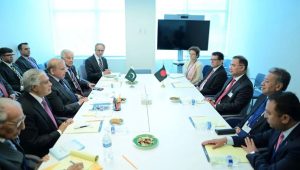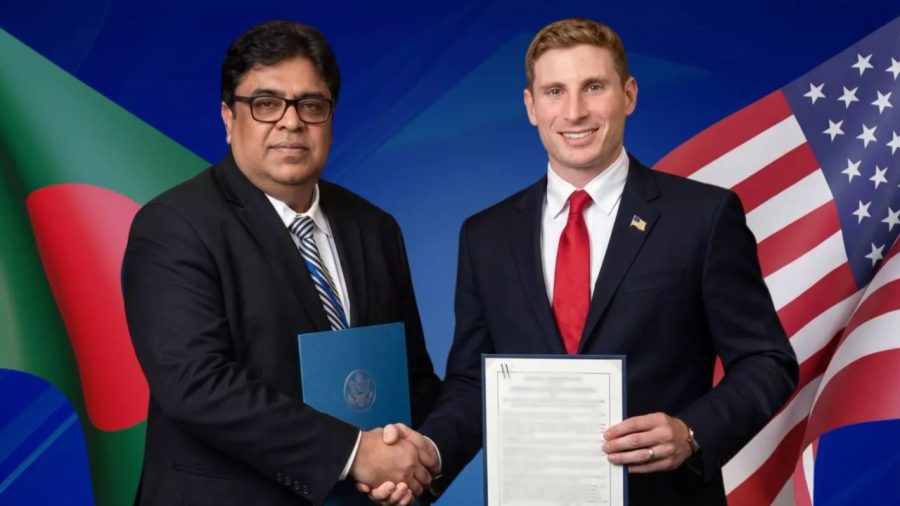



Dhaka and Washington have signed a memorandum of understanding on nuclear cooperation, opening a new avenue for civil nuclear engagement at a time when Bangladesh is seeking to diversify its partnerships in the sector.
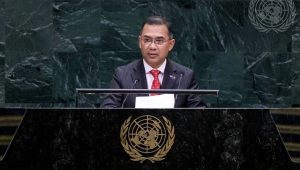
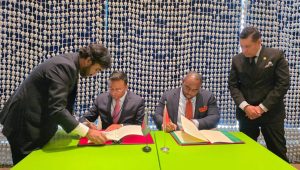
Rehan Asad, adviser to the prime minister for telecom and ICT, and Jacob Helberg, US under secretary of state for economic growth, energy, and the environment, signed the MoU on Friday in New York.
The US State Department says the NCMOU framework is intended to develop strategic civil nuclear cooperation, support the US civil nuclear industry and advance nuclear security and nonproliferation objectives. It also seeks to help partner countries develop infrastructure for the responsible use of nuclear technology while adopting high standards of nuclear safety, security, nonproliferation and independent regulatory oversight.
Science and Technology Minister Faqir Mahbub Anam told TIMES that Bangladesh had first signed a nuclear cooperation MoU with the US in 1968 and renewed it several times.
“I would say it is not renewed this time. We have signed a new instrument,” he said.
Asked why Bangladesh signed the new MoU, the minister said both sides had an interest in expanding cooperation.

“The US showed interest in signing the MoU with Bangladesh and, at the same time, Dhaka also wanted to seek cooperation on nuclear energy from Washington,” he said.
Visit of Sergio Gor
The issue was discussed during US Special Envoy for South and Central Asia Ambassador Sergio Gor’s visit to Dhaka from 30 July to 1 August.
In early September, Anam visited Washington and held discussions with US officials on nuclear technology, particularly small modular reactors (SMRs).
Bangladesh has proposed exploring SMRs capable of generating between 100 and 300 megawatts of electricity for remote areas, economic zones and locations where developing large transmission networks could be difficult.


The government has also held discussions with five to seven US-based companies over possible SMR projects. No financial proposals have yet been submitted, as the companies are still assessing baseline capital costs, according to the minister.
MoU does not permit nuclear sales
The NCMOU itself does not authorise Bangladesh to purchase nuclear equipment or technology from the United States. Any such commercial cooperation would require a separate agreement under Section 123 of the US Atomic Energy Act.
The US State Department says a 123 agreement establishes the rules governing the transfer of nuclear material and equipment between the United States and a partner country.
Any future commercial nuclear deal between Dhaka and Washington would therefore require further negotiations and a separate legal framework.
Geopolitical balancing
The new agreement also carries broader strategic implications for Bangladesh as it seeks to maintain cooperation with several major nuclear powers.
Bangladesh’s flagship nuclear project, the Rooppur Nuclear Power Plant, is being built by Russia’s state-owned Rosatom with 90% of the $12.65 billion project financed through a Russian loan. Bangladesh has already received its first shipment of Russian-enriched uranium for the project.
Against this backdrop, deeper US engagement in Bangladesh’s civilian nuclear sector could give Dhaka another source of technology, expertise and training while reducing dependence on any single external partner.
India is another important factor. New Delhi has also been involved in Bangladesh’s civil nuclear development, including cooperation on equipment and the nuclear manufacturing supply chain.
The US engagement therefore adds another dimension to Bangladesh’s effort to diversify its nuclear partnerships.
Diversifying nuclear partnerships
Shafiqul Islam, a professor of nuclear engineering at Dhaka University, said Bangladesh had previously signed civil nuclear cooperation MoUs with eight countries, including Russia, India, the United States, China, France, Hungary, Japan and South Korea.
“I think Bangladesh should not be dependent on a single country when it comes to nuclear energy cooperation in the best interest of the country,” he told TIMES.
Bangladesh signed the latest MoU with Washington while implementing the 2,400-megawatt Rooppur project with Russian assistance.
Asked why Dhaka is seeking greater cooperation with the United States in nuclear energy, Professor Islam said political and diplomatic priorities often influence countries’ decisions on international cooperation.
“Different governments have different priorities in different countries,” he said.