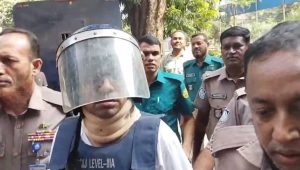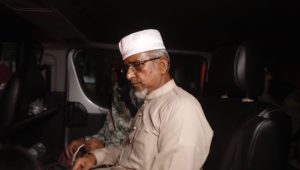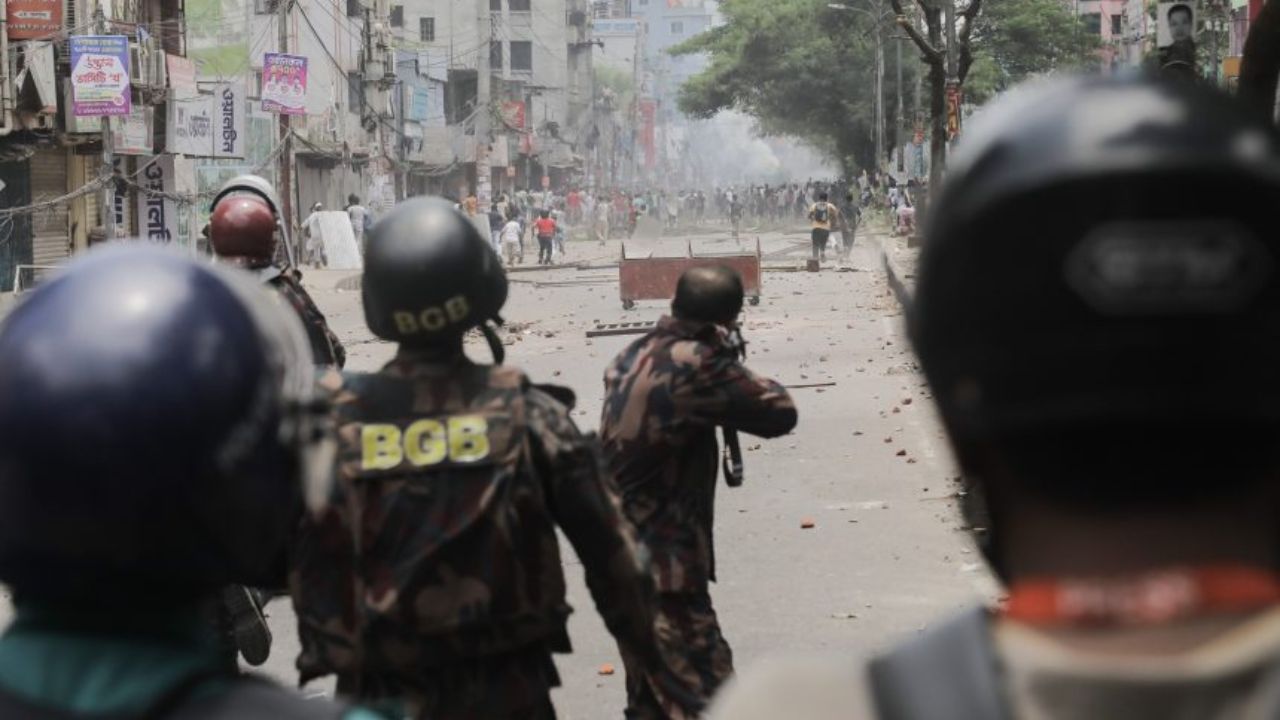



Serious questions are emerging over whether members of law enforcement agencies who allegedly ordered or enabled deadly crackdowns during 2024 July uprising are escaping prosecution, with some senior officers reportedly named as witnesses rather than suspects.
Lawyers, investigators and rights observers say the practice risks undermining accountability for killings that occurred during the mass protests which culminated in the fall of the Awami League regime on 5 August 2024.
At the centre of the controversy are cases handled by prosecutors at the International Crimes Tribunal, where officials accused of directing lethal force have, in some instances, been excluded from charge sheets despite evidence placing them at the scene.
Commander made witness despite video evidence
One such case relates to the killing of protesters in Dhaka’s Chankharpul area on 5 August.
Investigators say sub-inspector Ashraful Islam led police operations at the scene, where officers were filmed firing at demonstrators. Video footage captured by a private television channel shows him directing officers, pushing subordinates forward and instructing them to fire.
At one point, officers were seen kneeling, lying down and shooting towards protesters. A voice believed to be Ashraful’s can be heard shouting “Fire”.
Despite this, Ashraful was not charged. Instead, prosecutors listed him as a witness in the case against former prime minister Sheikh Hasina, who was later convicted alongside two associates on 17 November, 2025.
Legal experts say this raises serious concerns.
“If someone present at the scene gave orders that led to killings, treating them as a witness instead of an accused contradicts justice,” Supreme Court lawyer Solaiman Tushar told TIMES of Bangladesh.
Under Bangladesh’s Penal Code, particularly Sections 34, 35 and 36, individuals acting together in committing an offence share equal criminal responsibility, regardless of who carried out the final act.

Witness testimony contradicts video findings
In his testimony, Ashraful said he did not fire his weapon and claimed the order to shoot protesters came from additional deputy commissioner Shah Alam Akhtarul Islam.
He said constables Nasirul Islam and Sujon Hossain fired repeatedly using China rifles after receiving instructions from senior officers. Both were later charged with crimes against humanity.
But investigators and analysts point to video footage showing Ashraful directing officers immediately before gunfire, raising questions about why he was not charged alongside his subordinates.
Prosecutor Mizanul Islam denied intervening to protect Ashraful.
“If someone is involved in a crime, becoming a witness does not automatically grant immunity,” he said, adding that new charges could still be filed if evidence emerges.
Prosecutor Gazi MH Tamim declined to comment.


Senior police officer not charged despite recorded evidence
Questions have also been raised over the absence of charges against senior police official Hayatul Islam Khan, who served as deputy commissioner of Dhaka’s Motijheel division during the uprising.
Audio recordings obtained by TIMES allegedly capture him discussing the tactical need to surround and open fire on protesters in Rampura, where at least 28 demonstrators were killed.
The recording was seized from the National Telecommunication Monitoring Centre by investigators, but forensic analysis has yet to be completed. Despite the evidence, Khan has not been named as an accused.
By contrast, former Dhaka Metropolitan Police Commissioner Habibur Rahman was charged, convicted and sentenced to death.
Two army officers are also in custody in connection with the Rampura killings.
Prosecutors say investigations remain ongoing and deny granting immunity to anyone.
Allegations of witness deals and financial influence
Separate allegations have emerged regarding witness arrangements in other tribunal cases.
Former inspector general of police Chowdhury Abdullah Al-Mamun, also accused in crimes against humanity cases, was reportedly made a state witness and sentenced to five years after cooperating with prosecutors.
In another case involving burned bodies in Ashulia, former police officer Sheikh Abzalul Haque was reportedly granted clemency while others received death sentences.
Prosecutor BM Sultan Mahmud publicly alleged financial influence in witness decisions, claiming he saw a suspect’s wife entering a prosecutor’s office carrying a “heavy bag”.
Former chief prosecutor Tajul Islam strongly denied the accusation.
“All decisions were transparent and lawful,” he said. “Claims of financial influence are false and intended to undermine the justice process.”
Sexual assault allegations against intelligence officer dropped
Criticism has also emerged over the handling of allegations against Detective Branch assistant commissioner Javed Iqbal.
A female student from North South University accused him of sexually assaulting her inside Uttara West police station during the protests, in front of her parents.
She said he threatened her with a pistol.
Sources say prosecutors have decided not to pursue crimes against humanity charges against him, arguing the allegation could instead fall under general criminal law.
Prosecutor Tamim said there was no evidence supporting the allegation against Iqbal and denied claims of regional favouritism.
However, he had earlier told media investigators had found preliminary evidence linking Iqbal to protest-related killings.
Iqbal is currently in custody on separate charges.
Legal experts warn accountability gap
Legal experts say prosecutors must charge all individuals involved in giving or executing unlawful orders.
Bangladesh Law Association convenor Monir Hossain said both commanders and subordinates share equal criminal liability.
“If a superior orders an unlawful killing and subordinates carry it out, both are equally responsible and punishable,” he said.
He added that suspects must first be charged before being considered for state witness status.
“You cannot directly make a suspect a witness without charging them first.”
Prosecutors promise review
Newly-appointed Chief Prosecutor Aminul Islam said prosecutors would review all tribunal cases.
“If there were irregularities in investigation or prosecution, legal action will be taken,” he said.
He said authorities would examine whether formal charges were properly framed and investigations conducted thoroughly.