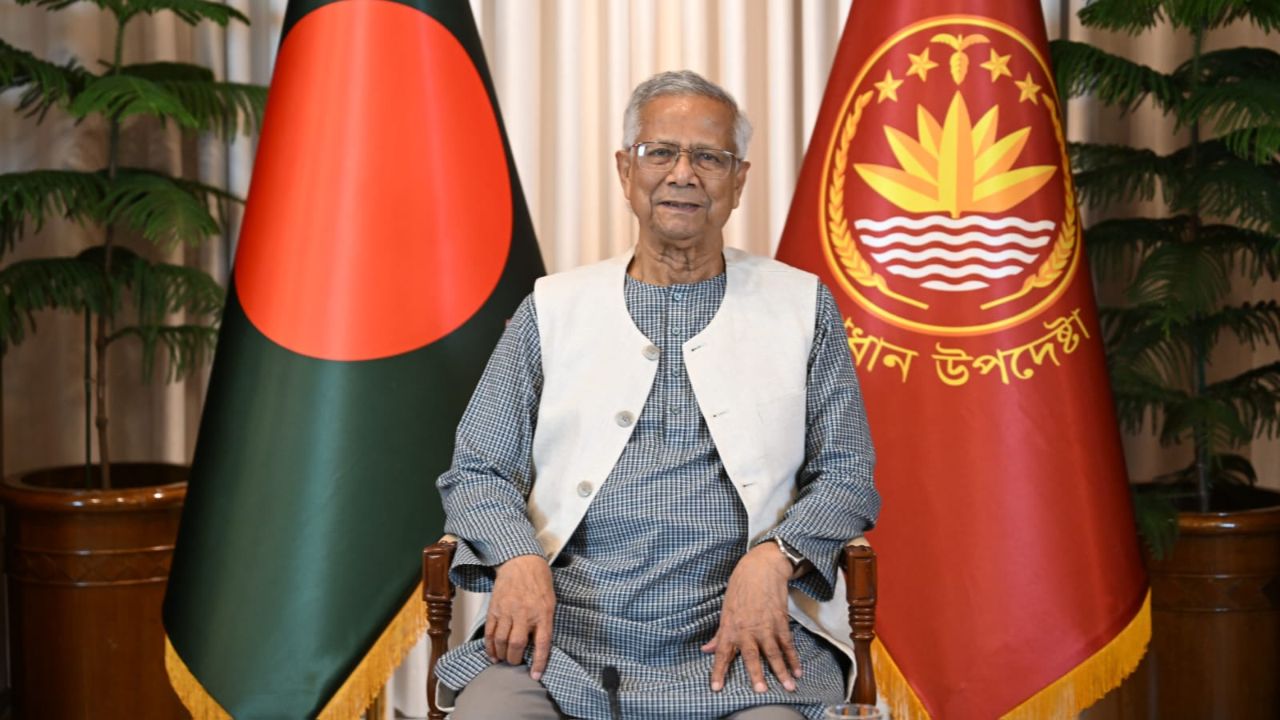

Bangladesh’s outgoing Chief Adviser Muhammad Yunus has defended his 18-month tenure, saying the interim administration restored order, pushed through sweeping reforms and delivered a credible national election after years of political turmoil.
In a televised farewell address on Monday evening, he said the government had been entrusted with three priorities — reform, justice and elections — following the July 2024 mass uprising that brought down the previous administration.
He described 5 August as a “day of great liberation”, recalling how student protesters “wrested the country from the grip of a monster”, but said the state machinery had been paralysed in the aftermath.
“Our first task was to make the country functional again,” he said, noting that many senior and mid-level officials had fled or gone into hiding, leaving institutions weakened and public trust shaken.

The interim administration enacted around 130 new laws and amendments and issued nearly 600 executive orders, most of which, he said, have been implemented.
Reforms focused on judicial independence, recognising enforced disappearance as a crime against humanity and restructuring law enforcement agencies.
Yunus said the Masdar Hossain verdict had been implemented to ensure the separation of the judiciary, and measures had been introduced to increase transparency at the International Crimes Tribunal.




On policing, he said officers no longer used lethal force indiscriminately or carried out so-called “crossfire” killings. A Police Commission Ordinance was introduced to create a more accountable force.
Turning to the economy, he said the government inherited a “bottomless” system, with banks drained and billions siphoned abroad. Structural reforms in revenue and finance had stabilised the situation, he said, lifting foreign exchange reserves to $34 billion.
Food inflation, the chief adviser added, had eased following increased supply and action against hoarding.
The July Charter, approved in a referendum alongside February’s election, was described as the administration’s “greatest achievement” and a barrier against any return to authoritarian rule.
“Even if other aspects of our tenure are forgotten, the nation will never forget the July Charter,” he said.
Yunus also highlighted the introduction of voting rights for expatriates and efforts to restore what he called sovereignty and balance in foreign policy, including renewed international attention to the Rohingya crisis.
The interim government was formed amid nationwide protests in July 2024, when the country faced deep political and economic instability. The 12 February election brought its tenure to a close, with power set to pass to an elected administration.
In closing, Muhammad Yunus urged political leaders to safeguard democratic gains.
“As we depart, democracy, accountability and freedom of expression must continue,” he said.