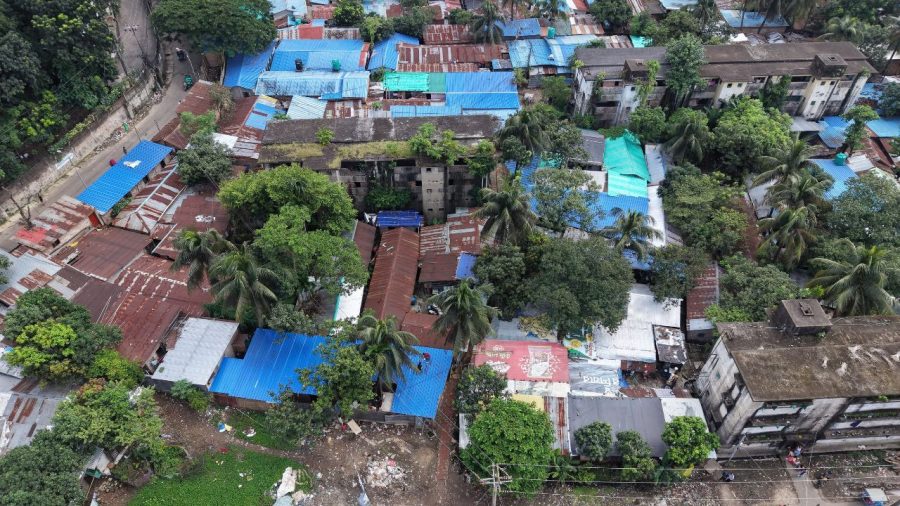



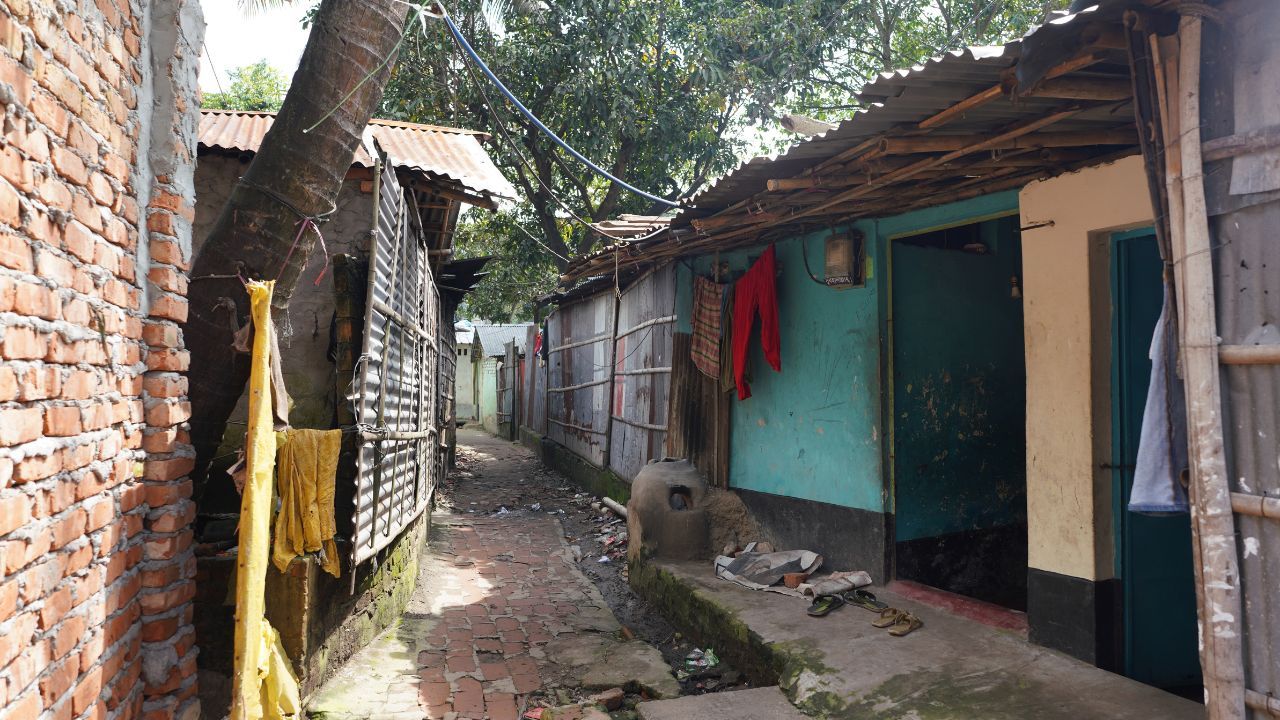
The colony has eight buildings containing 120 residential units constructed for railway officials and employees. Yet a significant portion of the quarters is no longer occupied by railway workers. Instead, outsiders have moved in, while hundreds of semi-pucca and bamboo houses have been built by occupying vacant spaces inside the colony.
Depending on their size and condition, these houses are reportedly rented out for Tk3,000 to Tk8,000 a month.
The situation has gradually transformed New Jhautala from a planned residential colony into an unregulated settlement resembling a slum. Railway workers living there say the growing presence of outsiders has also created security concerns.
The situation is not confined to New Jhautala. Similar allegations of illegal occupation, unauthorized structures and outsider settlements have emerged from several railway colonies and residential areas across the city.
According to Bangladesh Railway data, there are 5,329 residential units in 30 railway colonies under the Eastern Railway in Chattogram. Of these, 153 are allocated to first-class officials, 237 to second-class officials, 2,255 to third-class employees and 2,684 to fourth-class employees.

The colonies include Station Colony, Station Road Area Colony, Polo Ground Colony, Hospital Colony, CRB Officers Colony, Tiger Pass Colony, Flora Pass Colony, Boyneu Colony, Lalkhan Bazar Colony, New Jhautala, Jhautala, TPP, Diesel, North Ambagan, Wireless, South Ambagan, Segunbagan and Range Road, X-E John, Filter Bed, Master Lane, Shahid Lane, New Shahid Lane, Engineering and Veluar Dighirpar, Signal, Power House and Market, Station, Loco, Hospital, Francis Road and Engineer colonies.
Eastern Railway Chief Engineer Md Tanvirul Islam said the Chattogram Railway Division is responsible for supervising the railway colonies in the city.
Bangladesh Railway Chattogram Divisional Engineer-2 Jishan Datta told The TIMES of Bangladesh that there are about 30 railway colonies in Chattogram and that allegations of illegal occupation and unauthorized structures have been reported in several colonies, including Tiger Pass and Pahartali.




“We regularly collect information about illegal occupation in the colonies and inform the departmental estate officer in writing. When the magistrate-rank officer fixes a date for eviction, the engineering department remains physically present and conducts the eviction drive,” he said.
He said action is also taken when railway employees are found to have illegally rented out or sublet their allotted quarters.
“If a written complaint is received against any railway employee for illegally renting or subletting an allotted house, the matter is immediately investigated. If the allegation is proved, departmental disciplinary action is taken,” Dutta said.
According to him, disciplinary action has previously been taken against several railway employees after allegations of illegal subletting were proven. Authorities are also taking action against unauthorized utility connections, particularly illegal water connections.
Railway officials said government quarters are intended exclusively for railway employees and cannot legally be rented out to outsiders or used for commercial purposes. Similarly, constructing houses or settlements on railway land without permission is illegal.
However, residents and railway employees say the problem has persisted for years. Although eviction drives are conducted periodically, vacant spaces are often occupied again soon afterward, with new houses being built and rented to daily wage earners and low-income families.
Several railway employees living in allotted quarters at New Jhautala Railway Colony, speaking on condition of anonymity, said the area has become increasingly unsafe.
They alleged that drug users, including yaba users, become more visible after evening and expressed concern over the safety of women and families living in the colony.
Some residents of the unauthorized houses said they live there because rents are relatively low.
“We are low-income people. Houses are available here at affordable rents, and there are no restrictions on electricity and gas use. That is why we prefer living in the railway colony,” one outsider resident said.
A railway employee, also speaking anonymously, said the spread of illegal settlements has made many railway workers reluctant to live in the colonies.
“The environment and security of the railway residential areas are under threat because of the illegal settlements. It is almost impossible to live there with my wife and children. That is why I live in a rented house instead of taking a railway quarter,” he said.
In another instance, about 40 tin-shed houses have reportedly been built on railway land in the Shahid Lane residential area of Akbar Shah in Chattogram. The houses were allegedly constructed by AKM Shamsuddin Bakhtiar, a third-class employee of the railway’s electrical department.
Contacted by phone, Bakhtiar admitted constructing the houses and living there.
“The railway will decide whether it is legal or illegal. I am a railway staff member and I am on railway land. If the railway tells me to demolish the houses, I will demolish them. If it tells me to stay, I will stay,” he said.
Asked about the number of houses, he said they had not been counted accurately but confirmed that rent was collected from them regularly.
“We provide electricity and water through a deep tube well. There is nothing belonging to the railway here. Why should we pay money to officials?” he said.