



At a scrap shop beside the Islambagh STS, 13-year-old Al Amin spends his days separating lead from computer motherboards. For two years, he has handled electronic waste without gloves, a mask or any protective equipment.
Living with his parents in Kamrangirchar, Al Amin extracts valuable metals from discarded batteries, chargers, flashlights, mobile phones and laptops. He earns Tk300 a day.
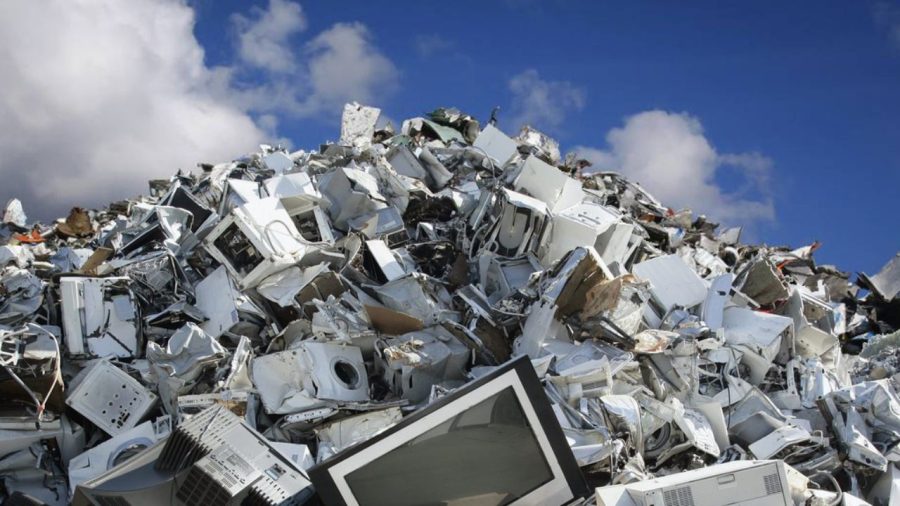
His story reflects the wider reality of Bangladesh’s e-waste sector, where thousands of workers recycle electronic waste through informal channels without safety measures or environmental safeguards.
Although Bangladesh introduced the Hazardous Waste (E-waste) Management Rules 2021, weak enforcement, limited monitoring and the absence of a central database have kept most e-waste outside the formal management system.
As a result, workers remain exposed to toxic substances such as lead, mercury and cadmium, while hazardous materials continue to enter the environment through unsafe recycling practices.
Scrap dealer Robiul Islam said he buys e-waste by weight from the Islambagh STS, processes it and sells extracted materials. Similar scenes are common at waste collection points, where workers manually dismantle electronic products to recover valuable components.
Experts said Bangladesh’s challenge is not a lack of regulations but weak implementation.

The 2021 rules require producers to register and gradually take responsibility for collecting e-waste. They also restrict the use of 11 hazardous substances, including lead, mercury and cadmium.
Under the rules, producers were required to collect 10 per cent of generated e-waste in the first year and increase this to 50 per cent by 2026.
However, progress cannot be measured due to the absence of a central database showing how much e-waste is generated, collected and recycled.
Violations of the rules carry penalties of up to two years’ imprisonment or a fine of Tk2 lakh. Repeat offences may result in two to 10 years’ imprisonment, a fine up to Tk10 lakh, or both.
Despite these provisions, around 97 per cent of Bangladesh’s e-waste is still handled through informal channels.




Bangladesh’s e-waste problem is growing rapidly with the expansion of digital technology.
The Bangladesh Bureau of Statistics (BBS) reported that the country generated 170 million kilograms of e-waste in 2021.
The Global E-waste Monitor 2024 estimated that Bangladesh generated around 350 million kilograms of e-waste in 2022, while a Buet study projected that the figure could rise from 310 million kilograms in 2017 to 4.62 billion kilograms by 2035.
Globally, e-waste generation is rising faster than recycling. The United Nations’ Global E-waste Monitor 2024 reported that the world generated a record 62 million tonnes of e-waste in 2022, 82 per cent higher than in 2010. The figure could reach 82 million tonnes by 2030 if current trends continue.
Although Bangladesh has government-approved recycling facilities, only around 3 per cent of total e-waste is processed through formal recyclers.
A Transparency International Bangladesh (TIB) study found that proper recycling through approved facilities could create economic opportunities worth around $500 million annually.
Akhtar-ul-Alam, founder of the Bangladesh E-Waste Management Society, said informal recyclers dominate because they operate at lower costs and face fewer compliance requirements.
He said unsafe practices such as burning plastic, breaking batteries and using chemicals to extract metals release toxic substances, including lead, mercury and cadmium, into the environment.
He called for a national governance framework involving producers, importers, the Department of Environment, Bangladesh Telecommunication Regulatory Commission (BTRC), local government bodies, collectors and recyclers.
He also stressed the need to bring informal workers under the formal system rather than excluding them.
While informal operators dominate collection, approved recyclers struggle due to a shortage of raw materials.
Mohammad Shahjahan Mia, managing director of JSM Recycling Ltd, said his company can recycle around 600 tonnes of e-waste daily but currently uses only 10 to 20 per cent of that capacity.
“Although Bangladesh has 10 to 12 approved recycling companies, more than 90 per cent of e-waste still enters informal channels,” he said.
He said formal recyclers must maintain environmental standards and submit regular reports, while informal operators face no such obligations, allowing them to operate at lower costs.
“Effective implementation of the E-Waste Management Rules and ensuring that producers send collected e-waste to registered recyclers are essential,” he said.
Abdullah Al Mamun, deputy director (Waste and Chemical Management) at the Department of Environment, told Times of Bangladesh that steps are being taken to strengthen e-waste management through increased manpower, capacity building and stakeholder training.
He said the government is working to develop institutional capacity and introduce Extended Producer Responsibility (EPR) in e-waste management, with a structured framework expected soon.