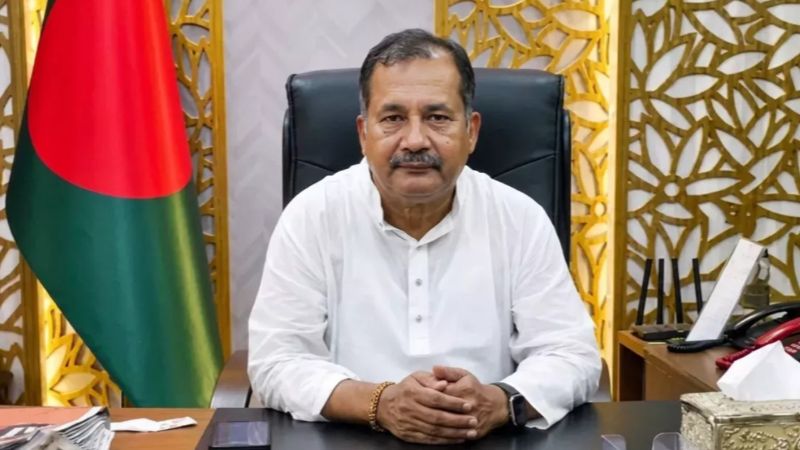



BNP Chairman’s Advisory Council member and Prime Minister’s Political Adviser Zahir Uddin Swapon on Saturday accused the Bangladesh Jamaat-e-Islami-led 11-party alliance of plotting to create instability in the country through street programmes such as a long march.
Speaking at a roundtable discussion in the capital, he urged people to remain vigilant against attempts to unnecessarily take parliamentary debates to the streets.
“Political parties may not fully understand what they are doing. But various domestic and foreign forces remain ready to exploit any unstable situation,” Swapon said.
He said programmes such as a long march were contrary to the aspirations of ordinary people at a time when Parliament was functioning satisfactorily.
“I believe such a programme in the name of movement, when the National Parliament is functioning satisfactorily, goes against the aspirations of the people,” he said.

The roundtable, titled ‘Review of the First 180 Days of Bangladesh’s Democratic Government: The Context of Governance, Accountability and Development’, was organised by Citizen Forum Bangladesh and the Bangladesh Centre for Advanced Initiatives (BCAI) at the Bangladesh Institute of Law and International Affairs (BILIA) auditorium.
Reviewing the government’s first 180 days, Swapon said it had succeeded in setting a new direction for the country after pulling it out of what he described as a severe deadlock caused by two decades of authoritarian practices, a fragile social structure and a bankrupt economy.
“The crisis is so deep that no magical change is possible overnight. However, the government has already taken specific policy measures to ensure sustainable growth in the long run,” he said.




On the energy crisis, the Prime Minister’s Political Adviser blamed long-term dependence on imports and what he described as flawed policies in the power and energy sectors.
“Due to long-term import dependence and wrong policies, the country is now struggling in essential sectors like power and energy. Failing to take sustainable measures to extract natural resources despite remaining in power for so long was not merely corruption; it was a long-term betrayal of the nation,” he said.
Swapon said the government was not seeking to avoid responsibility by merely discussing the crisis.
“Rather, the Prime Minister has sincerely apologised to the people and is implementing initiatives to explore alternative sources and extract our own gas,” he said.
He said the government was also working to develop new sources of imports alongside China and India, reduce import costs and diversify export products as part of efforts to restore good governance and provide economic relief.
Referring to the role of an effective Parliament, Swapon said the tendency to quickly take parliamentary debates to the streets was undermining democratic political culture.
“Although parliamentary politics provides an opportunity to hold the government accountable through checks and balances, the tendency to quickly take parliamentary debates to the streets hinders democratic culture,” he said.
Swapon said it was the opposition’s responsibility to hold the government accountable while making parliamentary democracy more dynamic and meaningful.
UGC Chairman Professor Dr Mamun Ahmed chaired the discussion, moderated by Dr Shakhawat Hossain Sayantha.
Former foreign minister Abul Hasan Chowdhury, Jahangirnagar University Vice-Chancellor Professor Kamrul Ahsan, human rights activist Shirin Huq, and politicians, academics and researchers, among others, spoke at the event.