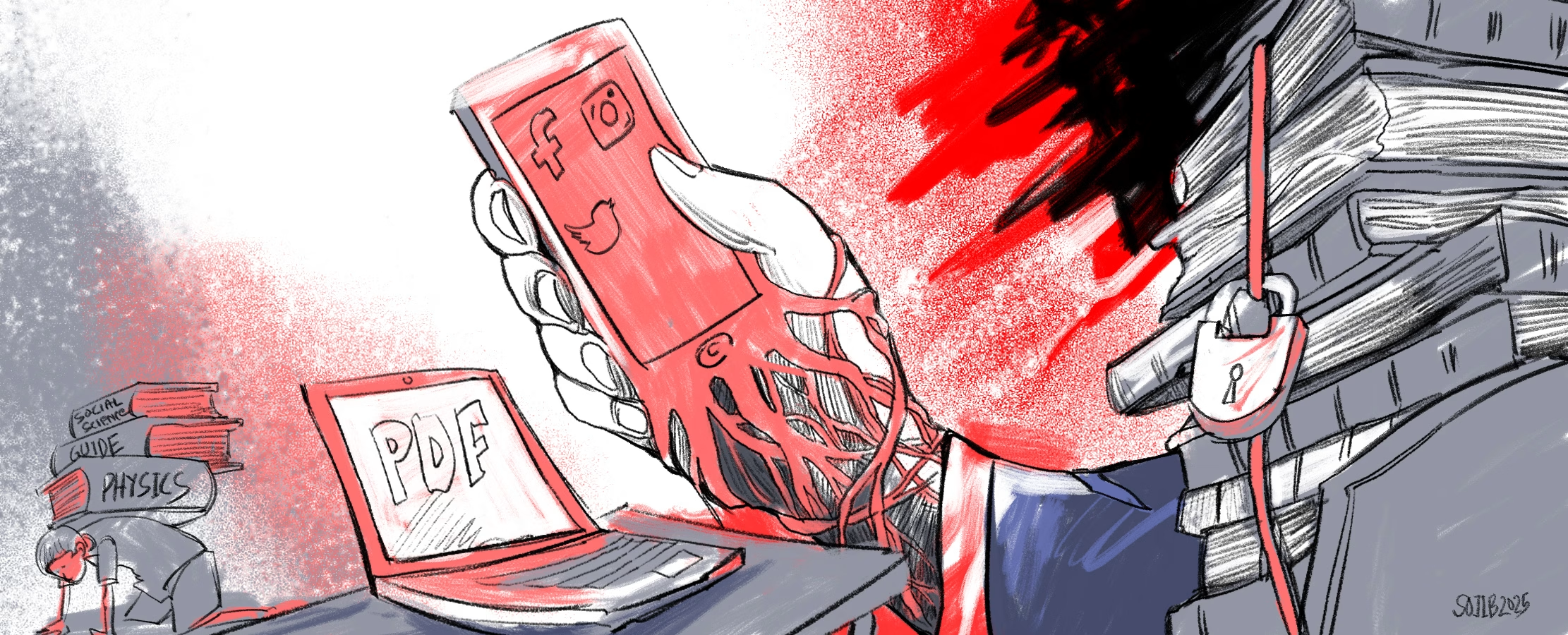

In an era shaped by constant digital expansion, the trend of reading finds itself in a tough situation. Once, reading was a way to spend quality time, a way to fly through imagination. Today, however, that escape has become a distant memory.
A 2024 UK survey by the National Literacy Trust revealed that reading habits have dropped to their lowest in nearly two decades, a trend echoed in Bangladesh as well. We once imagined a future where books were everywhere, but now fewer people are picking them up. The boom of the entertainment industry, social media, and easy access to smart devices are driving this decline.
With 15-second TikToks and Instagram Reels dominating our screens, our attention spans are shrinking fast. Who has the patience to dive into a 700-page novel anymore? And it’s not just digital distractions. Students today are buried under schoolwork, endless coaching classes, and academic stress. Reading for pleasure has become a forgotten luxury.
From books to screens: The shift in habits
Phones, YouTube and TikTok have become go-to sources for entertainment and even learning.
Mashiat Noor Prapti, a 28-year-old lecturer at UCSI University, says, “When I read on my tablet or phone now, I often get distracted by WhatsApp and Facebook notifications. It messes with my attention span.”
University student Mesbah Alvee admits, “Students now prefer videos or AI tools like ChatGPT. They make life easier for academic purposes but also make us passive.”
Abiduzzaman Mazumder Rafin, a first-year Dhaka University student, says, “No one really buys or gifts books anymore. Even for studying, students prefer PDFs over actual pages.”

Second-year student Warisha Khan sees a split: “Reading is still alive in some circles, but the mass appeal has dwindled in favour of videos. For me, reading is my escape, but most of Gen Z prefers social media.”
The instant gratification trap
Our obsession with instant gratification is another reason reading is losing the battle. Notifications buzz, news updates flash, TikToks autoplay, everything is engineered to be short, fast and dopamine-fueled.
Sultana Nazia Jahan, headmaster at Angelic Kindergarten School, explains, “People can read on their phones anywhere, but reading a book requires effort and a quiet environment.”
One study found that children’s average attention span is just 29.61 seconds, down 27.41% over time. Teenagers spending more than two hours daily on screens also tend to score lower on tests. In London, primary school teachers report that children’s attention spans are now shorter than ever.
Even if we want to read, our brains are now wired for quick dopamine hits. Books require focus, something we increasingly struggle to give.




School, coaching, burnout, social stigma
Academic pressure leaves little room for leisure reading.
“I love to read, but I don’t have the time,” says Muhammad Mohitir Hossain, a 15-year-old student. “I can’t even remember the last time I read for fun.”
With many classrooms falling short, students rely on coaching centre to keep up, creating a cycle of school, homework, tuition, and burnout. Guardians often blame the lack of engaging classroom teaching, saying it pushes students away from curiosity-driven learning.
Reading isn’t just time-consuming; it’s often socially discouraged. Sajid, an 18-year-old, says, “I enjoy reading a lot. My Nana encouraged me to read, but my friends mock me. They say, ‘What are you, some genius?’ It’s hard to enjoy a book when everyone’s teasing you.”
In a culture hooked on quick content, reading is often seen as boring, old-school, or even pretentious. Peer pressure quietly pushes more young people away from a habit that desperately needs nurturing.
The academic reading decline
It’s not just leisure reading that’s fading, academic reading is taking a hit too. With online resources, YouTube tutorials, and AI-generated answers, textbooks are often ignored.
“Books are great, but big ones take time,” says Muhammad Naqi, a 30-year-old avid reader. “For work, I often use video tutorials; they’re just faster.”
Teachers notice the shift too. “Students now just buy ready-made notes,” says Sultana Nazia Jahan. “They can Google anything. Why would they read a whole book or use a dictionary? What we read stays in our brain, but just seeing or listening doesn’t stick.”
In a world chasing shortcuts, deep and meaningful reading doesn’t stand a chance.
Literacy is up, but are we reading?
On paper, Bangladesh’s 76% literacy rate looks promising but that’s just a number. Being “literate” simply means reading and writing a basic sentence, not finishing a novel or analysing an article.
If books are gathering dust and our only reading is WhatsApp messages, what does literacy even mean? When no one reads for fun, literacy becomes just another box to tick.
Even with technology dominating our lives, passionate readers still keep books alive.
“I love reading because it helps me relax and escape from daily life,” says Sharmin Nipa, a mother of two. “It’s not just about gaining knowledge; it’s about experiencing something new.”
Sometimes all it takes is one person or one book to spark a love for reading. Nafisa, a 16-year-old madrasa student, shares, “My cousin used to give me books, and that’s what got me into reading outside of class.”
Lecturer Prapti offers practical advice: “It’s not about how much you read, but the quality of your engagement. Just 15 minutes a day can help rebuild your attention span.”
Final thoughts: Reading shouldn’t die
While screens have reshaped our habits, it’s not too late to fall in love with books again. We don’t need to give up phones or videos, but we do need balance.
Instead of mindlessly scrolling, pick up a book. Start small: a few pages, a short story, even an online article that sparks curiosity. Who knows? The next book might be the one you just can’t put down.