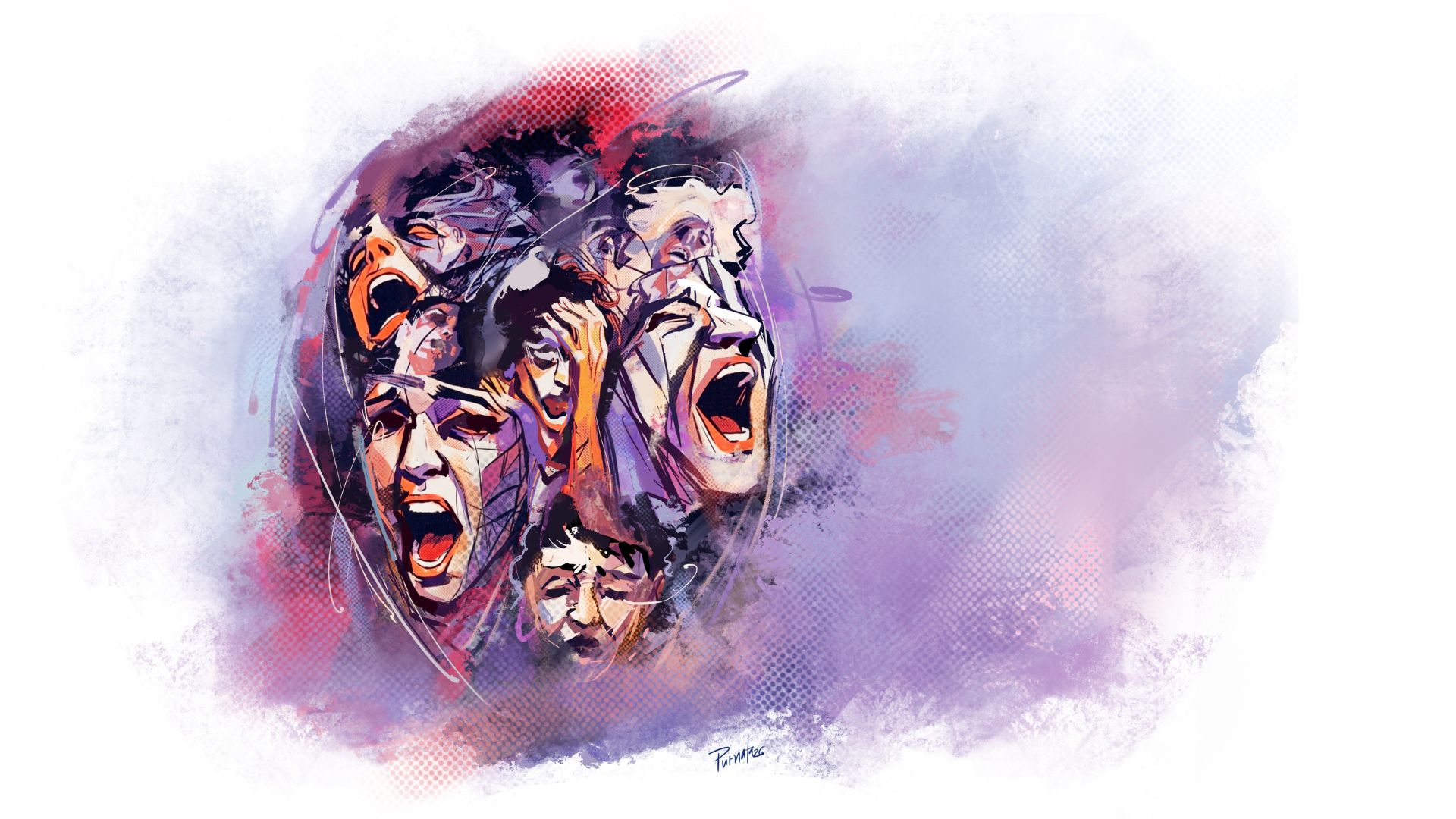



Bangladesh is a developing country that continues to struggle economically. In recent times, the nation has also been navigating prolonged political instability, economic pressure, and social uncertainty. In this reality, a question has become more relevant than ever: How does this environment affect the psychological well-being of its people?
According to the National Mental Health Survey conducted in 2018–19, an estimated 16.8% to 18.7% of adults and 13% to 14% of children and adolescents aged 7–17 in Bangladesh suffer from various mental health conditions. Considering the aftermath of the COVID-19 pandemic and the socio-political unrest following 2024, it is reasonable to assume that these rates have only increased.
This raises an important question: Does suffering from a mental health issue mean someone is “going mad”?
The answer is an emphatic no. The majority of mental health problems are conditions that people live with while continuing their daily lives. Many do not even realise that persistent feelings like “nothing feels good,” “I’m always restless,” “I don’t want to talk to anyone,” or “everything feels meaningless” may be rooted in childhood trauma, chronic stress, anxiety, depression, or accumulated life experiences, what we often refer to in modern terms as “emotional baggage.”

For instance, imagine that someone treats you poorly on the street. You might brush it off and tell yourself, “These things happen.” But the incident doesn’t end there. Our brains, especially the subconscious, store these experiences. Over time, this accumulated emotional weight influences our behaviour, self-confidence, relationships, decision-making, and mental state.
Yet, we rarely make room to check in with ourselves, to understand our feelings, or to open up to a mental health professional. The culture of self-reflection and seeking help remains extremely limited in our society.
The same survey found that 92.3% of adults and 94.5% of children aged 7–17 never consulted a doctor or mental health specialist for their psychological concerns.




So, is mental health really that important? If life goes on somehow, why all this talk about it?
Because there is a vast difference between merely surviving and truly thriving. Mental stress does not stay confined to the mind; it affects the body as well. Prolonged anxiety and emotional distress can lead to high blood pressure, heart palpitations, increased heart rate, headaches, neck and back tension, insomnia, loss or excess of appetite, digestive issues, acid reflux, heartburn, nausea, fatigue, skin problems, and even a weakened immune system.
In many cases, symptoms of diabetes, heart conditions, or other chronic physical illnesses can worsen due to unmanaged mental stress. In short, when the mind is unwell, the body silently begins to break down.
Many of us carry the weight of generational trauma, anxiety, panic, chronic stress, and unspoken emotions. In a busy city like Dhaka, it may be possible to survive like a machine, but to live healthily as a human being, mental wellbeing is indispensable. Between daily work pressures, economic uncertainty, anxiety about the future, and social expectations, depression and mental exhaustion deepen.
As this stress accumulates in the body, it gives rise to various physical ailments, often treated as separate illnesses, while the root cause remains undiagnosed.
These problems do not fade with time; they gain new dimensions. When a nation’s people are subjected to prolonged political instability, economic hardship, employment insecurity, and a sense of vulnerability, the stress spills over from personal lives into the fabric of society itself.
In a developing country like Bangladesh, talking about mental health is often considered a luxury. Behind this perception lie limited government initiatives, a shortage of adequate mental health services, and the inaccessibility of psychiatrists and psychologists to a large part of the population. Moreover, social stigma and shame discourage people from seeking help.
The development of mental health infrastructure cannot happen overnight. But change can begin with awareness and open conversation. Speaking about mental health is not a sign of weakness; it is an act of self-awareness. As more people break the stigma and share their experiences, the path to seeking and receiving help becomes easier.
If we continue to overlook this issue, we risk creating generation after generation that is emotionally unwell, reluctant to speak openly, and carrying unresolved trauma. And that price will ultimately be paid not just by individuals, but by the entire nation, with heavy interest.